Foxglove
Digitalis purpurea
Foxglove is a tall spired biennial or short-lived perennial prized for vertical bloom, tubular flowers, and easy self-sowing in suitable gardens. It brings a woodland-meadow feel to late spring and early summer borders and is especially useful where a planting needs height without woody mass.
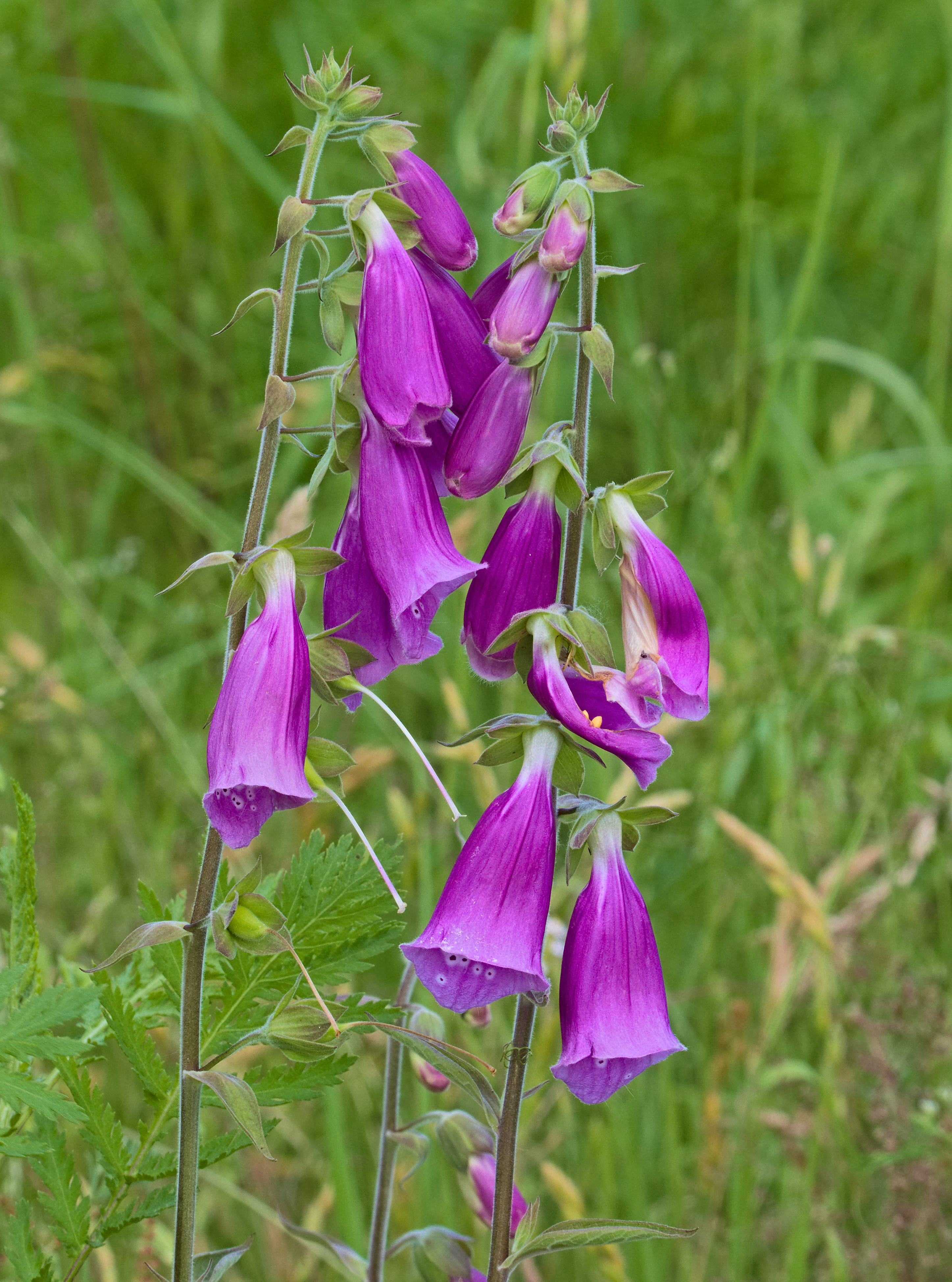
Foxglove produces rosettes of soft green leaves followed by upright flower spikes lined with pendant tubular blooms in shades of purple, pink, cream, white, and apricot. The flowers are strongly associated with cottage and woodland garden styles, but they also work surprisingly well in more contemporary mixed borders because of their clean vertical silhouette.
Many foxgloves behave as biennials, making foliage in the first year and flowering in the second, though some strains act more like short-lived perennials. Once happy, they often reseed into gravel edges, open soil, and lightly cultivated beds, creating a shifting colony effect from year to year.
They prefer bright shade to morning sun, decent drainage, and soils with some organic content. In hotter climates or exposed sites, afternoon protection helps flowers last longer and prevents the planting from burning out too quickly.
Foxgloves are excellent for bumblebees and other long-tongued pollinators, which can work deep into the tubular blossoms. Their ecological value and ease of self-sowing make them feel more dynamic than many traditional ornamental biennials.
In a neighborhood garden, foxglove is often at its best where the planting can be a little informal, allowing seedlings to appear and some variation from year to year to become part of the design rather than a problem to be corrected.
Microclimate
Foxglove responds strongly to light intensity and summer heat. Plants are usually longest-lived where they receive morning sun or bright open shade, rather than full reflected heat all day. Moisture-retentive but draining soil helps them bulk up without scorching, while hot paved exposures can shorten bloom and lifespan.
Neighborhood observations
Around older gardens, foxglove often turns up in the seams between cultivated beds and informal edges, especially where leaf litter and open soil give seedlings a place to settle. It is less reliable in highly formal, heavily mulched plantings unless seed is deliberately saved and resown.