Hardy hibiscus
Hibiscus moscheutos hybrids
Hardy hibiscus is a bold herbaceous perennial grown for very large late-summer flowers and lush tropical-looking foliage. It dies back in winter but returns with strong warm-season growth, creating a dramatic peak when many earlier perennials are winding down.
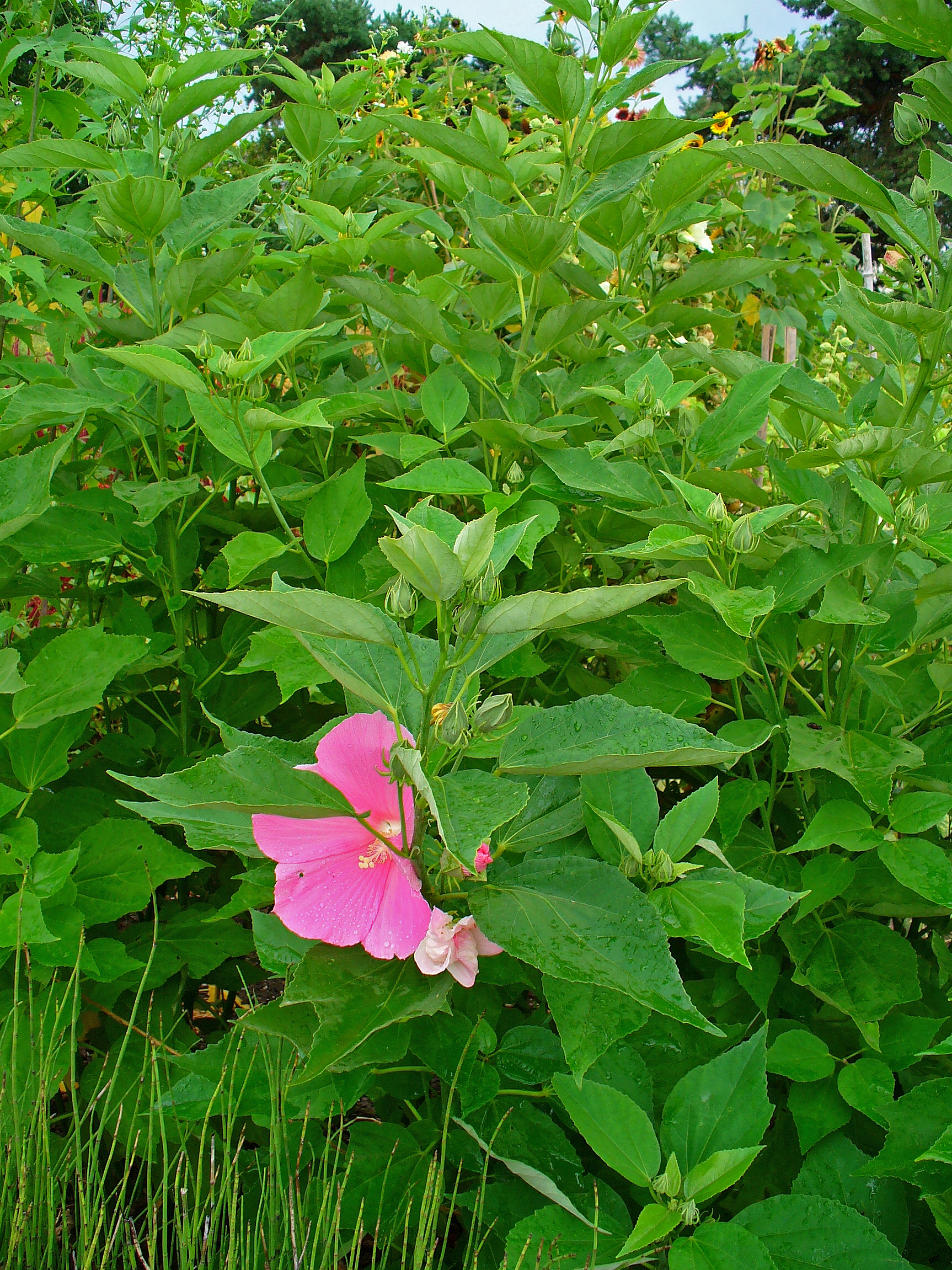
Hardy hibiscus combines oversized hollyhock-like flowers with a substantial shrubby silhouette, though the plant is herbaceous and returns from the crown each year. Flower colors range from white and blush to red and deep rose, often with a contrasting eye, and individual blooms can be strikingly large.
Despite the tropical look, hardy hibiscus is cold-hardy in many regions and functions as a late-emerging but fast-growing perennial. It is one of the clearest ways to bring a lush, almost subtropical feeling into a temperate border without relying on tender annual bedding.
These plants prefer full sun, fertile soil, and more moisture than many standard border perennials. They are especially effective where irrigation is reliable and the root zone does not dry out repeatedly during summer, though they still need drainage good enough to avoid winter crown issues.
The large open flowers can be visited by bees and other insects, and the plant has a strong visual relationship to heat and abundance. Because it emerges late, gardeners need to be patient in spring and avoid assuming the crown has failed before the soil has truly warmed.
In a neighborhood setting, hardy hibiscus can act as a seasonal focal point near patios, sunny fences, or mixed borders where its size and flower scale have space to read clearly.
Microclimate
Hardy hibiscus responds strongly to soil warmth and available moisture. The best plants usually occupy sunny, open sites with heat accumulation and dependable irrigation, where growth starts late but accelerates fast once nights warm. Dry reflected heat without root moisture can stunt plants, while cool shade delays them too much to perform well.
Neighborhood observations
In neighborhood beds, hardy hibiscus often looks best when it is treated like a summer focal plant rather than a filler. It benefits from enough elbow room that the foliage mound and giant flowers can be read from a distance, especially near outdoor living spaces or broad sunny borders.