Shasta daisy
Leucanthemum x superbum
Shasta daisy is a long-blooming clump-forming perennial grown for its clean white ray flowers, yellow centers, and dependable summer presence. It reads as bright and simple from a distance but is sturdy enough to anchor mixed borders and cutting beds.
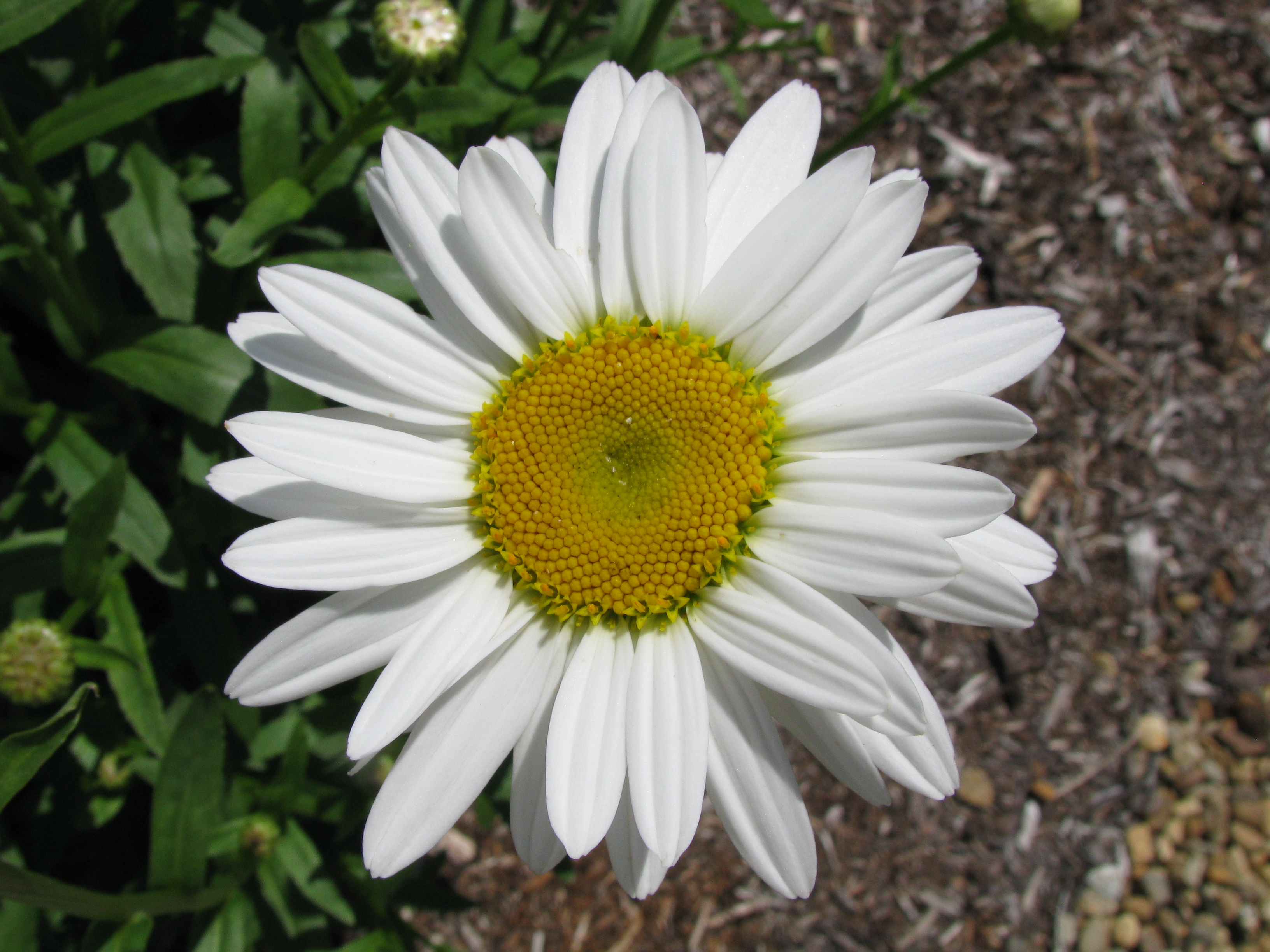
Shasta daisy is a classic herbaceous perennial valued for crisp white blooms carried on sturdy stems above dark green foliage. The flowers have the familiar daisy form of white petals surrounding a golden eye, and they combine easily with almost any summer palette, from hot oranges and reds to cooler blues and silvers.
Most cultivars bloom from early to mid summer into late summer with deadheading, and established clumps can become impressively floriferous. Their upright, mounded habit makes them useful for the middle of borders, and the stems are also reliable for cutting.
Shasta daisies prefer full sun, decent drainage, and soils that are fertile enough to support steady growth without becoming lush and floppy. They are not especially fussy, but they resent wet winter soil and usually look best when divided periodically to maintain vigor.
Ecologically, the open flower centers are accessible to bees, hoverflies, and other generalist pollinators. In the garden they offer a strong, legible bloom shape that helps tie mixed plantings together when more complex flowers can start to look visually busy.
With regular cleanup, occasional division, and enough light, Shasta daisies provide one of the easiest white summer perennials for a bright border or neighborhood planting strip.
Microclimate
Shasta daisies stay tidier and flower more heavily in open, sunny spots where foliage dries quickly after rain or irrigation. In richer or partially shaded locations they can grow taller and softer, sometimes needing support. They dislike places that hold winter moisture, so slightly raised beds or slopes are often more dependable than low, heavy pockets.
Neighborhood observations
In neighborhood borders, Shasta daisies often do best in the same kind of straightforward sunny beds that suit lavender, yarrow, and other dry-summer perennials. They can handle ordinary garden conditions, but clumps planted into compacted strips usually stay smaller and lose the dense, blooming look they have in improved beds.