Tiger flower
Tigridia pavonia
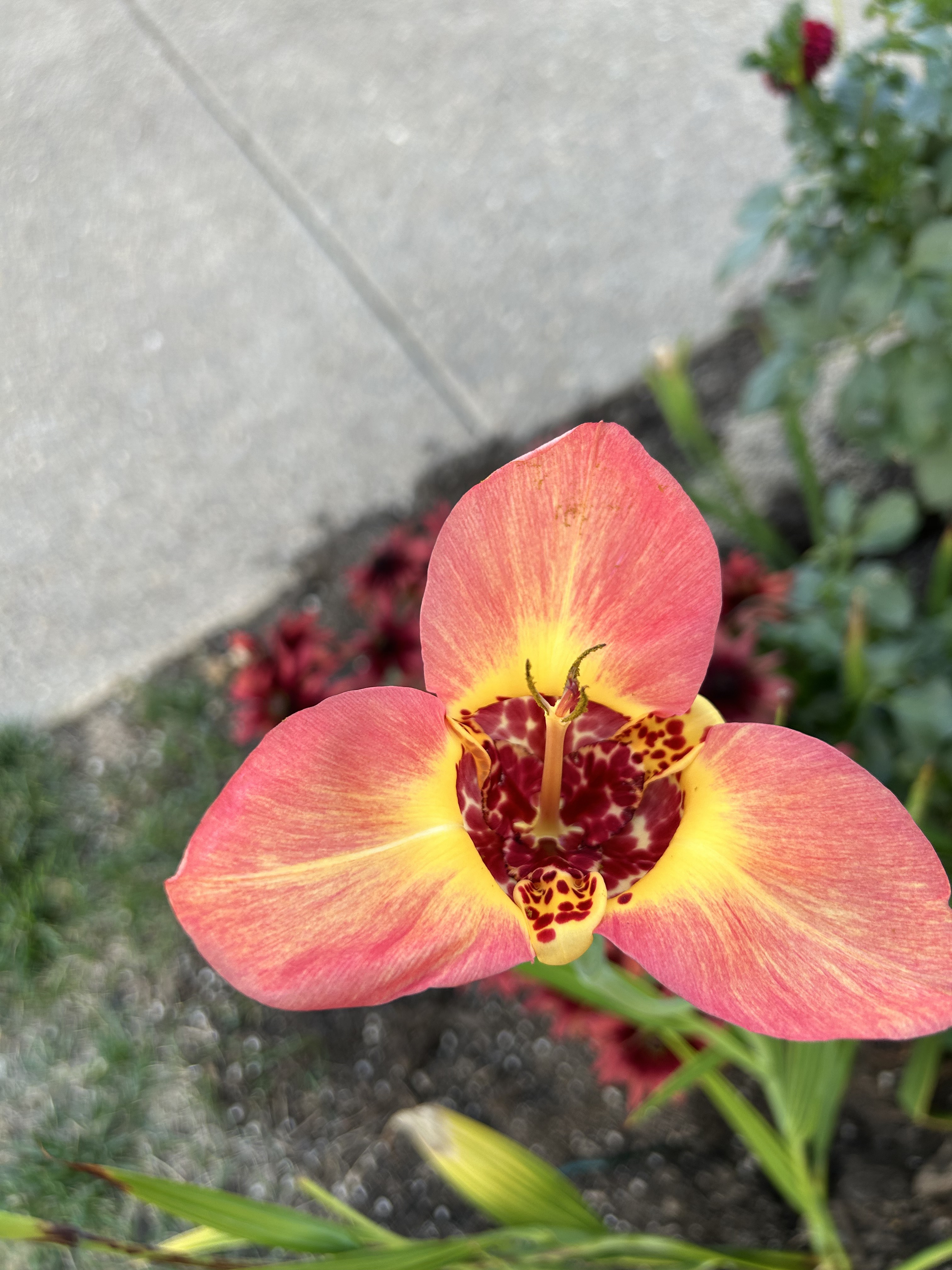
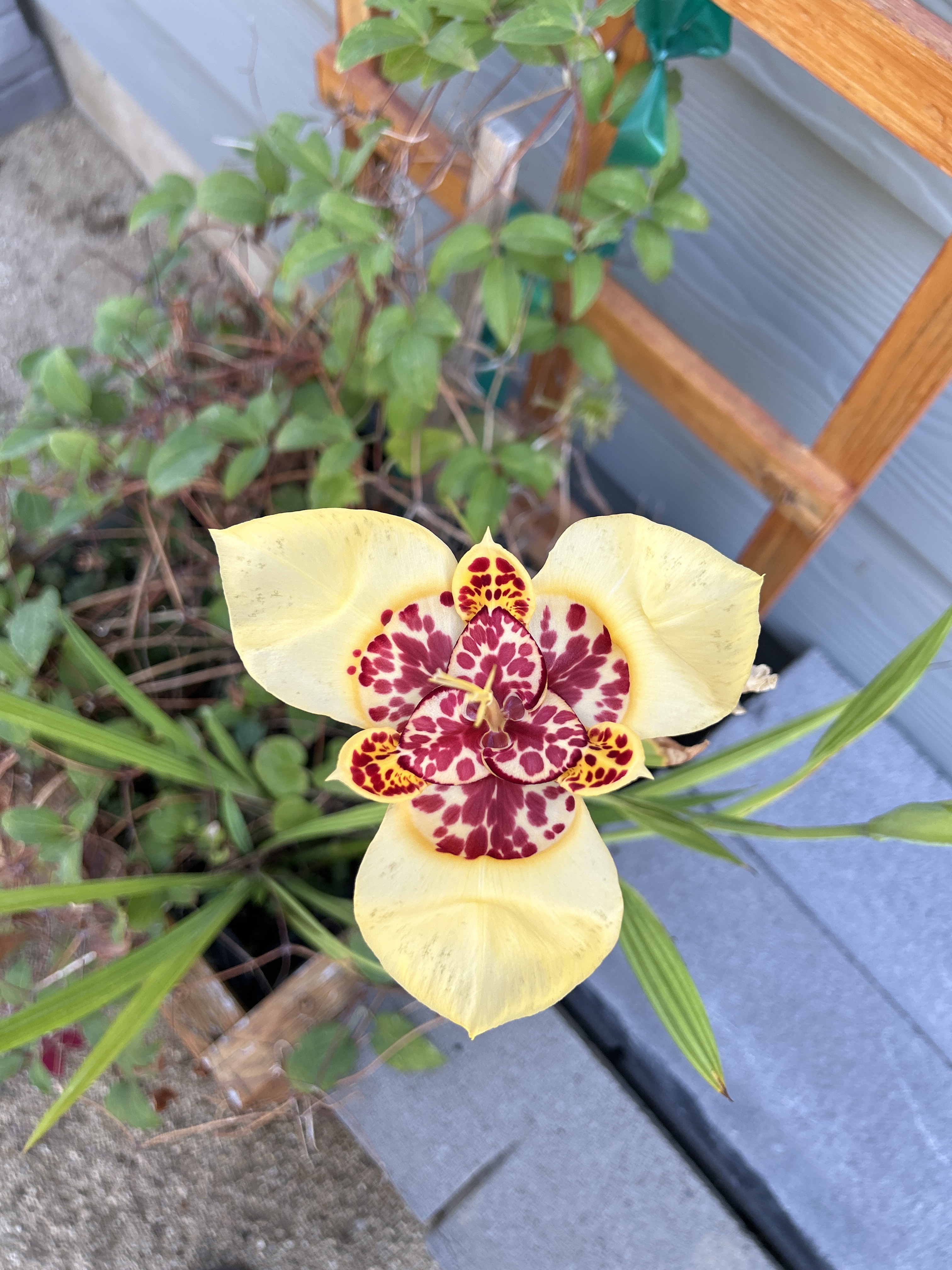
Tigridia pavonia is a cormous summer bloomer grown for its dramatic three-petaled flowers, each marked with a boldly patterned central cup. Individual blooms last only a day, but established clumps open fresh flowers in succession through warm weather.
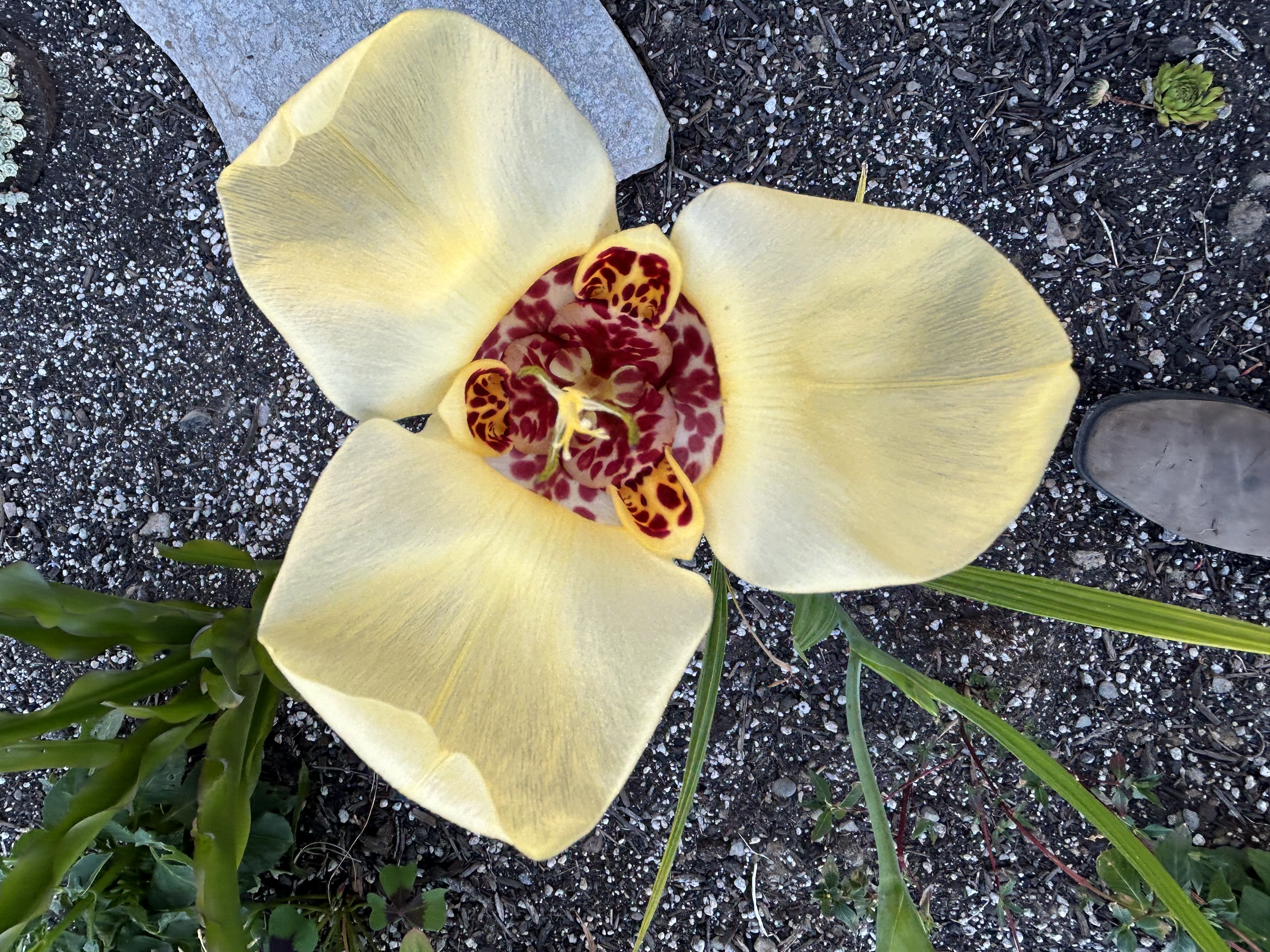
Tigridia pavonia, commonly called tiger flower, is a tender cormous perennial native to Mexico and Guatemala and grown for its striking, short-lived blooms. Each flower has three broad outer tepals and a richly mottled central cup, giving the plant a graphic, almost hand-painted look that reads very differently from more typical summer bulbs.
Individual flowers usually open for just one day, but healthy clumps produce a steady relay of buds, so the plant can stay interesting for weeks in midsummer and late summer. The foliage is narrow and blade-like, and the flowering stems rise lightly above it rather than forming a dense mass.
Tiger flower performs best in full sun with warm soil, good drainage, and regular moisture while actively growing. In cooler climates it is often treated like a lifted summer bulb, especially where winter wet or hard freezes would threaten the corms.
Because the blooms are open and structurally simple, they can be visited by daytime pollinators, though the floral display is more about succession than persistence. In design terms, Tigridia brings a brief but memorable flare of tropical-looking color and pattern to small sunny pockets, containers, and front-of-border placements.
Microclimate
Tigridia is happiest in heat-reflective, fast-draining pockets where the soil warms early and does not stay wet. South-facing beds, gravelly strips, and spots near paving can improve bloom performance, while cool shaded ground tends to produce weaker stems and fewer flowers.
Neighborhood observations
In neighborhood-scale gardens, tiger flower usually performs best where irrigation is consistent through summer but drainage stays quick. It looks especially effective in smaller sunny beds where individual blooms can be appreciated up close, since each flower is brief and highly detailed.
Gallery
Supporting media
Supporting media