Barred owl
Strix varia
A large, dark-eyed woodland owl increasingly associated with mixed suburban edges, barred owl is a powerful nocturnal hunter whose presence is often detected first by voice rather than sight.
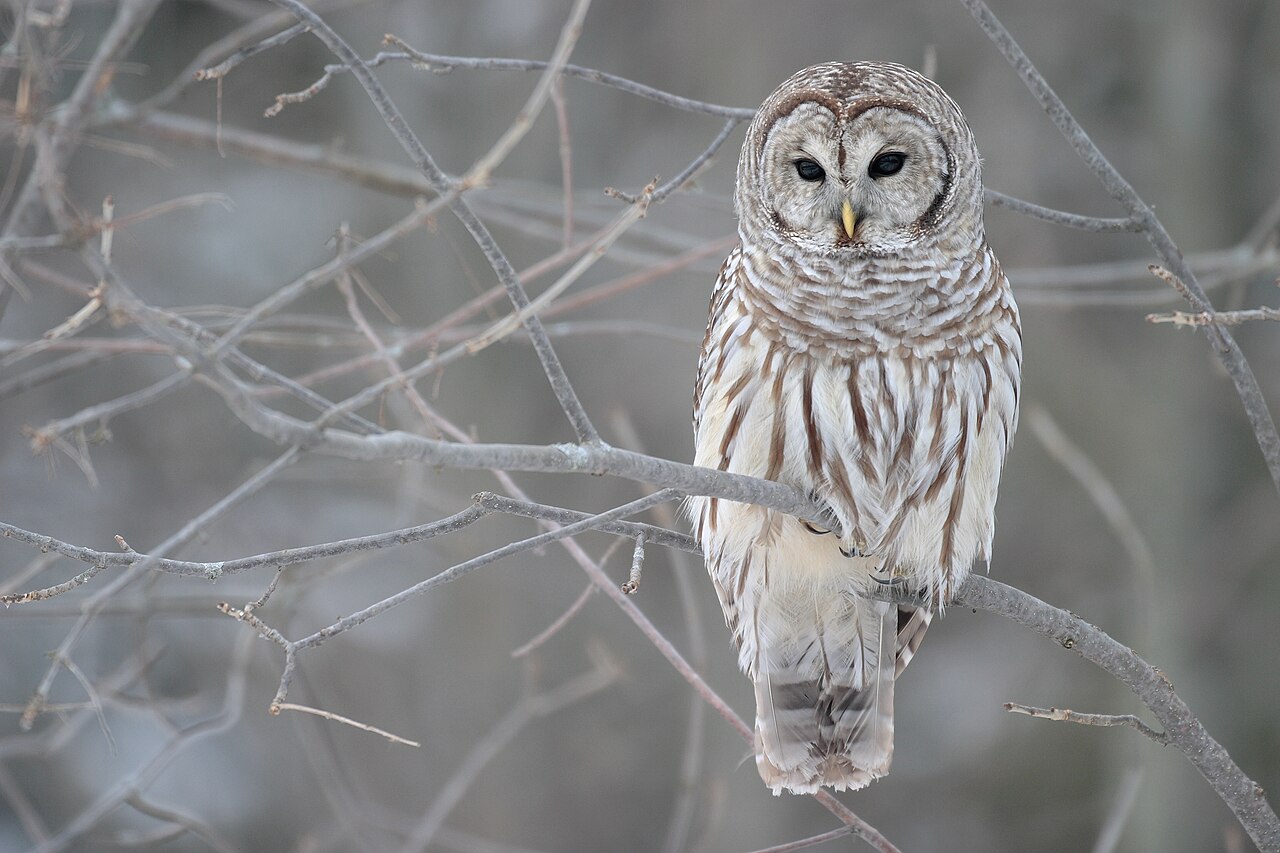
Barred owl is a broad-winged forest owl with a rounded head, dark eyes, and a heavily patterned brown-and-white body that gives it a soft but imposing presence. Its famous call, often rendered as “who cooks for you, who cooks for you all,” carries well through damp evening air and is one of the clearest signs that mature trees and layered cover are nearby.
Historically associated with forested habitats, barred owls have become increasingly comfortable in wooded neighborhoods, riparian corridors, and semi-rural edges where large trees, quiet roost sites, and prey are available. They are most active from dusk through night, though they can occasionally be seen in daytime, especially in overcast weather or when disturbed from a roost.
Their diet is broad and opportunistic, including small mammals, birds, amphibians, and large invertebrates. This adaptability helps them persist in human-shaped landscapes as long as enough structure remains for hunting and shelter.
In the neighborhood context, barred owls are less a garden species than a canopy-and-edge species. Their appearance can change the emotional scale of a place, making a residential landscape feel connected to the larger wooded systems beyond it.
Because they rely on mature trees and relatively undisturbed nesting opportunities, barred owls are a reminder that habitat value is not only about flowers and feeders but also about vertical structure, darkness, and continuity of cover.
Microclimate
Barred owls use the calmest, darkest parts of the neighborhood canopy system rather than exposed ornamental spaces. Ravine edges, creek corridors, tall wind-sheltered trees, and densely layered backyards create the kind of cool, quiet microclimates where roosting and hunting feel possible.
Neighborhood observations
In residential areas, barred owls tend to appear where multiple yards combine into a larger block of tree cover. Even if they do not use a single garden intensively, neighborhoods with mature canopy, low night disturbance, and a steady prey base can support repeated owl presence.