Dark-eyed junco
Junco hyemalis
Dark-eyed junco is a familiar small sparrow of cool seasons and quiet garden edges, usually noticed as a flicker of slate, brown, and white moving beneath shrubs or across open ground.
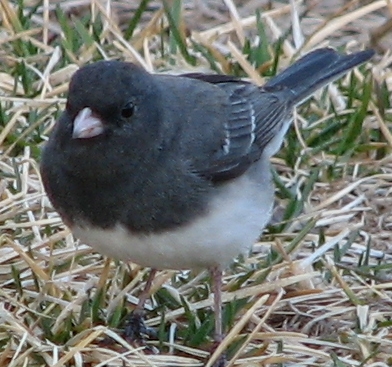
Dark-eyed junco is a compact sparrow with a clean, understated look: a pale bill, contrasting white outer tail feathers, and plumage that varies from slate-gray to brownish depending on form and age. In western Oregon it is one of the birds most likely to make a garden feel active in fall and winter, when many brighter species are less conspicuous.
Juncos spend much of their time on or near the ground, hopping through leaf litter, gravel, and the margins of planting beds in search of seeds and small invertebrates. They often move in loose groups, especially outside the breeding season, and flush together into shrubs when startled.
They favor places with both open foraging ground and nearby cover, which makes residential gardens, hedges, and layered borders especially suitable. Their presence tends to increase in cooler months, even where some individuals remain year-round.
Because they are quiet, quick, and low to the ground, juncos are often more strongly felt than consciously studied. They add a subtle but constant winter rhythm to gardens that would otherwise seem still.
A yard that supports juncos is usually offering the basic but important combination of seed, shelter, and low disturbance near the ground plane.
Microclimate
Juncos concentrate where the ground layer stays usable in cool wet weather: sheltered path edges, dry-overhung beds, hedges, and mulch zones that provide both foraging access and quick escape cover. They are less interested in hot exposed paving than in softly buffered edges.
Neighborhood observations
In neighborhood gardens, juncos often appear wherever there is a little mess left on purpose: seedheads, leaf litter, evergreen structure, and lightly protected open ground. Overly stripped or hardscaped yards tend to have fewer of them.