California scrub-jay
Aphelocoma californica
California scrub-jay is a bold, intelligent, blue-and-gray corvid of oak edges, neighborhood gardens, and semi-open habitats, known for curiosity, memory, and constant visual presence.
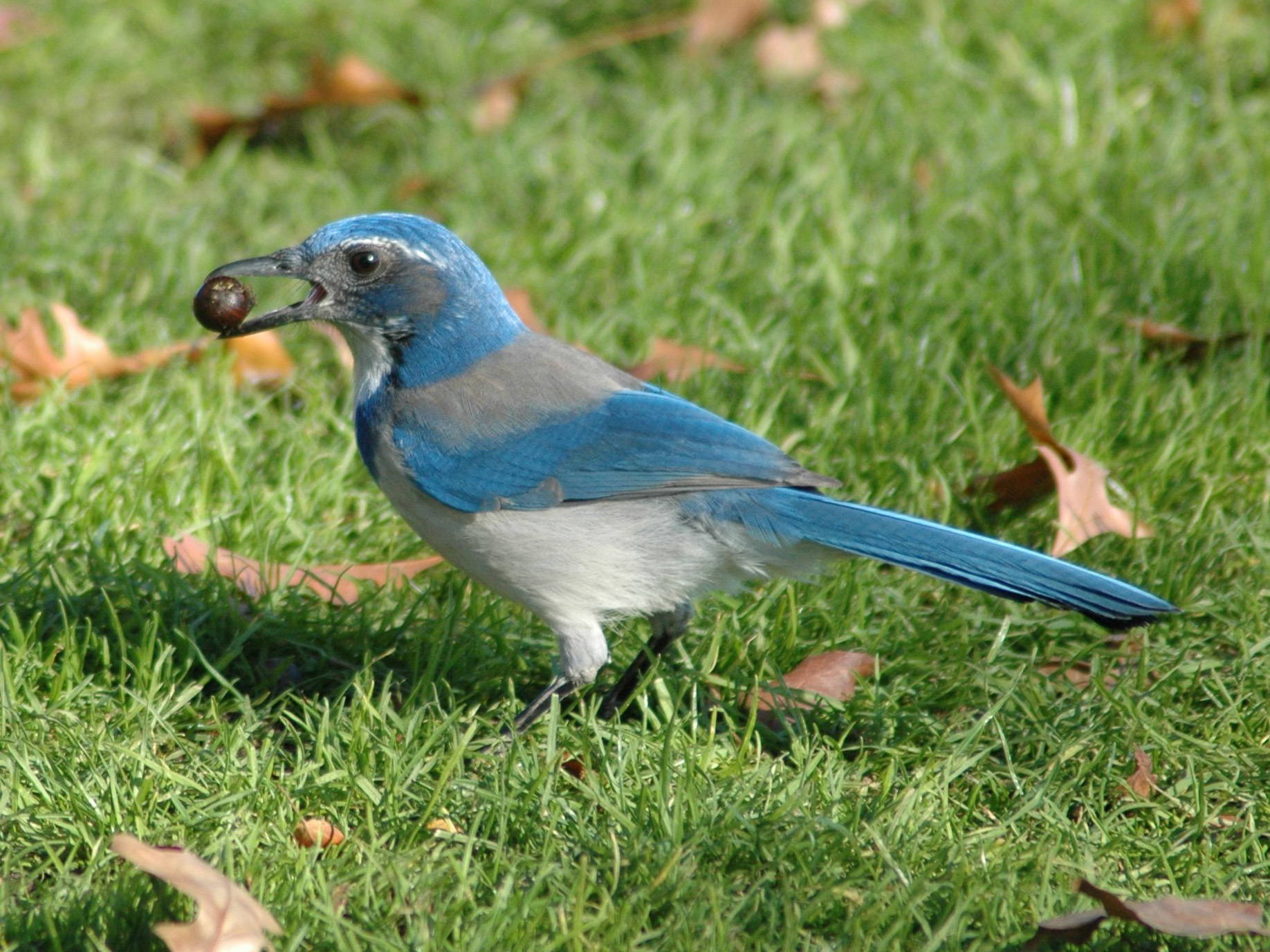
California scrub-jay is one of the most charismatic everyday birds of western neighborhoods. Its bright blue wings and tail, gray-brown back, and alert posture make it immediately recognizable, and its behavior is often as noticeable as its color: watchful, vocal, opportunistic, and rarely passive.
Unlike flocking crows, scrub-jays are often encountered singly, in pairs, or in small family groups moving deliberately through shrubs, fences, and mid-level branches. They readily cache food, investigate activity, and exploit garden structure in a way that makes them seem almost mammalian in their spatial awareness.
The species is strongly associated with oak habitats and semi-open woody cover, but it adapts well to suburban landscapes that retain shrubs, trees, and foraging space. Acorns, berries, insects, and feeder offerings all become part of its seasonal diet.
In ecological terms, scrub-jays are also movers of seeds, especially acorns, and can help shape woody plant distribution over time. In a garden they bring attitude and narrative as much as song or delicacy.
A neighborhood that suits scrub-jays usually has a bit of wildness left in it: layered shrubs, mature trees, edges, and enough complexity that intelligence has something to work with.
Microclimate
Scrub-jays favor edge-rich microclimates where open view corridors meet shrubs and mid-height trees. Warm dry slopes, fence lines, oak margins, and layered backyards give them the mix of lookout points, hiding cover, and food storage opportunities they use constantly.
Neighborhood observations
In neighborhood settings, scrub-jays often become regulars in yards with oaks, dense shrubs, and a little room to perch and patrol. They are less dependent on lawns than crows and more tied to structure, memory, and repeatable food routes.