Black-eyed Susan vine Black-eyed Susan vine
Thunbergia alata
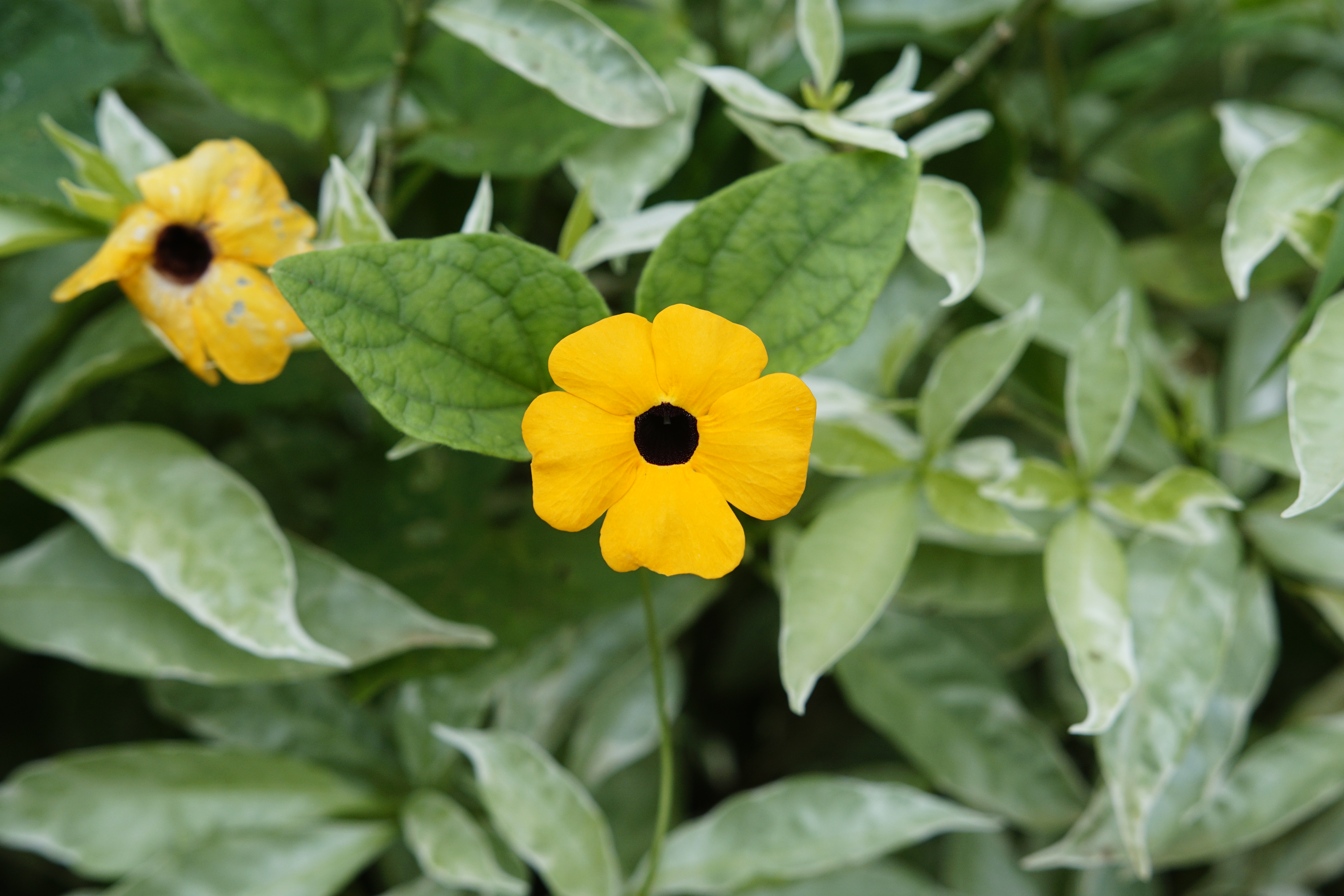
Black-eyed Susan vine is a fast warm-season climber that covers a trellis or container support with cheerful orange, yellow, or cream flowers centered by the dark eye that gives it its name. Black-eyed Susan vine is a fast warm-season climber that covers a trellis or container support with cheerful orange, yellow, or cream flowers centered by the dark eye that gives it its name.
The Summer Vine That Gets the Job Done
Black-eyed Susan vine is a practical kind of beautiful. It is not rare, it is not difficult, and it does not spend half the season deciding whether to grow. Once the weather warms, it climbs. Give it a support and it starts wrapping, leafing out, and flowering with a kind of sunny efficiency that can solve a lot of summer design problems quickly.
At The Patient Garden, a vine like this is useful because we sometimes need one season of softness in a hurry. A trellis that looks bare in June, a container that needs height, or a fence section that wants some brightness can all be handled by Thunbergia alata without making the whole garden more complicated.
What It Wants in Salem
Black-eyed Susan vine likes warmth and does not appreciate cold soil. In Salem, that means it is usually best treated as a seasonal plant set out after frost danger has passed. Our warm dry summers suit it well once nights are mild. The Fairview clay matters less here than it does for permanent perennials because this is usually being grown in a container or a deliberately prepared annual bed.
If you do plant it in the ground, the soil should still drain reasonably well and warm up without staying soggy. In a pot, a fertile, well-drained mix and regular watering are the keys.
Year by Year, or More Honestly Season by Season
In our climate, black-eyed Susan vine is usually managed as an annual or a summer seasonal even though it is perennial in warmer places. That means the useful unit of time is the season. Early summer is establishment and the first climbing growth. Midsummer is the big rush of flower and vine. Late summer into early fall is the peak display if water and feeding have stayed consistent.
If you decide to overwinter it frost-free, it can be carried forward, but most gardeners here simply start fresh each year. That is not a defeat. It is the cleanest way to use the plant.
Not Native, Not a Problem
Thunbergia alata is not native to Oregon. It comes from tropical Africa and behaves as a warm-season ornamental here. In our climate it is not invasive in the way it can be in frost-free regions. The season ends before it can become a real management issue.
Pollinators and Garden Use
The flowers bring some pollinator activity, especially from bees, but the plant's greatest value is probably visual. It flowers steadily, softens vertical supports, and makes summer containers look generous very quickly. That is real usefulness in a garden, even if it is not our highest-value habitat plant.
Growing Tips for The Patient Garden
Start with warm soil or warm potting mix. Give it a support immediately so the stems can begin climbing instead of tangling at ground level. Water consistently through the dry season and feed enough to keep bloom coming, especially in containers where nutrients flush out quickly. Pinch young growth if you want a bushier start, but do not keep pinching forever or you delay the climb.
If the vine looks tired in late summer, cut it back lightly and water deeply. It often responds with fresh growth.
Where It Fits
In The Patient Garden, black-eyed Susan vine belongs wherever we need a quick summer veil: an obelisk in a large pot, a narrow trellis by a seating area, or a warm annual pocket that wants vertical bloom without long-term commitment. It is one of the friendliest ways to get height and flower in the same season.
The Summer Vine That Gets the Job Done
Black-eyed Susan vine is a practical kind of beautiful. It is not rare, it is not difficult, and it does not spend half the season deciding whether to grow. Once the weather warms, it climbs. Give it a support and it starts wrapping, leafing out, and flowering with a kind of sunny efficiency that can solve a lot of summer design problems quickly.
At The Patient Garden, a vine like this is useful because we sometimes need one season of softness in a hurry. A trellis that looks bare in June, a container that needs height, or a fence section that wants some brightness can all be handled by Thunbergia alata without making the whole garden more complicated.
What It Wants in Salem
Black-eyed Susan vine likes warmth and does not appreciate cold soil. In Salem, that means it is usually best treated as a seasonal plant set out after frost danger has passed. Our warm dry summers suit it well once nights are mild. The Fairview clay matters less here than it does for permanent perennials because this is usually being grown in a container or a deliberately prepared annual bed.
If you do plant it in the ground, the soil should still drain reasonably well and warm up without staying soggy. In a pot, a fertile, well-drained mix and regular watering are the keys.
Year by Year, or More Honestly Season by Season
In our climate, black-eyed Susan vine is usually managed as an annual or a summer seasonal even though it is perennial in warmer places. That means the useful unit of time is the season. Early summer is establishment and the first climbing growth. Midsummer is the big rush of flower and vine. Late summer into early fall is the peak display if water and feeding have stayed consistent.
If you decide to overwinter it frost-free, it can be carried forward, but most gardeners here simply start fresh each year. That is not a defeat. It is the cleanest way to use the plant.
Not Native, Not a Problem
Thunbergia alata is not native to Oregon. It comes from tropical Africa and behaves as a warm-season ornamental here. In our climate it is not invasive in the way it can be in frost-free regions. The season ends before it can become a real management issue.
Pollinators and Garden Use
The flowers bring some pollinator activity, especially from bees, but the plant's greatest value is probably visual. It flowers steadily, softens vertical supports, and makes summer containers look generous very quickly. That is real usefulness in a garden, even if it is not our highest-value habitat plant.
Growing Tips for The Patient Garden
Start with warm soil or warm potting mix. Give it a support immediately so the stems can begin climbing instead of tangling at ground level. Water consistently through the dry season and feed enough to keep bloom coming, especially in containers where nutrients flush out quickly. Pinch young growth if you want a bushier start, but do not keep pinching forever or you delay the climb.
If the vine looks tired in late summer, cut it back lightly and water deeply. It often responds with fresh growth.
Where It Fits
In The Patient Garden, black-eyed Susan vine belongs wherever we need a quick summer veil: an obelisk in a large pot, a narrow trellis by a seating area, or a warm annual pocket that wants vertical bloom without long-term commitment. It is one of the friendliest ways to get height and flower in the same season.
Continue Continuar