Crocosmia Crocosmia
Crocosmia spp.
Crocosmia is the arching summer corm that throws up fiery flower wands above sword-shaped leaves, bringing motion, hummingbird traffic, and late-season color to the sunniest borders. Crocosmia is the arching summer corm that throws up fiery flower wands above sword-shaped leaves, bringing motion, hummingbird traffic, and late-season color to the sunniest borders.
Fire on Stems
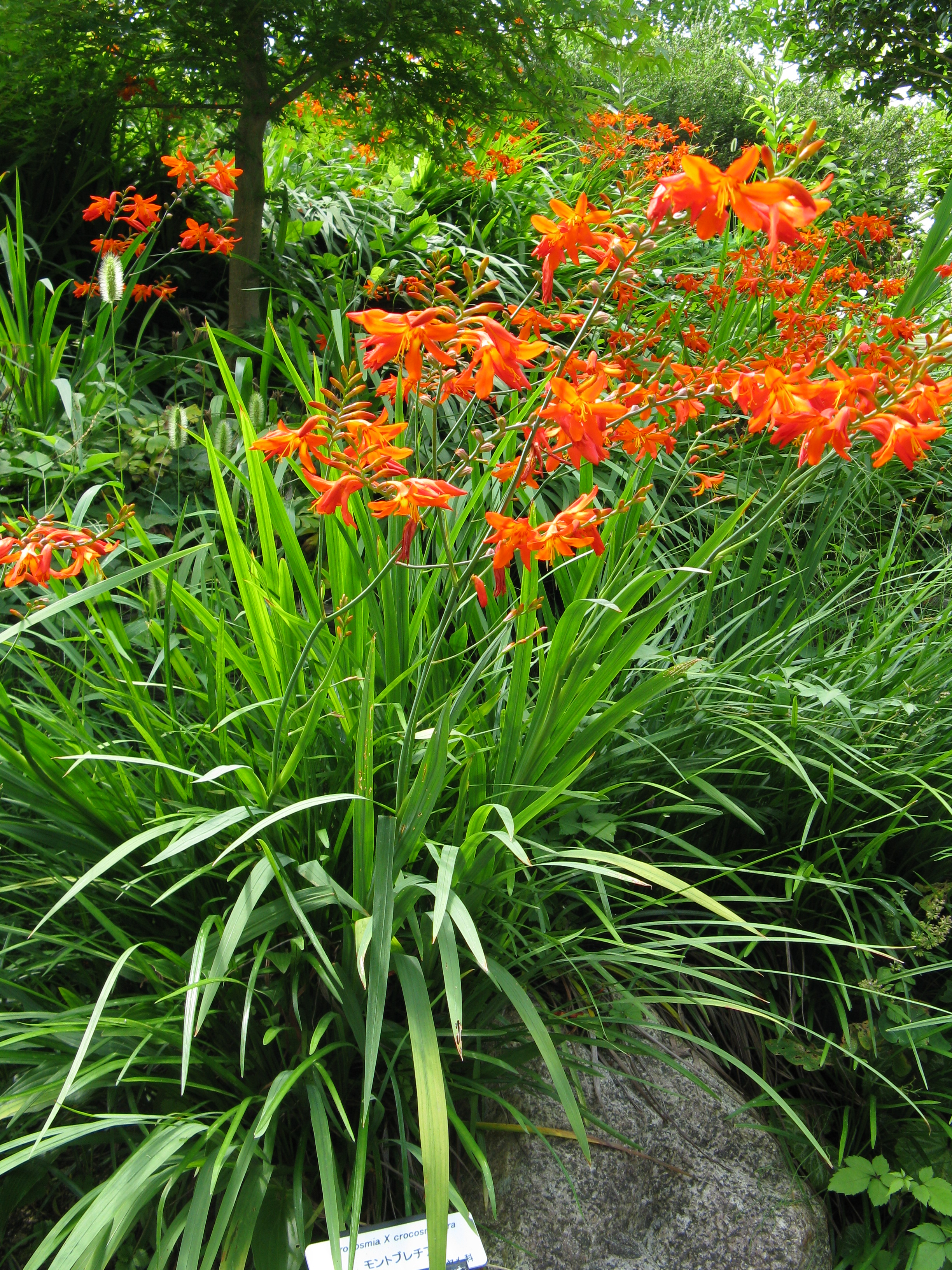
Crocosmia is one of those plants that can make an ordinary summer border feel alive. The foliage comes up first in clean upright fans, all blades and promise. Then the stems rise, arch out, and carry buds and flowers in a line that feels almost airborne. In bloom the colors run through orange, scarlet, coral, and hot yellow depending on the form, and the whole clump seems to move even when there is no wind.
At The Patient Garden, that sense of motion is part of the value. We have a lot of mounded and shrubby things. Crocosmia cuts through them with something looser and more directional. It points outward into the garden.
How It Handles Salem and the Fairview Clay
Crocosmia likes the same broad climate pattern we have: wet winters to recharge, warm summers to flower strongly. The trouble is not rain itself. The trouble is stagnant winter wet around the corms in heavy clay. On a slope or in a bed that drains decently, crocosmia can be easy here. In a flat sticky pocket that stays saturated, it struggles or rots.
The plant also appreciates more summer moisture than the driest Mediterranean herbs do. That makes it a nice bridge plant for beds that are sunny but not deliberately dry. Give it a place with sun, amended soil, and reasonable drainage, and it settles in well.
Year by Year
Year one is usually modest but promising. The foliage establishes and you may get a light bloom depending on the size of the corms. Year two is when the clump starts to show what it can do. By year three, a happy crocosmia planting can throw enough stems to become a real event in July and August.
Because crocosmia grows by multiplying corms, older clumps can become crowded. When bloom begins to decline or the center gets congested, lift and divide in spring. That both refreshes the planting and gives you plenty to share.
Not Native, Occasionally Vigorous
Crocosmia is not native to Oregon. Most garden forms come from South African species and hybrids. It is not generally invasive in our setting, but it can be vigorous in a good bed. That is not a complaint. It simply means we should give it room and edit it every few years rather than pretending it will stay exactly the same size forever.
Pollinators and Wildlife Value
Crocosmia flowers are particularly good for hummingbirds, which appreciate the tubular shape and bright color. Bees visit too, though hummingbirds are the star audience when the clump is in full stride. That makes crocosmia especially useful in a garden that wants some late-summer vertical nectar sources without leaning entirely on salvias.
Growing Tips for the Fairview Clay
Plant corms or divisions in spring in a sunny bed improved with compost and some grit or pumice if the clay is especially tight. Water through the first summer and during extended dry stretches. Let the foliage stand after bloom until it yellows. Those leaves are feeding next year's flowers. In colder or wetter winters, a light mulch can help, but heavy soggy mulch over the crown is counterproductive.
If a clump is too happy and starts pushing into neighbors, that is the moment to divide, not to resent the plant for doing exactly what it does.
Where It Fits
In The Patient Garden, crocosmia belongs in the hotter, brighter mixed borders with room to arch. It pairs beautifully with blanket flower, veronica, red hot poker, and the sturdier salvias. It is one of the best plants for carrying a border from midsummer into late summer without losing energy.
Fire on Stems
Crocosmia is one of those plants that can make an ordinary summer border feel alive. The foliage comes up first in clean upright fans, all blades and promise. Then the stems rise, arch out, and carry buds and flowers in a line that feels almost airborne. In bloom the colors run through orange, scarlet, coral, and hot yellow depending on the form, and the whole clump seems to move even when there is no wind.
At The Patient Garden, that sense of motion is part of the value. We have a lot of mounded and shrubby things. Crocosmia cuts through them with something looser and more directional. It points outward into the garden.
How It Handles Salem and the Fairview Clay
Crocosmia likes the same broad climate pattern we have: wet winters to recharge, warm summers to flower strongly. The trouble is not rain itself. The trouble is stagnant winter wet around the corms in heavy clay. On a slope or in a bed that drains decently, crocosmia can be easy here. In a flat sticky pocket that stays saturated, it struggles or rots.
The plant also appreciates more summer moisture than the driest Mediterranean herbs do. That makes it a nice bridge plant for beds that are sunny but not deliberately dry. Give it a place with sun, amended soil, and reasonable drainage, and it settles in well.
Year by Year
Year one is usually modest but promising. The foliage establishes and you may get a light bloom depending on the size of the corms. Year two is when the clump starts to show what it can do. By year three, a happy crocosmia planting can throw enough stems to become a real event in July and August.
Because crocosmia grows by multiplying corms, older clumps can become crowded. When bloom begins to decline or the center gets congested, lift and divide in spring. That both refreshes the planting and gives you plenty to share.
Not Native, Occasionally Vigorous
Crocosmia is not native to Oregon. Most garden forms come from South African species and hybrids. It is not generally invasive in our setting, but it can be vigorous in a good bed. That is not a complaint. It simply means we should give it room and edit it every few years rather than pretending it will stay exactly the same size forever.
Pollinators and Wildlife Value
Crocosmia flowers are particularly good for hummingbirds, which appreciate the tubular shape and bright color. Bees visit too, though hummingbirds are the star audience when the clump is in full stride. That makes crocosmia especially useful in a garden that wants some late-summer vertical nectar sources without leaning entirely on salvias.
Growing Tips for the Fairview Clay
Plant corms or divisions in spring in a sunny bed improved with compost and some grit or pumice if the clay is especially tight. Water through the first summer and during extended dry stretches. Let the foliage stand after bloom until it yellows. Those leaves are feeding next year's flowers. In colder or wetter winters, a light mulch can help, but heavy soggy mulch over the crown is counterproductive.
If a clump is too happy and starts pushing into neighbors, that is the moment to divide, not to resent the plant for doing exactly what it does.
Where It Fits
In The Patient Garden, crocosmia belongs in the hotter, brighter mixed borders with room to arch. It pairs beautifully with blanket flower, veronica, red hot poker, and the sturdier salvias. It is one of the best plants for carrying a border from midsummer into late summer without losing energy.
Continue Continuar