Curry plant Curry plant
Helichrysum italicum
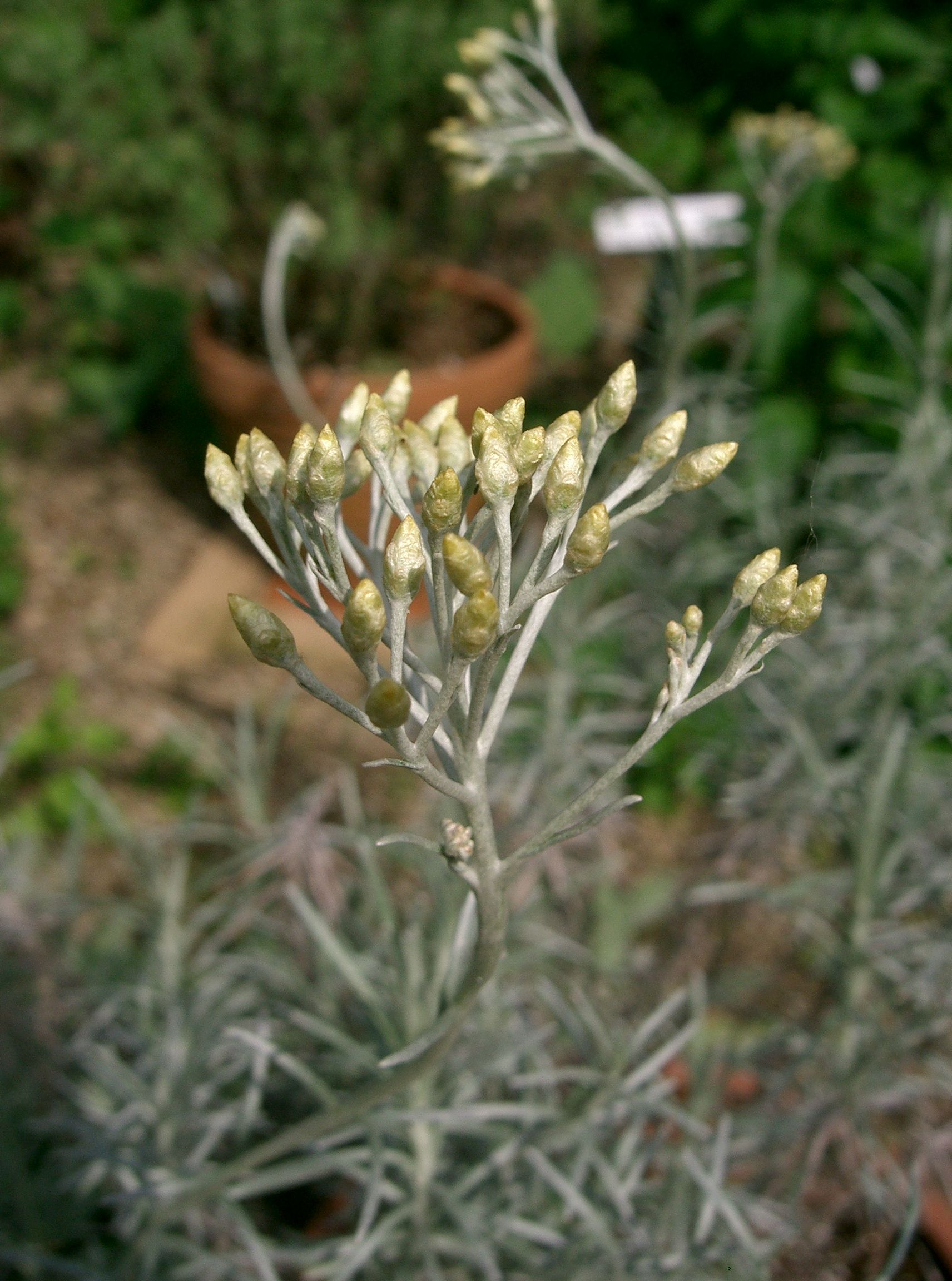
Curry plant is a silver Mediterranean subshrub grown as much for its warm, resinous foliage as for its yellow summer flowers, and it only really works here when we give it the driest, sharpest-draining corner we have. Curry plant is a silver Mediterranean subshrub grown as much for its warm, resinous foliage as for its yellow summer flowers, and it only really works here when we give it the driest, sharpest-draining corner we have.
The Plant That Smells Like Heat
Curry plant is one of those plants people notice before they can name it. Brush the foliage and it releases that warm, savory scent that explains the common name immediately. The leaves are narrow and silver, the stems make a soft shrubby mound, and by summer the plant carries clusters of small yellow flowers that sit like buttons above the foliage.
It is worth stating something plainly at the start: this is not the curry leaf tree used in South Asian cooking. The scent is what gave Helichrysum italicum its common name. In the garden, the plant is more about foliage, structure, and atmosphere than about the kitchen.
At The Patient Garden, that silver foliage is the real draw. It gives the hot side of the border a dry-climate clarity that Salem gardens sometimes need in late summer.
Why It Is Tricky on the Fairview Clay
Curry plant comes from Mediterranean conditions. That means sun, lean soil, and winter drainage are not preferences. They are requirements. Salem can provide the summer part of the deal easily enough. Our dry season gives this plant the heat and brightness it wants. The harder part is getting it through winter on heavy clay.
If we plant curry plant flat into an ordinary border on the old Fairview site, the odds are not good. Wet winter soil and a moisture-holding crown will shorten its life quickly. The only sensible approach is to give it a raised, mineral, sharply drained setting. Gravel shoulders, wall-side beds, and lifted herb borders are the right kind of places.
The Willamette Valley is full of plants that tolerate our wet season and then enjoy our dry summer. Curry plant is less tolerant than that. It needs us to shape the site around its drainage needs.
What to Expect Over Time
In the first year, curry plant often looks smaller than people expect. The root system is settling, and the plant is testing whether the site is dry enough to trust.
By the second year, a good planting starts to form a real silver mound. The stems branch more freely, the scent is stronger, and the plant begins to read as a structural piece rather than a small novelty.
By year three and beyond, a happy plant becomes woody at the base and more characterful. That does not mean it is immortal. In Salem, winter losses can still happen after a colder or wetter year. Curry plant is best treated as a subshrub we enjoy while it is vigorous, then renew if the base gets too tired.
Native Status and Garden Behavior
Helichrysum italicum is native to the Mediterranean region, not to Oregon. It is not invasive here. It stays in a clump, does not run, and does not seed around in any serious way in our climate. The real issue is not control. It is survival.
That makes it an honest plant for a patient garden. It asks for a site that matches its nature. If we give it the wrong site, it tells us quickly.
Pollinators and Seasonal Value
The yellow flowers are not enormous, but they do attract bees and other small insects. More than that, the plant contributes a useful contrast in form and foliage. Too many summer plantings become a blur of green unless we include silver, gray, and other dry-garden textures.
Curry plant also partners well with the kind of pollinator plants that do heavier lifting, such as lavender, thyme, oregano, and salvia. It helps the whole dry border look coherent.
Growing Tips for Salem Clay
Give full sun, and give the plant more mineral drainage than organic matter. Pumice, gravel, and a little modest compost are better than rich, dark soil. Water to establish, then reduce irrigation sharply. Keep mulch back from the crown. Shear lightly after flowering if the plant gets loose, but do not cut hard into old wood.
If a wet winter takes out part of the plant, cut the dead wood cleanly and reassess drainage before replacing it. The site is usually the lesson.
Where It Belongs
In The Patient Garden, curry plant belongs in the hottest herb-border company with lavender, rosemary, thyme, and artemisia. It does not belong in a moist mixed border or anywhere the clay stays heavy and cool for months. On the Fairview clay, that kind of honesty is useful. A plant that tells us exactly what kind of place it needs helps us garden more clearly.
The Plant That Smells Like Heat
Curry plant is one of those plants people notice before they can name it. Brush the foliage and it releases that warm, savory scent that explains the common name immediately. The leaves are narrow and silver, the stems make a soft shrubby mound, and by summer the plant carries clusters of small yellow flowers that sit like buttons above the foliage.
It is worth stating something plainly at the start: this is not the curry leaf tree used in South Asian cooking. The scent is what gave Helichrysum italicum its common name. In the garden, the plant is more about foliage, structure, and atmosphere than about the kitchen.
At The Patient Garden, that silver foliage is the real draw. It gives the hot side of the border a dry-climate clarity that Salem gardens sometimes need in late summer.
Why It Is Tricky on the Fairview Clay
Curry plant comes from Mediterranean conditions. That means sun, lean soil, and winter drainage are not preferences. They are requirements. Salem can provide the summer part of the deal easily enough. Our dry season gives this plant the heat and brightness it wants. The harder part is getting it through winter on heavy clay.
If we plant curry plant flat into an ordinary border on the old Fairview site, the odds are not good. Wet winter soil and a moisture-holding crown will shorten its life quickly. The only sensible approach is to give it a raised, mineral, sharply drained setting. Gravel shoulders, wall-side beds, and lifted herb borders are the right kind of places.
The Willamette Valley is full of plants that tolerate our wet season and then enjoy our dry summer. Curry plant is less tolerant than that. It needs us to shape the site around its drainage needs.
What to Expect Over Time
In the first year, curry plant often looks smaller than people expect. The root system is settling, and the plant is testing whether the site is dry enough to trust.
By the second year, a good planting starts to form a real silver mound. The stems branch more freely, the scent is stronger, and the plant begins to read as a structural piece rather than a small novelty.
By year three and beyond, a happy plant becomes woody at the base and more characterful. That does not mean it is immortal. In Salem, winter losses can still happen after a colder or wetter year. Curry plant is best treated as a subshrub we enjoy while it is vigorous, then renew if the base gets too tired.
Native Status and Garden Behavior
Helichrysum italicum is native to the Mediterranean region, not to Oregon. It is not invasive here. It stays in a clump, does not run, and does not seed around in any serious way in our climate. The real issue is not control. It is survival.
That makes it an honest plant for a patient garden. It asks for a site that matches its nature. If we give it the wrong site, it tells us quickly.
Pollinators and Seasonal Value
The yellow flowers are not enormous, but they do attract bees and other small insects. More than that, the plant contributes a useful contrast in form and foliage. Too many summer plantings become a blur of green unless we include silver, gray, and other dry-garden textures.
Curry plant also partners well with the kind of pollinator plants that do heavier lifting, such as lavender, thyme, oregano, and salvia. It helps the whole dry border look coherent.
Growing Tips for Salem Clay
Give full sun, and give the plant more mineral drainage than organic matter. Pumice, gravel, and a little modest compost are better than rich, dark soil. Water to establish, then reduce irrigation sharply. Keep mulch back from the crown. Shear lightly after flowering if the plant gets loose, but do not cut hard into old wood.
If a wet winter takes out part of the plant, cut the dead wood cleanly and reassess drainage before replacing it. The site is usually the lesson.
Where It Belongs
In The Patient Garden, curry plant belongs in the hottest herb-border company with lavender, rosemary, thyme, and artemisia. It does not belong in a moist mixed border or anywhere the clay stays heavy and cool for months. On the Fairview clay, that kind of honesty is useful. A plant that tells us exactly what kind of place it needs helps us garden more clearly.
Continue Continuar