Elfin thyme Elfin thyme
Thymus serpyllum 'Elfin'
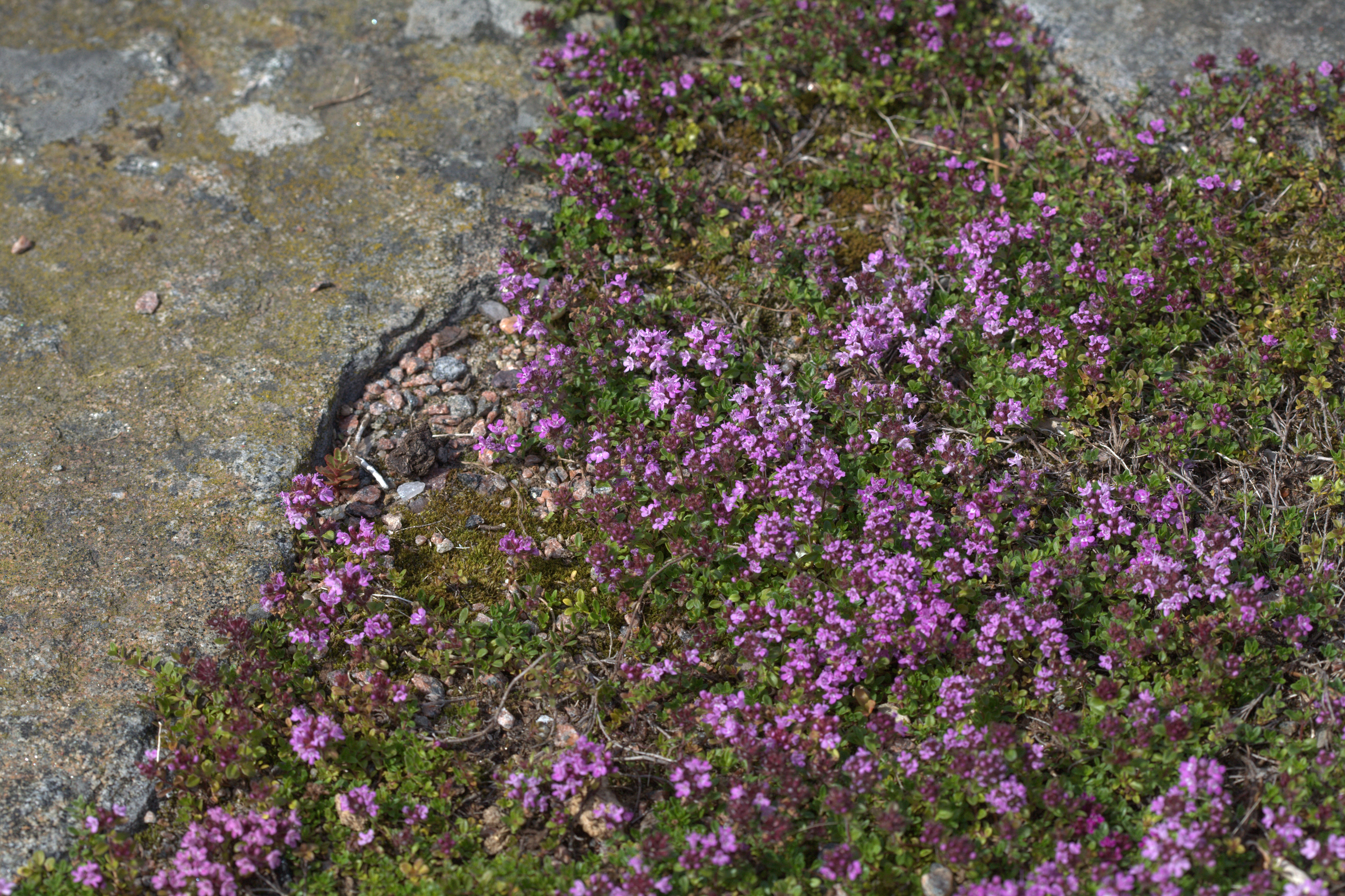
Elfin thyme is the tiniest of the creeping thymes, forming a miniature cushion that fits into stepping-stone joints, gravel seams, and the smallest hot gaps where a larger ground cover would feel coarse. Elfin thyme is the tiniest of the creeping thymes, forming a miniature cushion that fits into stepping-stone joints, gravel seams, and the smallest hot gaps where a larger ground cover would feel coarse.
The Tiny Thyme for Tiny Spaces
Elfin thyme is a plant for people who notice details at ankle height. It is not the thyme that covers a broad strip beside the path. It is the thyme that settles into the quarter-inch seam between stones, the tiny lip of soil beside a border brick, or the shallow pocket at the front of a raised bed where larger plants would bully the space. In The Patient Garden, those small places matter. They are where the difference between a garden that feels abrupt and one that feels knitted together really shows.
What makes elfin thyme special is scale. The leaves are especially small, the stems stay very low, and the overall habit is denser and more miniature than ordinary creeping thyme. When it blooms, the flowers hover just above the mat like a fine mist. It is subtle, but it is not forgettable.
Why It Likes Our Hottest Margins
Elfin thyme wants the same basic conditions all the best thymes want: full sun, lean soil, and excellent drainage. On the Fairview clay, that means we do not plant it in the middle of a flat heavy bed and hope for the best. We tuck it into the spots where water runs off quickly and the soil stays thin. Between stepping stones, along gravel path shoulders, and at the edge of raised masonry are the places where it makes the most sense.
That combination of winter drainage and summer heat is the whole game. Salem's dry summers are ideal once the plant is established. Our wet winters are the test. If the crown stays wet under fallen leaves or thick mulch, the plant declines. If the crown stays exposed to light and air, it is surprisingly resilient.
Year by Year Expectations
Year one looks modest. A little plug sits there as if nothing is happening, and then by late summer you notice it has quietly widened into the surrounding grit. Year two is when the true character of the plant starts to show. The cushion gets denser, the edges feather out neatly, and the plant looks as if it grew there on purpose. By years three and four, a happy planting becomes a tight low mat that can hold a seam or soften a stone edge beautifully.
Because the growth is so compact, elfin thyme can seem slower than other thymes. It is slower. That is part of the appeal. It stays fine-textured and controlled instead of turning into a broad patch all at once.
Not Native and Easy to Manage
Elfin thyme is not native to Oregon. It is a cultivated garden thyme selection, and it behaves like one. It spreads slowly, stays low, and never becomes a nuisance. If a section gets too thick, you lift and divide it. If it creeps where you do not want it, you pull it. There is no drama involved.
Pollinators and Usefulness
The flowers are small, but bees still find them. That is one of the pleasures of low thyme plantings in general: the flower scale may be tiny to us, but the pollinator traffic can still be steady. Elfin thyme is not the biggest nectar engine in the garden, yet it contributes meaningfully in a place where many paving-edge plants offer no nectar at all.
It also gives us a way to keep micro-spaces planted. Bare joints and thin dry strips tend to collect weeds. A dense thyme cushion turns those nuisance spaces into part of the planting design instead.
Growing Tips for Salem Clay
Use the smallest starts you can find and plant them into a gritty pocket rather than a rich one. Water carefully through the first summer, especially if the plant is set among stones that heat up quickly. After that, let it get by mostly on rainfall and occasional deep summer watering in extended drought.
Do not bury it in mulch. Do not feed it heavily. Do not expect it to thrive in shade. Almost every failure with elfin thyme comes from too much softness: too much moisture, too much organic matter, or too little sun.
Where It Fits Best
In The Patient Garden, elfin thyme belongs wherever we want a tiny plant to do precise work: the narrow joints of the stepping-stone path, the thin ledge at the front of a hot bed, the smallest gravel seams where a regular ground cover would read as too blunt. It is a detail plant, but the details are what make a place feel looked after. That is reason enough to grow it.
The Tiny Thyme for Tiny Spaces
Elfin thyme is a plant for people who notice details at ankle height. It is not the thyme that covers a broad strip beside the path. It is the thyme that settles into the quarter-inch seam between stones, the tiny lip of soil beside a border brick, or the shallow pocket at the front of a raised bed where larger plants would bully the space. In The Patient Garden, those small places matter. They are where the difference between a garden that feels abrupt and one that feels knitted together really shows.
What makes elfin thyme special is scale. The leaves are especially small, the stems stay very low, and the overall habit is denser and more miniature than ordinary creeping thyme. When it blooms, the flowers hover just above the mat like a fine mist. It is subtle, but it is not forgettable.
Why It Likes Our Hottest Margins
Elfin thyme wants the same basic conditions all the best thymes want: full sun, lean soil, and excellent drainage. On the Fairview clay, that means we do not plant it in the middle of a flat heavy bed and hope for the best. We tuck it into the spots where water runs off quickly and the soil stays thin. Between stepping stones, along gravel path shoulders, and at the edge of raised masonry are the places where it makes the most sense.
That combination of winter drainage and summer heat is the whole game. Salem's dry summers are ideal once the plant is established. Our wet winters are the test. If the crown stays wet under fallen leaves or thick mulch, the plant declines. If the crown stays exposed to light and air, it is surprisingly resilient.
Year by Year Expectations
Year one looks modest. A little plug sits there as if nothing is happening, and then by late summer you notice it has quietly widened into the surrounding grit. Year two is when the true character of the plant starts to show. The cushion gets denser, the edges feather out neatly, and the plant looks as if it grew there on purpose. By years three and four, a happy planting becomes a tight low mat that can hold a seam or soften a stone edge beautifully.
Because the growth is so compact, elfin thyme can seem slower than other thymes. It is slower. That is part of the appeal. It stays fine-textured and controlled instead of turning into a broad patch all at once.
Not Native and Easy to Manage
Elfin thyme is not native to Oregon. It is a cultivated garden thyme selection, and it behaves like one. It spreads slowly, stays low, and never becomes a nuisance. If a section gets too thick, you lift and divide it. If it creeps where you do not want it, you pull it. There is no drama involved.
Pollinators and Usefulness
The flowers are small, but bees still find them. That is one of the pleasures of low thyme plantings in general: the flower scale may be tiny to us, but the pollinator traffic can still be steady. Elfin thyme is not the biggest nectar engine in the garden, yet it contributes meaningfully in a place where many paving-edge plants offer no nectar at all.
It also gives us a way to keep micro-spaces planted. Bare joints and thin dry strips tend to collect weeds. A dense thyme cushion turns those nuisance spaces into part of the planting design instead.
Growing Tips for Salem Clay
Use the smallest starts you can find and plant them into a gritty pocket rather than a rich one. Water carefully through the first summer, especially if the plant is set among stones that heat up quickly. After that, let it get by mostly on rainfall and occasional deep summer watering in extended drought.
Do not bury it in mulch. Do not feed it heavily. Do not expect it to thrive in shade. Almost every failure with elfin thyme comes from too much softness: too much moisture, too much organic matter, or too little sun.
Where It Fits Best
In The Patient Garden, elfin thyme belongs wherever we want a tiny plant to do precise work: the narrow joints of the stepping-stone path, the thin ledge at the front of a hot bed, the smallest gravel seams where a regular ground cover would read as too blunt. It is a detail plant, but the details are what make a place feel looked after. That is reason enough to grow it.
Continue Continuar