False indigo False indigo
Baptisia spp.
False indigo is the deep-rooted perennial that takes its time, then becomes one of the steadiest plants in the sunny border with spring flower spikes, blue-green foliage, and handsome seed pods. False indigo is the deep-rooted perennial that takes its time, then becomes one of the steadiest plants in the sunny border with spring flower spikes, blue-green foliage, and handsome seed pods.
The Perennial for Patient Gardeners
False indigo is one of the best examples of a plant that rewards the long view. It does not leap out of the ground and dominate in year one. It settles in, works quietly on its root system, and asks us not to fuss over it too much. Then, a few seasons later, it becomes one of the strongest and most self-possessed plants in the whole border.
That rhythm feels right at The Patient Garden. On the Fairview site, where soil improvement is gradual and we are always learning what can truly anchor itself in the clay, false indigo makes a kind of moral sense. It is patient in the exact way good perennials often are.
Why It Can Handle the Fairview Clay
Most garden false indigos belong to the genus Baptisia, a group of North American prairie and open-ground perennials with deep root systems and a strong tolerance for drought once established. That root system is the important part. A mature baptisia can reach down and steady itself in a way shallower-rooted plants never quite manage.
The catch is establishment. On heavy clay, the first year or two matter. A planting hole opened up with compost and some mineral amendment helps the young crown get started, but once the plant is in, it is best not to keep disturbing it. False indigo resents frequent moving. Choose the spot carefully and let it stay.
Year by Year
Year one is often modest and a little disappointing if you are expecting instant fullness. Year two is better. The clump broadens, the stems strengthen, and the flower spikes start to look intentional. Year three is often the turning point. Suddenly the plant has presence. From there it can go on for many years with very little intervention.
This is why divisions are not usually the first strategy with baptisias. They are happier settling into a place and deepening there. The plant teaches us to stop treating every perennial like something that needs rearranging every other spring.
Not Native to Oregon, But Native in Spirit
False indigos are not native to Oregon, though the genus is native to other parts of North America. That matters. They bring a prairie perennial's toughness and ecological usefulness without becoming invasive or unruly here. A baptisia stays in a clump, holds itself well, and makes strong seasonal structure.
Pollinators and Seed Pods
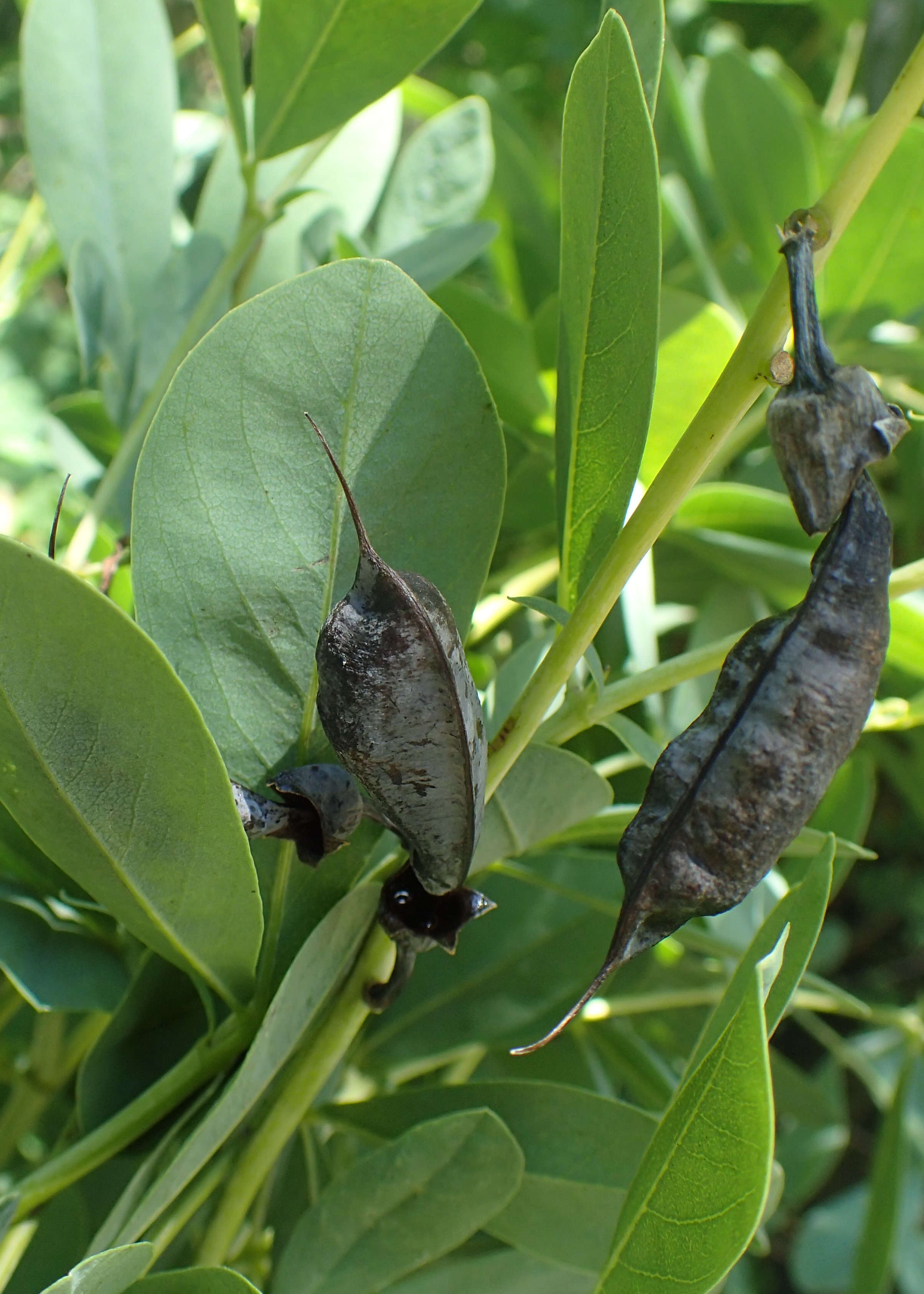
The spring flower spikes are highly attractive to bees, especially bumblebees that can work the pea-family flowers effectively. After bloom, the seed pods take over as the ornamental feature. They darken and rattle in summer and early fall, which gives the plant interest long after the flowers are gone.
That long arc of usefulness is one of false indigo's best qualities. It offers bloom, foliage, form, and pods without collapsing into mess in between.
Growing Tips for Salem Clay
Plant in full sun and plan for permanence. Water through the first couple of summers while the root system establishes, then back off. Once mature, false indigo is remarkably drought-tolerant in Salem. Avoid rich constant feeding. The plant does not need it, and softer growth is rarely an improvement.
Because the roots run deep, planting small younger specimens is often wiser than trying to install an oversized older one. Small plants adapt better and catch up over time.
Where It Fits
In The Patient Garden, false indigo belongs in the sunny border among other long-lived perennials that appreciate drainage and a little breathing room: veronica, blanket flower, coreopsis, and the tougher salvias. It is a plant that makes the whole bed feel more mature after a few years. Not many perennials do that as convincingly.
The Perennial for Patient Gardeners
False indigo is one of the best examples of a plant that rewards the long view. It does not leap out of the ground and dominate in year one. It settles in, works quietly on its root system, and asks us not to fuss over it too much. Then, a few seasons later, it becomes one of the strongest and most self-possessed plants in the whole border.
That rhythm feels right at The Patient Garden. On the Fairview site, where soil improvement is gradual and we are always learning what can truly anchor itself in the clay, false indigo makes a kind of moral sense. It is patient in the exact way good perennials often are.
Why It Can Handle the Fairview Clay
Most garden false indigos belong to the genus Baptisia, a group of North American prairie and open-ground perennials with deep root systems and a strong tolerance for drought once established. That root system is the important part. A mature baptisia can reach down and steady itself in a way shallower-rooted plants never quite manage.
The catch is establishment. On heavy clay, the first year or two matter. A planting hole opened up with compost and some mineral amendment helps the young crown get started, but once the plant is in, it is best not to keep disturbing it. False indigo resents frequent moving. Choose the spot carefully and let it stay.
Year by Year
Year one is often modest and a little disappointing if you are expecting instant fullness. Year two is better. The clump broadens, the stems strengthen, and the flower spikes start to look intentional. Year three is often the turning point. Suddenly the plant has presence. From there it can go on for many years with very little intervention.
This is why divisions are not usually the first strategy with baptisias. They are happier settling into a place and deepening there. The plant teaches us to stop treating every perennial like something that needs rearranging every other spring.
Not Native to Oregon, But Native in Spirit
False indigos are not native to Oregon, though the genus is native to other parts of North America. That matters. They bring a prairie perennial's toughness and ecological usefulness without becoming invasive or unruly here. A baptisia stays in a clump, holds itself well, and makes strong seasonal structure.
Pollinators and Seed Pods
The spring flower spikes are highly attractive to bees, especially bumblebees that can work the pea-family flowers effectively. After bloom, the seed pods take over as the ornamental feature. They darken and rattle in summer and early fall, which gives the plant interest long after the flowers are gone.
That long arc of usefulness is one of false indigo's best qualities. It offers bloom, foliage, form, and pods without collapsing into mess in between.
Growing Tips for Salem Clay
Plant in full sun and plan for permanence. Water through the first couple of summers while the root system establishes, then back off. Once mature, false indigo is remarkably drought-tolerant in Salem. Avoid rich constant feeding. The plant does not need it, and softer growth is rarely an improvement.
Because the roots run deep, planting small younger specimens is often wiser than trying to install an oversized older one. Small plants adapt better and catch up over time.
Where It Fits
In The Patient Garden, false indigo belongs in the sunny border among other long-lived perennials that appreciate drainage and a little breathing room: veronica, blanket flower, coreopsis, and the tougher salvias. It is a plant that makes the whole bed feel more mature after a few years. Not many perennials do that as convincingly.
Continue Continuar