Woolly thyme Woolly thyme
Thymus pseudolanuginosus
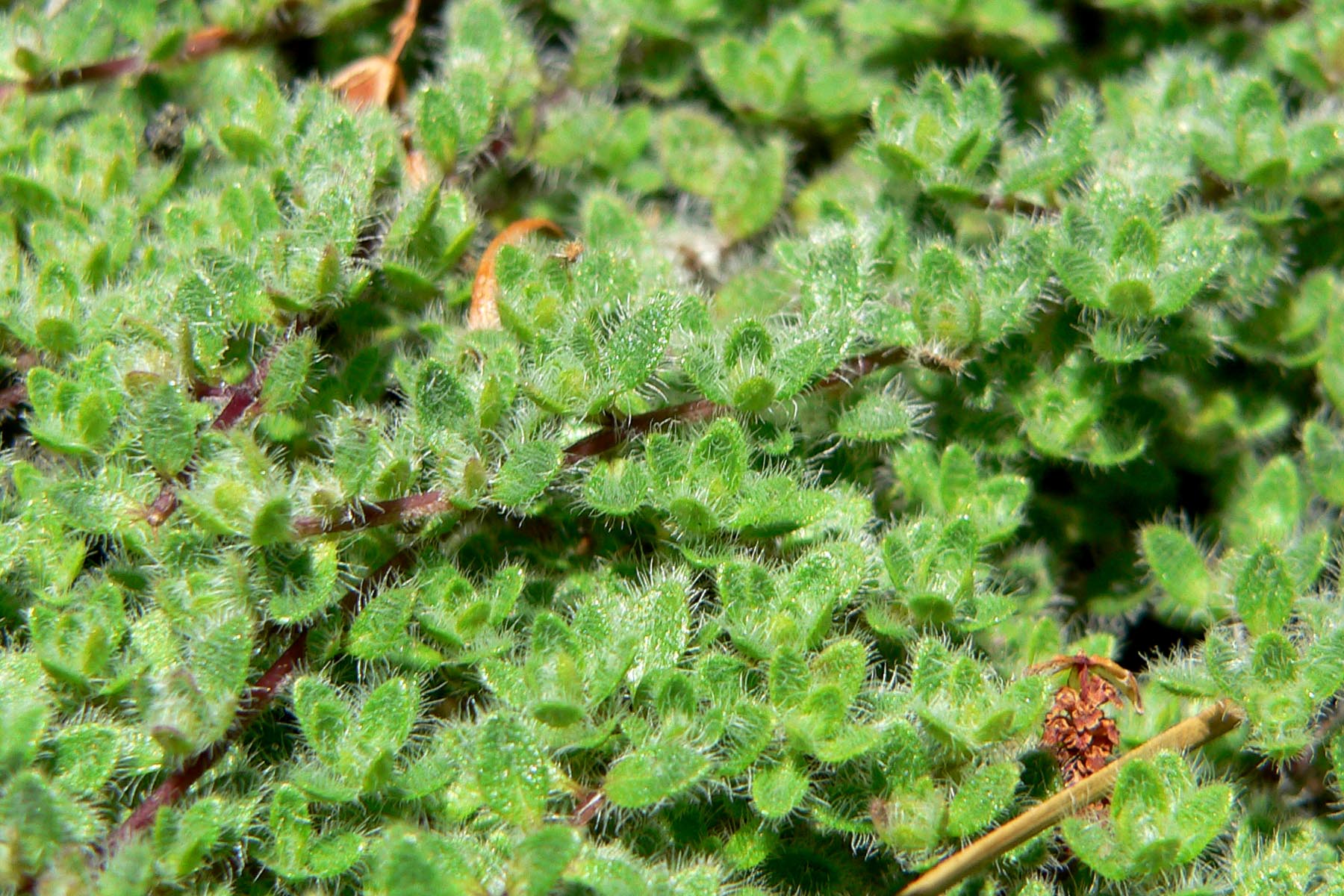
Woolly thyme is a silver-gray thyme grown as much for its soft, felted foliage as its flowers, making a dry edge look cooler, quieter, and more finished through the whole growing season. Woolly thyme is a silver-gray thyme grown as much for its soft, felted foliage as its flowers, making a dry edge look cooler, quieter, and more finished through the whole growing season.
The Thyme for Texture First
Woolly thyme earns its place before it ever blooms. The leaves are small, gray, and softly hairy, and from even a few feet away the plant reads as a pale, velvety mat. In a garden built around warm paper tones, clay soil, and summer glare, that cool silver color does a lot of visual work. At The Patient Garden, woolly thyme is the kind of plant that calms a hot spot down.
Unlike some flowering ground covers, it is not trying to steal the show. The bloom is light and pleasant, usually in soft pinks, but the real point is the foliage and the way the plant drapes itself over the edge of a bed or tucks into the joints between stone and soil. It gives us that finished, settled look without demanding much water or maintenance.
Why It Likes the Hard Places
Woolly thyme is perfectly suited to the brightest, driest, least coddled parts of a Salem garden. It likes the same general conditions as other low thymes: full sun, lean soil, and good drainage. On the Fairview clay, that translates to raised positions, gravelly shoulders, stone paths, and the spots where amended bed soil meets original compacted ground.
What it does not like is winter saturation. Our long rainy stretch from fall through spring is the one real risk. If the plant sits in clay that stays cold and wet, the stems blacken and the center opens up. The answer is not extra fertilizer or more compost. The answer is sharper drainage and less fuss.
Year by Year
In the first year, woolly thyme usually forms a small, low cushion with short runners beginning to move outward. It can look almost static at first, but the root system is establishing below the surface. In year two, the patch begins to broaden and soften around the edges. By year three, it is doing the thing most people want from it: spilling slightly, smoothing the line of a border, and reading as a continuous silver pad.
Older plantings can get woody in the center after several wet winters. If that happens, do not keep staring at the dead spot and hoping it recovers. Trim out the tired center, reset a few healthy edge pieces, and let the living perimeter grow back across the gap.
Not Native and Not Pushy
Woolly thyme is not native to Oregon. It comes from Mediterranean thyme ancestry and behaves exactly like a civilized garden plant here. It stays low, spreads slowly, and is easy to edit. It does not seed around or make a nuisance of itself.
Ecological Value
The flowers are not as showy as those of some other thymes, but bees still visit them. The pollinator value is useful, especially in a dry planting where every bloom surface matters. I would not plant woolly thyme as my main nectar plant, but I would absolutely use it as part of a ground-layer mosaic that also includes oregano, creeping thyme, sedums, and salvias.
The bigger ecological value may simply be that woolly thyme helps us keep hot bare soil covered. Ground covers that reduce open dirt, hold the edge of a path, and keep weeds from colonizing are part of a healthier planting system overall.
Growing Tips for Salem
Give woolly thyme the hottest site you have with reliable drainage. A south-facing slope is ideal. So are the edges of stone paths and the tops of retaining walls. Plant in spring, water consistently through the first summer, and then back off sharply. Keep organic mulch light or skip it entirely. If flower stems look untidy after bloom, trim them. If the plant is dense and happy, leave it alone.
Do not expect it to tolerate heavy foot traffic. It can take the occasional step, but it is better as a visual and aromatic edge than as a true walk-on carpet.
Where It Belongs
In The Patient Garden, woolly thyme fits best in the dry ornamental edges, especially next to stones, low sedums, and plants with darker foliage that make the silver leaves pop. It is one of the easiest ways to make a hot, exposed patch feel designed rather than abandoned. That is a valuable quality in any garden, and especially on the Fairview clay where the harsh spots are the ones we notice first.
The Thyme for Texture First
Woolly thyme earns its place before it ever blooms. The leaves are small, gray, and softly hairy, and from even a few feet away the plant reads as a pale, velvety mat. In a garden built around warm paper tones, clay soil, and summer glare, that cool silver color does a lot of visual work. At The Patient Garden, woolly thyme is the kind of plant that calms a hot spot down.
Unlike some flowering ground covers, it is not trying to steal the show. The bloom is light and pleasant, usually in soft pinks, but the real point is the foliage and the way the plant drapes itself over the edge of a bed or tucks into the joints between stone and soil. It gives us that finished, settled look without demanding much water or maintenance.
Why It Likes the Hard Places
Woolly thyme is perfectly suited to the brightest, driest, least coddled parts of a Salem garden. It likes the same general conditions as other low thymes: full sun, lean soil, and good drainage. On the Fairview clay, that translates to raised positions, gravelly shoulders, stone paths, and the spots where amended bed soil meets original compacted ground.
What it does not like is winter saturation. Our long rainy stretch from fall through spring is the one real risk. If the plant sits in clay that stays cold and wet, the stems blacken and the center opens up. The answer is not extra fertilizer or more compost. The answer is sharper drainage and less fuss.
Year by Year
In the first year, woolly thyme usually forms a small, low cushion with short runners beginning to move outward. It can look almost static at first, but the root system is establishing below the surface. In year two, the patch begins to broaden and soften around the edges. By year three, it is doing the thing most people want from it: spilling slightly, smoothing the line of a border, and reading as a continuous silver pad.
Older plantings can get woody in the center after several wet winters. If that happens, do not keep staring at the dead spot and hoping it recovers. Trim out the tired center, reset a few healthy edge pieces, and let the living perimeter grow back across the gap.
Not Native and Not Pushy
Woolly thyme is not native to Oregon. It comes from Mediterranean thyme ancestry and behaves exactly like a civilized garden plant here. It stays low, spreads slowly, and is easy to edit. It does not seed around or make a nuisance of itself.
Ecological Value
The flowers are not as showy as those of some other thymes, but bees still visit them. The pollinator value is useful, especially in a dry planting where every bloom surface matters. I would not plant woolly thyme as my main nectar plant, but I would absolutely use it as part of a ground-layer mosaic that also includes oregano, creeping thyme, sedums, and salvias.
The bigger ecological value may simply be that woolly thyme helps us keep hot bare soil covered. Ground covers that reduce open dirt, hold the edge of a path, and keep weeds from colonizing are part of a healthier planting system overall.
Growing Tips for Salem
Give woolly thyme the hottest site you have with reliable drainage. A south-facing slope is ideal. So are the edges of stone paths and the tops of retaining walls. Plant in spring, water consistently through the first summer, and then back off sharply. Keep organic mulch light or skip it entirely. If flower stems look untidy after bloom, trim them. If the plant is dense and happy, leave it alone.
Do not expect it to tolerate heavy foot traffic. It can take the occasional step, but it is better as a visual and aromatic edge than as a true walk-on carpet.
Where It Belongs
In The Patient Garden, woolly thyme fits best in the dry ornamental edges, especially next to stones, low sedums, and plants with darker foliage that make the silver leaves pop. It is one of the easiest ways to make a hot, exposed patch feel designed rather than abandoned. That is a valuable quality in any garden, and especially on the Fairview clay where the harsh spots are the ones we notice first.
Continue Continuar