Blue elderberry Blue elderberry
Sambucus nigra subsp. cerulea
Blue elderberry is a large native shrub or small tree that earns its keep fast, with creamy spring flowers, powder-blue fruit, and strong habitat value for birds and pollinators. It also fits the hotter, drier edges of a Salem garden better than many people expect, especially when we let it be a little loose and useful instead of forcing it into ornamental neatness. Blue elderberry is a large native shrub or small tree that earns its keep fast, with creamy spring flowers, powder-blue fruit, and strong habitat value for birds and pollinators. It also fits the hotter, drier edges of a Salem garden better than many people expect, especially when we let it be a little loose and useful instead of forcing it into ornamental neatness.
The Native Fruit Tree at the Dry Edge
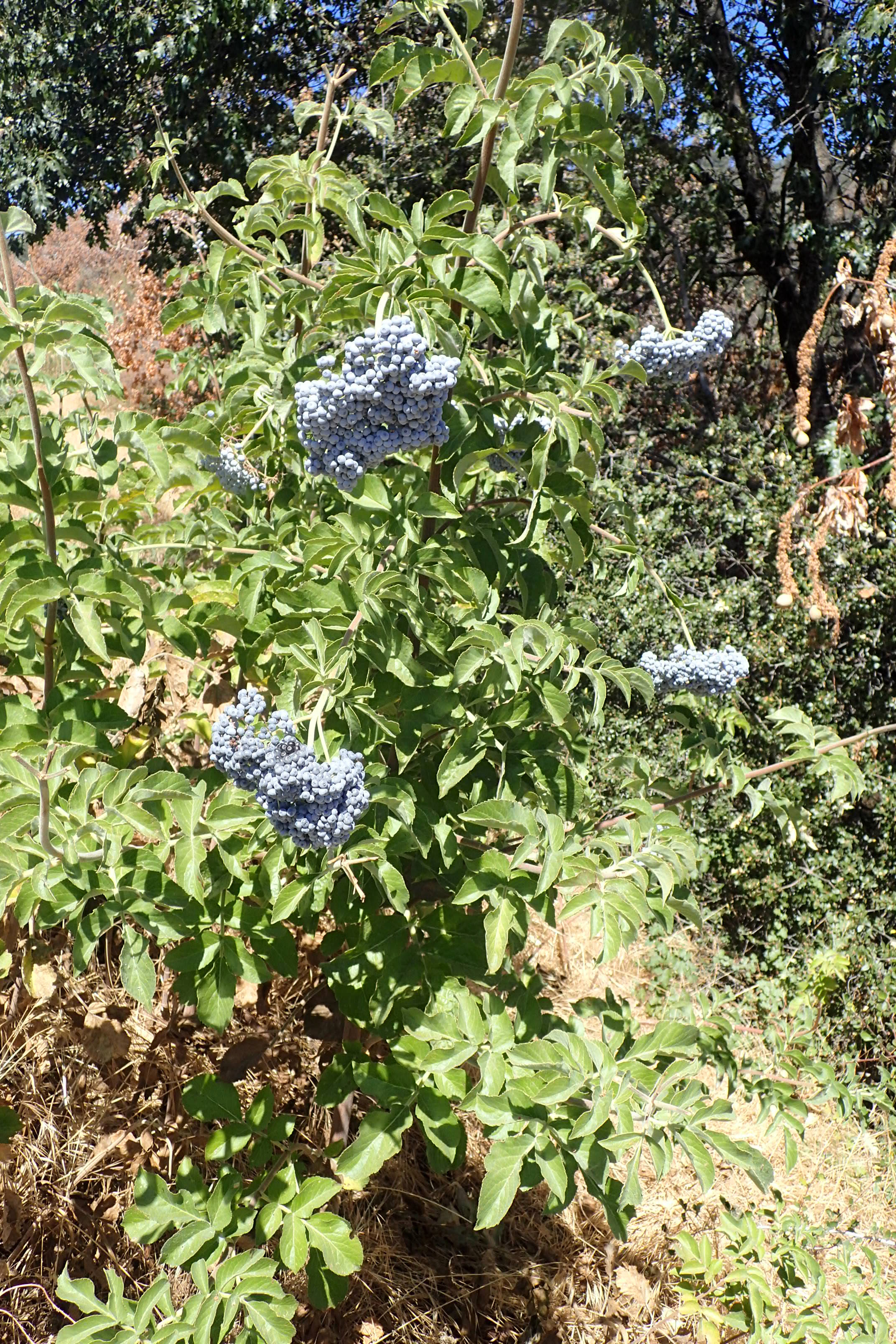
Blue elderberry often looks like the plant that knows more about summer than we do. By the time August has bleached grasses and tightened the soil, elderberry is still carrying soft foliage and heavy blue fruit with that dusty bloom that makes the clusters look almost painted. The plant can be a broad shrub or a small tree depending on how it is trained, and that flexibility is one reason it deserves more use in Willamette Valley gardens.
At The Patient Garden, blue elderberry fills an appealing niche. It is more drought-oriented than the black elder types many people know from wetter gardens. It flowers, fruits, and feeds wildlife quickly. And it reads as regional without requiring the scale of a canopy tree.
Shrub or Small Tree
This is one of the first honest conversations to have about blue elderberry. If what you want is a crisp, symmetrical, single-trunk ornamental, this may not be your plant. Blue elderberry naturally wants to be generous. It throws multiple stems, grows quickly, and can look broad and informal.
That is not a flaw. It is the plant's ecological strategy. The fast growth gives cover. The wide framework carries flowers and fruit within reach of birds. The somewhat loose habit lets it belong at the edge of a meadow, hedgerow, or habitat planting where a little abundance is welcome.
If you do want a small tree form, it can be trained that way by selecting a few main stems early and gradually lifting the lower growth. But even then it should keep some softness to its outline. Trying to force blue elderberry into a strict ornamental silhouette usually misses the point.
On the Fairview Clay
Blue elderberry is a better candidate for the Fairview clay than many people realize, especially on the drier side of the site. It is native to dry slopes, open woods, and stream-adjacent areas across much of the West, and it is comfortable with seasonal extremes as long as the roots are not left in stagnant winter water.
On our soil, I would site it where drainage is at least moderate and sun is generous. Full sun gives the strongest flowering and fruiting. A little light shade is acceptable, but too much shade leads to lanky growth and weaker berry production.
At planting time, loosen the soil widely, add only moderate compost, and mulch heavily. Water through the first two or three summers while the root system establishes. After that, blue elderberry usually handles Salem's dry season with much less help than wetter-site elderberries would ask for.
Year by Year
Blue elderberry moves quickly once it is happy. In the first couple of years, expect strong stem extension and a somewhat exuberant outline.
By years three through five, flowering and fruiting can become substantial. This is when the plant really starts to announce its value. Pollinators work the flower clusters in late spring, and birds begin to key in on the fruit later in summer.
Longer term, the plant can be renewed by removing a portion of the oldest stems at the base every few years if it becomes crowded. That kind of rotation pruning keeps the framework vigorous without fighting the natural character of the plant.
The Name Question
Blue elderberry is one of those western natives with active naming overlap. In contemporary horticulture and field use you will still see it called Sambucus cerulea and Sambucus mexicana. Oregon State University currently treats it as Sambucus nigra subsp. cerulea. It is worth recognizing all of those names because nursery labels and native plant references still vary.
Whatever name appears on the tag, the plant itself is the same useful western elder: glaucous blue fruit, pale flower clusters, and a strong relationship with birds and dry-edge habitats.
Wildlife Value
This is where blue elderberry really separates itself from many small ornamental trees. The flower clusters are busy with pollinators. The berries feed a long list of birds. The branching gives cover and nesting opportunity. Even the stems and foliage participate in the ordinary insect life that makes a planted space function as habitat.
If you are trying to build a neighborhood garden that feeds more than people, elderberry is one of the clearest yes plants available.
Native Status and Design Role
Blue elderberry is native across much of western North America, including Oregon. It belongs in habitat-minded regional plantings and can bridge the ornamental and ecological parts of a garden well. The flower clusters look good. The fruit is striking. The plant is not ugly or purely utilitarian. It is simply more honest and more active than a clipped landscape shrub.
I especially like it at the back or edge of a planting where it can lean a little into its own abundance without crowding smaller, tidier companions.
The Patient Perspective
Blue elderberry rewards a gardener who can distinguish between loose and sloppy. Left entirely alone in the wrong place, it can become too much. But given room, light, and the occasional renewal cut, it becomes one of the most generous plants in the whole planting.
On the Fairview clay, that generosity matters. We need species that can take some summer heat, build habitat quickly, and still feel rooted in the broader western landscape. Blue elderberry does all of that.
The Native Fruit Tree at the Dry Edge
Blue elderberry often looks like the plant that knows more about summer than we do. By the time August has bleached grasses and tightened the soil, elderberry is still carrying soft foliage and heavy blue fruit with that dusty bloom that makes the clusters look almost painted. The plant can be a broad shrub or a small tree depending on how it is trained, and that flexibility is one reason it deserves more use in Willamette Valley gardens.
At The Patient Garden, blue elderberry fills an appealing niche. It is more drought-oriented than the black elder types many people know from wetter gardens. It flowers, fruits, and feeds wildlife quickly. And it reads as regional without requiring the scale of a canopy tree.
Shrub or Small Tree
This is one of the first honest conversations to have about blue elderberry. If what you want is a crisp, symmetrical, single-trunk ornamental, this may not be your plant. Blue elderberry naturally wants to be generous. It throws multiple stems, grows quickly, and can look broad and informal.
That is not a flaw. It is the plant's ecological strategy. The fast growth gives cover. The wide framework carries flowers and fruit within reach of birds. The somewhat loose habit lets it belong at the edge of a meadow, hedgerow, or habitat planting where a little abundance is welcome.
If you do want a small tree form, it can be trained that way by selecting a few main stems early and gradually lifting the lower growth. But even then it should keep some softness to its outline. Trying to force blue elderberry into a strict ornamental silhouette usually misses the point.
On the Fairview Clay
Blue elderberry is a better candidate for the Fairview clay than many people realize, especially on the drier side of the site. It is native to dry slopes, open woods, and stream-adjacent areas across much of the West, and it is comfortable with seasonal extremes as long as the roots are not left in stagnant winter water.
On our soil, I would site it where drainage is at least moderate and sun is generous. Full sun gives the strongest flowering and fruiting. A little light shade is acceptable, but too much shade leads to lanky growth and weaker berry production.
At planting time, loosen the soil widely, add only moderate compost, and mulch heavily. Water through the first two or three summers while the root system establishes. After that, blue elderberry usually handles Salem's dry season with much less help than wetter-site elderberries would ask for.
Year by Year
Blue elderberry moves quickly once it is happy. In the first couple of years, expect strong stem extension and a somewhat exuberant outline.
By years three through five, flowering and fruiting can become substantial. This is when the plant really starts to announce its value. Pollinators work the flower clusters in late spring, and birds begin to key in on the fruit later in summer.
Longer term, the plant can be renewed by removing a portion of the oldest stems at the base every few years if it becomes crowded. That kind of rotation pruning keeps the framework vigorous without fighting the natural character of the plant.
The Name Question
Blue elderberry is one of those western natives with active naming overlap. In contemporary horticulture and field use you will still see it called Sambucus cerulea and Sambucus mexicana. Oregon State University currently treats it as Sambucus nigra subsp. cerulea. It is worth recognizing all of those names because nursery labels and native plant references still vary.
Whatever name appears on the tag, the plant itself is the same useful western elder: glaucous blue fruit, pale flower clusters, and a strong relationship with birds and dry-edge habitats.
Wildlife Value
This is where blue elderberry really separates itself from many small ornamental trees. The flower clusters are busy with pollinators. The berries feed a long list of birds. The branching gives cover and nesting opportunity. Even the stems and foliage participate in the ordinary insect life that makes a planted space function as habitat.
If you are trying to build a neighborhood garden that feeds more than people, elderberry is one of the clearest yes plants available.
Native Status and Design Role
Blue elderberry is native across much of western North America, including Oregon. It belongs in habitat-minded regional plantings and can bridge the ornamental and ecological parts of a garden well. The flower clusters look good. The fruit is striking. The plant is not ugly or purely utilitarian. It is simply more honest and more active than a clipped landscape shrub.
I especially like it at the back or edge of a planting where it can lean a little into its own abundance without crowding smaller, tidier companions.
The Patient Perspective
Blue elderberry rewards a gardener who can distinguish between loose and sloppy. Left entirely alone in the wrong place, it can become too much. But given room, light, and the occasional renewal cut, it becomes one of the most generous plants in the whole planting.
On the Fairview clay, that generosity matters. We need species that can take some summer heat, build habitat quickly, and still feel rooted in the broader western landscape. Blue elderberry does all of that.
Continue Continuar