Cascara Cascara
Frangula purshiana
Cascara is a native understory tree with glossy leaves, modest flowers, and dark fruit that birds use heavily in late season. It does not shout for attention from across the street, but on the Fairview clay it may be one of the most sensible small native trees we can plant for shade edges, habitat, and long-term steadiness. Cascara is a native understory tree with glossy leaves, modest flowers, and dark fruit that birds use heavily in late season. It does not shout for attention from across the street, but on the Fairview clay it may be one of the most sensible small native trees we can plant for shade edges, habitat, and long-term steadiness.
The Understory Tree Worth Learning by Name
Cascara is not flashy enough to sell itself. That is probably why so many gardeners know the bark medicine history or the old name Rhamnus purshiana before they know the tree as a living plant. But once you start paying attention to it in the landscape, cascara becomes very easy to respect.
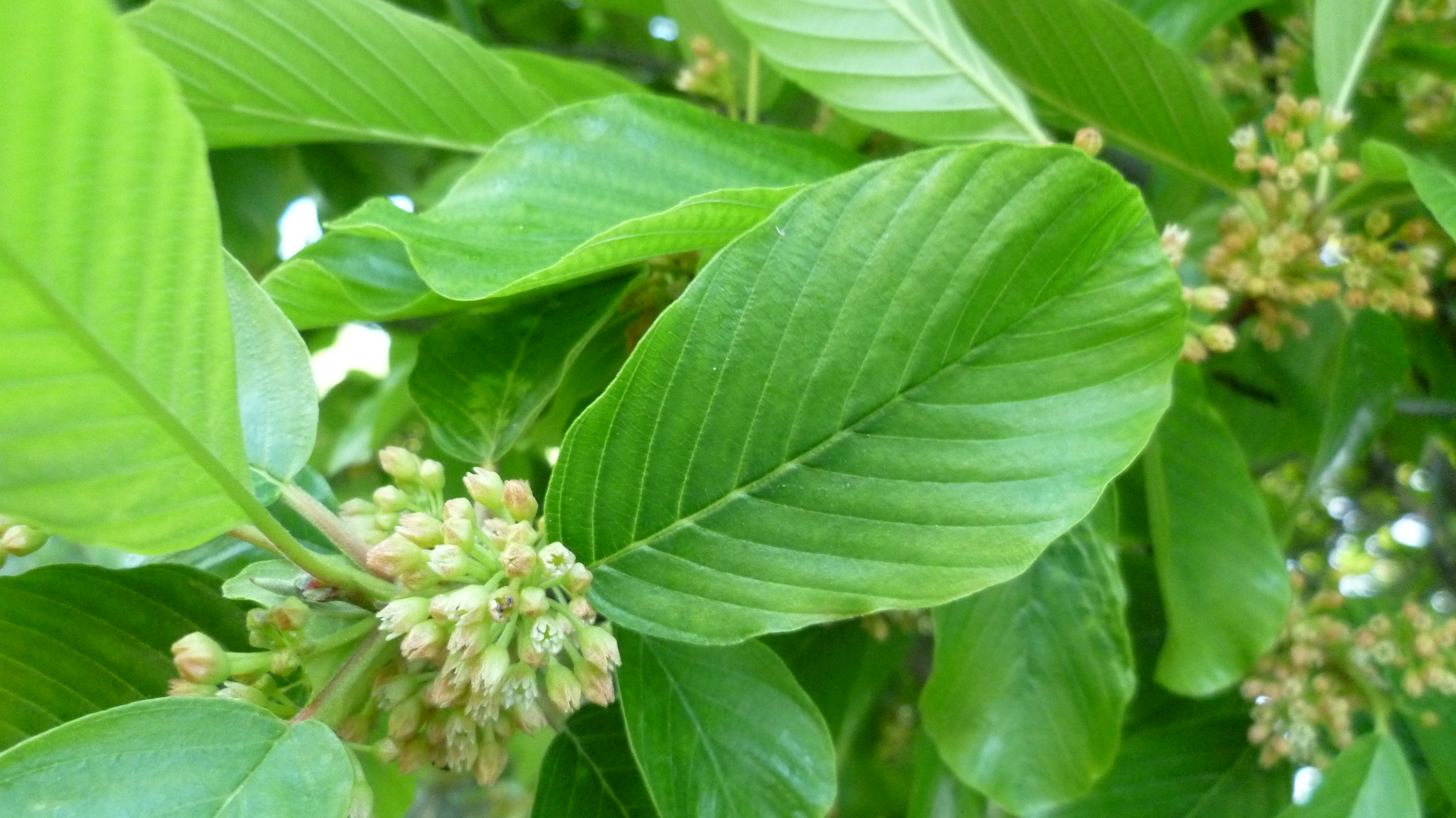
It is a small native tree of woodland edges, stream-adjacent slopes, and mixed forests in the Pacific Northwest. The leaves are glossy and clean, with a calm, slightly tropical look that belies how thoroughly the tree belongs here. The flowers are small and yellow-green. The fruit matures through red to deep purple-black. Birds use it hard.
At The Patient Garden, cascara reads as a habitat tree for the quieter parts of the site. It is the kind of plant that makes the garden richer without demanding center stage.
Why Cascara Is So Useful
A lot of native tree conversations in the Willamette Valley go straight to the giants: oak, fir, maple, alder. Those all matter. But neighborhood gardens also need smaller native trees that can slip into tighter spaces, take some shade, and still contribute real ecological value. Cascara is one of the best answers to that problem.
It tends to be more restrained than red alder, more forgiving of clay than madrone, and more naturally woodland-oriented than bitter cherry. It can live at the north edge of a yard, beneath larger canopies, or beside a path that wants filtered shade rather than deep gloom.
Cascara also ages well. The bark develops interest over time, the branching stays graceful, and the tree keeps a composed form without much intervention. It is a patient gardener's kind of native: useful, steady, and better every year it is left alone.
On the Fairview Clay
Cascara is one of the natives I trust more than most on our soil. It naturally tolerates seasonally moist conditions better than many small ornamental trees, and it is comfortable in the kind of woodland soil patterns that include winter wet and summer dry-down.
That does not mean planting it in a puddle. On the Fairview clay, I would still avoid the most compacted low spots where water sits for weeks. But the tree is very appropriate for the cooler, moister side of the site where a madrone or paperbark maple would complain.
Dig a wide hole, use modest compost if the soil is badly beaten up, and then rely on mulch and time. The tree appreciates moisture during establishment, and once rooted it usually handles Salem's summer drought with minimal help unless the season is unusually long and hot.
Year by Year
Cascara often starts with quiet, steady growth rather than drama. The first years can feel almost uneventful if you are used to fast nurse trees. That is fine. The tree is building a framework suited to partial shade and long service.
By years four through six, the crown begins to fill, and the tree starts to read clearly as a small understory canopy rather than a sapling. Fruit production usually becomes more noticeable as the tree matures.
By year ten, a good cascara can anchor the middle layer of a planting beautifully. It is large enough to matter, but still scaled for ordinary residential space.
Native Status, Naming, and History
Cascara is native to the Pacific Northwest and the broader western coastal region. The current scientific name is Frangula purshiana, though many gardeners, field guides, and older references still use Rhamnus purshiana. It is worth knowing both names because both still circulate.
The bark has a long medicinal history and was harvested commercially as a laxative. That history explains the common name for many people, but in a garden setting I think the more important point is that cascara is a legitimate native tree in its own right, not just a plant known for one extracted use.
Wildlife Value
Cascara is a strong habitat tree. The flowers serve insects even if they do not make a visual spectacle. The fruit is heavily used by birds. The foliage supports the ordinary invertebrate life that feeds nesting birds, and the branching provides cover in the layered middle canopy.
This is exactly the sort of tree that helps a neighborhood planting move from decorative to ecological. You may not get a dramatic moment out of cascara, but you will get a lot of quiet usefulness.
Management and Design Role
Maintenance is light. Prune for structure when young, then mostly leave it alone. If you want a cleaner single-trunk form, begin shaping early. If you want a softer, more woodland look, let the branching stay lower.
Cascara pairs well with ferns, Oregon grape, snowberry, sword fern, and shade-tolerant perennials. It is also a good companion to larger native canopy trees because it occupies a smaller vertical layer without becoming invisible.
The Patient Perspective
Cascara is a reminder that not every worthwhile tree has to perform for us first. Some trees earn their keep by making the whole garden function better for decades. They hold shade, feed birds, and knit layers together.
On the Fairview clay, where we are always looking for plants that are both durable and ecologically grounded, cascara feels like a tree we should know much better than we do.
The Understory Tree Worth Learning by Name
Cascara is not flashy enough to sell itself. That is probably why so many gardeners know the bark medicine history or the old name Rhamnus purshiana before they know the tree as a living plant. But once you start paying attention to it in the landscape, cascara becomes very easy to respect.
It is a small native tree of woodland edges, stream-adjacent slopes, and mixed forests in the Pacific Northwest. The leaves are glossy and clean, with a calm, slightly tropical look that belies how thoroughly the tree belongs here. The flowers are small and yellow-green. The fruit matures through red to deep purple-black. Birds use it hard.
At The Patient Garden, cascara reads as a habitat tree for the quieter parts of the site. It is the kind of plant that makes the garden richer without demanding center stage.
Why Cascara Is So Useful
A lot of native tree conversations in the Willamette Valley go straight to the giants: oak, fir, maple, alder. Those all matter. But neighborhood gardens also need smaller native trees that can slip into tighter spaces, take some shade, and still contribute real ecological value. Cascara is one of the best answers to that problem.
It tends to be more restrained than red alder, more forgiving of clay than madrone, and more naturally woodland-oriented than bitter cherry. It can live at the north edge of a yard, beneath larger canopies, or beside a path that wants filtered shade rather than deep gloom.
Cascara also ages well. The bark develops interest over time, the branching stays graceful, and the tree keeps a composed form without much intervention. It is a patient gardener's kind of native: useful, steady, and better every year it is left alone.
On the Fairview Clay
Cascara is one of the natives I trust more than most on our soil. It naturally tolerates seasonally moist conditions better than many small ornamental trees, and it is comfortable in the kind of woodland soil patterns that include winter wet and summer dry-down.
That does not mean planting it in a puddle. On the Fairview clay, I would still avoid the most compacted low spots where water sits for weeks. But the tree is very appropriate for the cooler, moister side of the site where a madrone or paperbark maple would complain.
Dig a wide hole, use modest compost if the soil is badly beaten up, and then rely on mulch and time. The tree appreciates moisture during establishment, and once rooted it usually handles Salem's summer drought with minimal help unless the season is unusually long and hot.
Year by Year
Cascara often starts with quiet, steady growth rather than drama. The first years can feel almost uneventful if you are used to fast nurse trees. That is fine. The tree is building a framework suited to partial shade and long service.
By years four through six, the crown begins to fill, and the tree starts to read clearly as a small understory canopy rather than a sapling. Fruit production usually becomes more noticeable as the tree matures.
By year ten, a good cascara can anchor the middle layer of a planting beautifully. It is large enough to matter, but still scaled for ordinary residential space.
Native Status, Naming, and History
Cascara is native to the Pacific Northwest and the broader western coastal region. The current scientific name is Frangula purshiana, though many gardeners, field guides, and older references still use Rhamnus purshiana. It is worth knowing both names because both still circulate.
The bark has a long medicinal history and was harvested commercially as a laxative. That history explains the common name for many people, but in a garden setting I think the more important point is that cascara is a legitimate native tree in its own right, not just a plant known for one extracted use.
Wildlife Value
Cascara is a strong habitat tree. The flowers serve insects even if they do not make a visual spectacle. The fruit is heavily used by birds. The foliage supports the ordinary invertebrate life that feeds nesting birds, and the branching provides cover in the layered middle canopy.
This is exactly the sort of tree that helps a neighborhood planting move from decorative to ecological. You may not get a dramatic moment out of cascara, but you will get a lot of quiet usefulness.
Management and Design Role
Maintenance is light. Prune for structure when young, then mostly leave it alone. If you want a cleaner single-trunk form, begin shaping early. If you want a softer, more woodland look, let the branching stay lower.
Cascara pairs well with ferns, Oregon grape, snowberry, sword fern, and shade-tolerant perennials. It is also a good companion to larger native canopy trees because it occupies a smaller vertical layer without becoming invisible.
The Patient Perspective
Cascara is a reminder that not every worthwhile tree has to perform for us first. Some trees earn their keep by making the whole garden function better for decades. They hold shade, feed birds, and knit layers together.
On the Fairview clay, where we are always looking for plants that are both durable and ecologically grounded, cascara feels like a tree we should know much better than we do.
Continue Continuar