Paperbark maple Paperbark maple
Acer griseum
Paperbark maple is one of the best small specimen trees for a Salem garden, combining peeling cinnamon bark, trifoliate leaves, and rich fall color in a size that fits where larger maples would overwhelm the space. It is not a native tree, but it behaves well, asks for sensible drainage on our clay, and earns its place by looking good in every season. Paperbark maple is one of the best small specimen trees for a Salem garden, combining peeling cinnamon bark, trifoliate leaves, and rich fall color in a size that fits where larger maples would overwhelm the space. It is not a native tree, but it behaves well, asks for sensible drainage on our clay, and earns its place by looking good in every season.
Bark Before Anything Else
Paperbark maple wins people over in winter. Long before anyone notices the leaves or samaras, they notice the bark: thin curls of cinnamon, chestnut, and orange-brown peeling away from the trunk in translucent sheets. In low winter light it looks almost backlit. In a garden where so much goes quiet after leaf drop, that bark keeps the tree fully present.
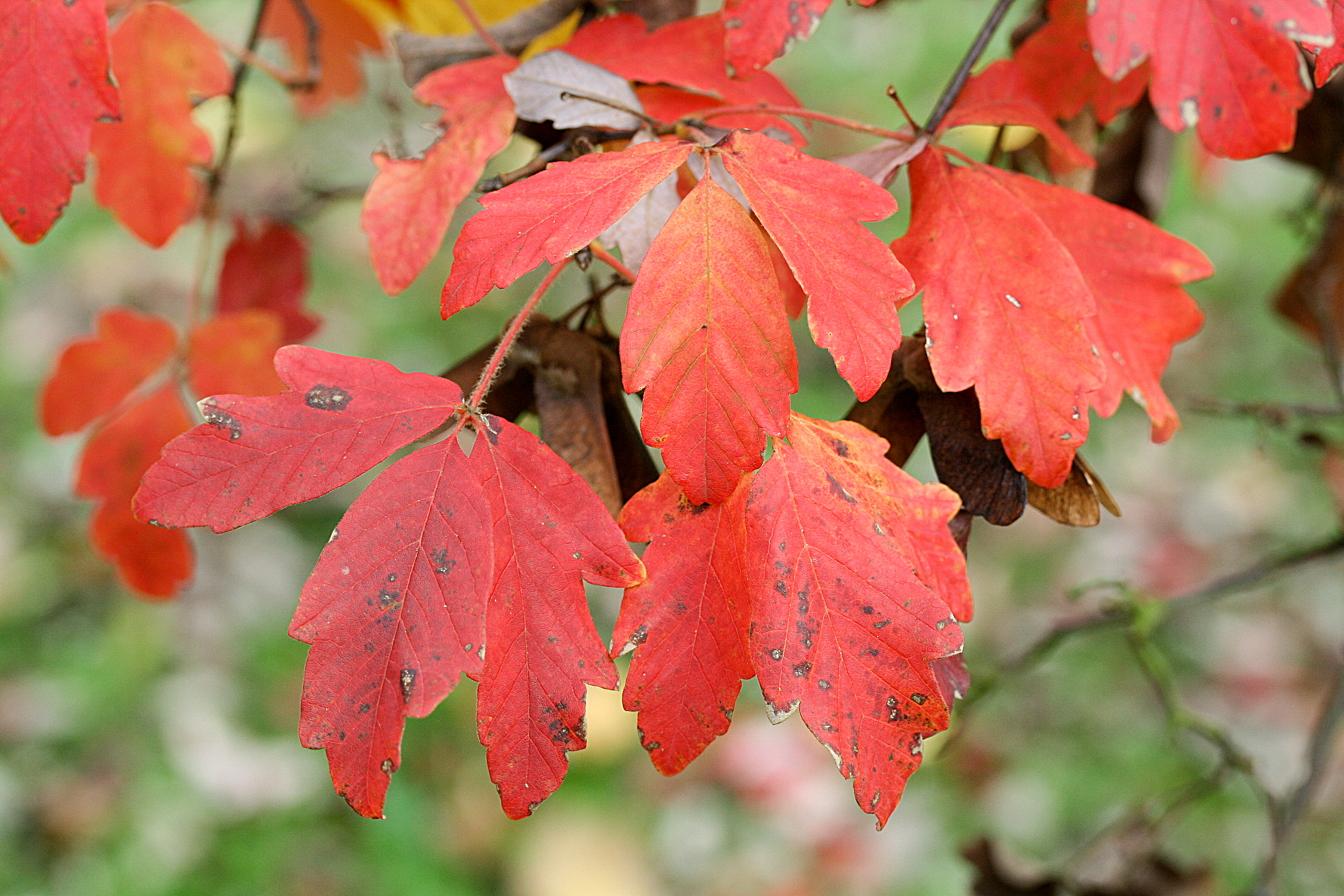
That alone would make paperbark maple useful. But the tree has more to offer than bark. The leaves are divided into three leaflets, finer and more elegant than the broad blades of bigleaf maple or red maple. In fall they turn a reliable mix of orange-red and scarlet. The overall habit is upright when young, broadening into a rounded, manageable crown with age.
For Salem gardens, that scale matters. This is a tree that can live near a house, frame a path, or anchor a smaller lawn without creating the lifetime negotiation required by sycamore, bigleaf maple, or Douglas fir.
Why It Works So Well in Small Gardens
Paperbark maple is patient in the best sense. It does not leap upward and force decisions before you are ready. The growth rate is moderate, often on the slow side in the first years, which gives the gardener time to see how the space is changing and what the tree wants to become.
Because the branching is graceful and the crown remains relatively open, the tree casts lighter shade than many maples. That means hellebores, ferns, woodland perennials, and spring bulbs can still do good work beneath it. In a neighborhood garden, where every square foot has to do multiple things, that is a major advantage.
It is also a tree for close viewing. A paperbark maple planted fifteen feet from a window or a walkway often gives more pleasure than a larger shade tree pushed to the edge of the lot. You can actually see the bark, the leaf texture, and the branch structure every day.
On the Fairview Clay
Paperbark maple is not difficult, but it is not a swamp tree either. On the Fairview clay, I would not put it in the lowest winter-wet corner and hope for the best. It wants even moisture in the growing season and drainage in winter.
The best approach is a wide planting hole, modest compost mixed into the backfill, and a broad mulch ring that improves the soil year by year. If the site holds water, mound the planting area slightly. If the site bakes in reflected heat, give the tree some afternoon protection while it is young. Morning sun with open light, or full sun with good soil moisture, usually works well in Salem.
Once established, paperbark maple tolerates our summer dry spell better than many people assume, but it looks best if it is not pushed into severe drought. Deep, occasional watering is better than frequent shallow irrigation.
Year by Year
In the first few years, the most important work happens below ground. Top growth can be modest, especially if the tree was planted carefully and is settling in rather than racing. Do not interpret moderate growth as failure.
By years four through six, the bark begins to show more of the peeling character that gives the tree its name. This is usually the stage when people start to understand why they planted it.
By year ten, a well-grown paperbark maple is often fifteen to twenty feet tall with a rounded, composed silhouette. It feels substantial without becoming overbearing. That is an excellent size for many Shall and Audubon lots.
Native Status and Landscape Role
Paperbark maple is native to central China, not to Oregon. It does not offer the same deep regional ecological role as oak, alder, or madrone. That said, it is well-behaved in our climate, not invasive, and valuable as a human-scale tree where a native species of comparable size and four-season ornament is harder to find.
There is room in The Patient Garden for both ideas at once: the ecologically foundational native trees that rebuild habitat, and the carefully chosen ornamentals that make small urban spaces livable and beautiful. Paperbark maple belongs in the second category.
Pollinators and Seasonal Value
The spring flowers are small and not flashy, but they are visited by insects. The samaras that follow are more interesting botanically than visually. Wildlife value is moderate rather than exceptional.
Its real strength is seasonal structure. Winter bark, spring leaf-out, summer fine texture, and strong fall color give the tree a four-season rhythm that reads clearly even in a modest garden. Few small trees do that as reliably.
The Patient Perspective
Paperbark maple rewards the gardener who notices subtle things. It is not planted for one dramatic bloom. It is planted for the peel of bark in January, the clean leaf shape in June, the first orange tones in October, and the way the tree slowly becomes indispensable.
In a garden on compacted clay, patience often means accepting that smaller, better-scaled trees can give more daily pleasure than bigger, faster ones. Paperbark maple is one of the best arguments for that way of thinking.
Bark Before Anything Else
Paperbark maple wins people over in winter. Long before anyone notices the leaves or samaras, they notice the bark: thin curls of cinnamon, chestnut, and orange-brown peeling away from the trunk in translucent sheets. In low winter light it looks almost backlit. In a garden where so much goes quiet after leaf drop, that bark keeps the tree fully present.
That alone would make paperbark maple useful. But the tree has more to offer than bark. The leaves are divided into three leaflets, finer and more elegant than the broad blades of bigleaf maple or red maple. In fall they turn a reliable mix of orange-red and scarlet. The overall habit is upright when young, broadening into a rounded, manageable crown with age.
For Salem gardens, that scale matters. This is a tree that can live near a house, frame a path, or anchor a smaller lawn without creating the lifetime negotiation required by sycamore, bigleaf maple, or Douglas fir.
Why It Works So Well in Small Gardens
Paperbark maple is patient in the best sense. It does not leap upward and force decisions before you are ready. The growth rate is moderate, often on the slow side in the first years, which gives the gardener time to see how the space is changing and what the tree wants to become.
Because the branching is graceful and the crown remains relatively open, the tree casts lighter shade than many maples. That means hellebores, ferns, woodland perennials, and spring bulbs can still do good work beneath it. In a neighborhood garden, where every square foot has to do multiple things, that is a major advantage.
It is also a tree for close viewing. A paperbark maple planted fifteen feet from a window or a walkway often gives more pleasure than a larger shade tree pushed to the edge of the lot. You can actually see the bark, the leaf texture, and the branch structure every day.
On the Fairview Clay
Paperbark maple is not difficult, but it is not a swamp tree either. On the Fairview clay, I would not put it in the lowest winter-wet corner and hope for the best. It wants even moisture in the growing season and drainage in winter.
The best approach is a wide planting hole, modest compost mixed into the backfill, and a broad mulch ring that improves the soil year by year. If the site holds water, mound the planting area slightly. If the site bakes in reflected heat, give the tree some afternoon protection while it is young. Morning sun with open light, or full sun with good soil moisture, usually works well in Salem.
Once established, paperbark maple tolerates our summer dry spell better than many people assume, but it looks best if it is not pushed into severe drought. Deep, occasional watering is better than frequent shallow irrigation.
Year by Year
In the first few years, the most important work happens below ground. Top growth can be modest, especially if the tree was planted carefully and is settling in rather than racing. Do not interpret moderate growth as failure.
By years four through six, the bark begins to show more of the peeling character that gives the tree its name. This is usually the stage when people start to understand why they planted it.
By year ten, a well-grown paperbark maple is often fifteen to twenty feet tall with a rounded, composed silhouette. It feels substantial without becoming overbearing. That is an excellent size for many Shall and Audubon lots.
Native Status and Landscape Role
Paperbark maple is native to central China, not to Oregon. It does not offer the same deep regional ecological role as oak, alder, or madrone. That said, it is well-behaved in our climate, not invasive, and valuable as a human-scale tree where a native species of comparable size and four-season ornament is harder to find.
There is room in The Patient Garden for both ideas at once: the ecologically foundational native trees that rebuild habitat, and the carefully chosen ornamentals that make small urban spaces livable and beautiful. Paperbark maple belongs in the second category.
Pollinators and Seasonal Value
The spring flowers are small and not flashy, but they are visited by insects. The samaras that follow are more interesting botanically than visually. Wildlife value is moderate rather than exceptional.
Its real strength is seasonal structure. Winter bark, spring leaf-out, summer fine texture, and strong fall color give the tree a four-season rhythm that reads clearly even in a modest garden. Few small trees do that as reliably.
The Patient Perspective
Paperbark maple rewards the gardener who notices subtle things. It is not planted for one dramatic bloom. It is planted for the peel of bark in January, the clean leaf shape in June, the first orange tones in October, and the way the tree slowly becomes indispensable.
In a garden on compacted clay, patience often means accepting that smaller, better-scaled trees can give more daily pleasure than bigger, faster ones. Paperbark maple is one of the best arguments for that way of thinking.
Continue Continuar