Parrotia Parrotia
Parrotia persica
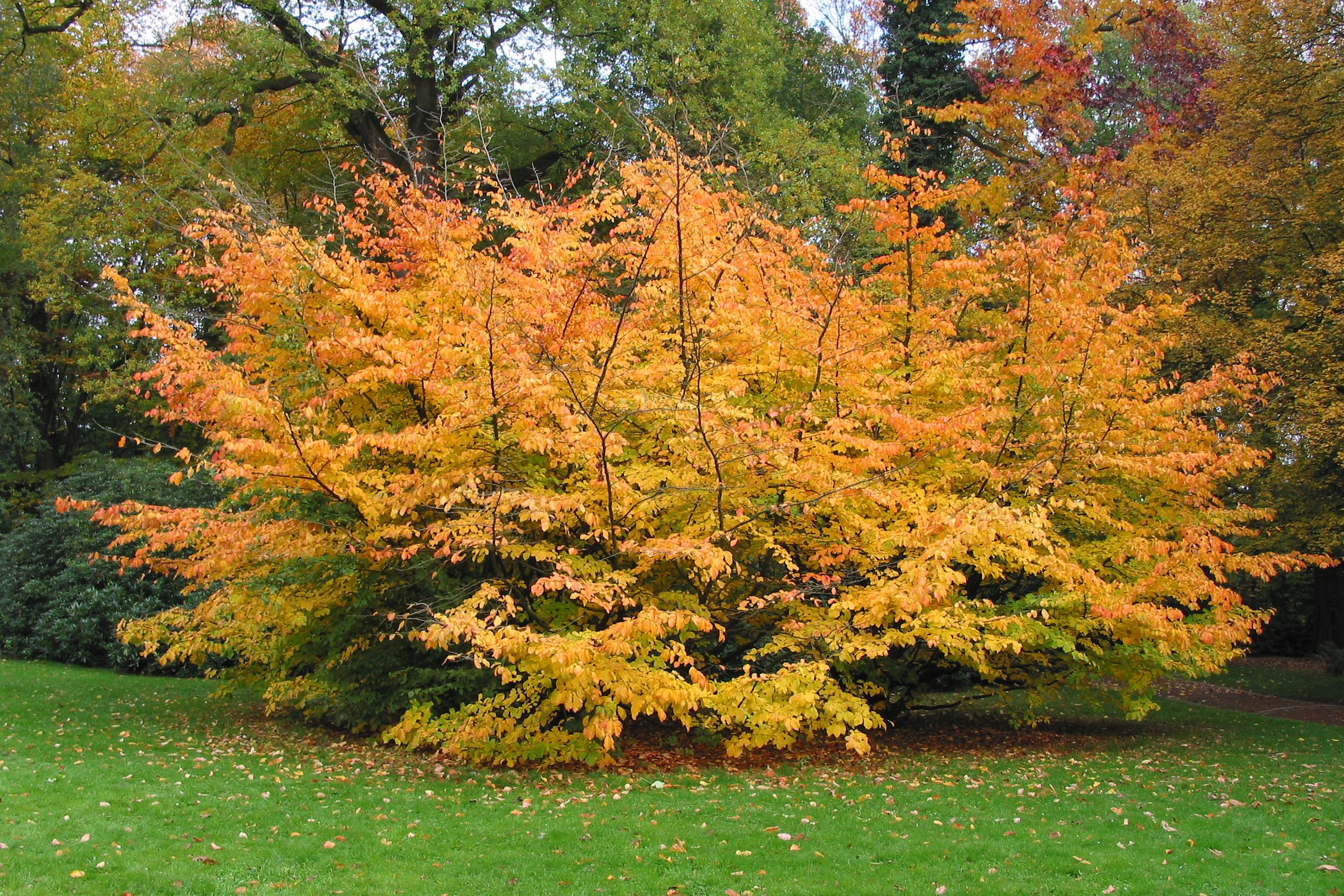
Parrotia is a quietly excellent small tree, valued for muscular branching, patchwork bark, and some of the best fall color available in a Salem landscape. It is not loud in spring and it is not a local native, but it handles urban conditions well and rewards the long view better than many flashier ornamentals. Parrotia is a quietly excellent small tree, valued for muscular branching, patchwork bark, and some of the best fall color available in a Salem landscape. It is not loud in spring and it is not a local native, but it handles urban conditions well and rewards the long view better than many flashier ornamentals.
Quiet Most of the Year, Brilliant at the Right Time
Parrotia is rarely the tree people ask for first. It does not have the instant name recognition of Japanese maple or dogwood, and its flowers are so subtle that many gardeners never notice them. But once you have lived with a good parrotia for a few years, it starts to look like one of the smartest tree choices around.
This is a tree of structure. The branching is sturdy and broad, the bark eventually breaks into gray, olive, and tan plates, and the leaves carry a clean, slightly wavy form through the growing season. Then fall arrives and the whole tree turns complicated shades of yellow, orange, red, and wine. On good years the color looks almost lit from inside.
In Salem, where we want trees that can handle heat, some drought, winter wet, and ordinary neighborhood pressure, parrotia keeps proving itself useful.
The Flowers Are Small, but They Matter
Parrotia blooms before the leaves, usually in late winter or very early spring. The flowers have no petals to speak of. What you notice are the dark buds opening to reveal fine red stamens at the branch tips. From a distance the effect is understated. Up close it is elegant.
That timing is part of the tree's value. Very little is happening in February and early March, and any flower that opens then matters more than its size suggests. Early insects will visit when weather allows, and the tree begins the season with quiet confidence rather than a burst of spectacle.
Why It Fits Salem So Well
Parrotia has a reputation for toughness that is deserved. It tolerates city conditions, air pollution, clay-influenced soil, and periods of summer dryness once established. It also ages well, which is not true of every ornamental tree sold into small urban landscapes.
This matters on the old Fairview site. We are not gardening on pampered loam. We are gardening on compacted clay, with winter saturation in some places and hard summer bake in others. Trees that can handle that swing without constant rescue work deserve attention.
Parrotia is also adaptable in form. It can be trained as a single-trunk tree or allowed to develop a broader, multi-stem character. For a garden that wants a little more presence than paperbark maple but less sheer scale than sycamore or oak, it sits in a very useful middle range.
On the Fairview Clay
On our site I would place parrotia in a spot that gets good light and drains at least moderately well. It is more clay-tolerant than many ornamentals, but it still performs best when the root zone does not stay saturated all winter.
Dig wide, not deep. Add compost modestly, then rely on mulch to improve texture over time. If the chosen area is one of the flatter sections that holds water, raise the planting plane a few inches. Once established, the tree can take Salem's dry summers with less complaint than many deciduous ornamentals, though it looks better with a few deep waterings during long hot spells.
Unlike some thinner-barked maples, parrotia is not especially fussy about sun exposure in our climate. Full sun generally gives the strongest fall color. Light shade is acceptable if the site is otherwise good.
Year by Year
The first years are about framework. A young parrotia often looks a little stiff or narrow. That changes with time.
By year four or five, the tree begins to widen and the branch angles become more interesting. The bark also starts to show more variation, especially on older stems.
By year ten, a well-grown parrotia often feels settled and architectural. The crown has broadened, the bark has begun to patch and exfoliate, and the fall display becomes reliable enough that neighbors start to notice it from the street.
This is not a throwaway ornamental planted for a quick effect. It improves with age, which is exactly what we want from a patient garden tree.
Native Status and Tradeoffs
Parrotia is native to the forests south of the Caspian Sea in Iran and nearby regions, not to North America. It does not rebuild local habitat the way native cherries, cascara, or oaks do. That should be said plainly.
Its value here is different. It is a durable, beautiful, non-invasive tree that fits many urban gardens better than larger species and requires less correction than fussier ornamentals. When used honestly, it can support a landscape that still leaves room for more ecologically foundational plants nearby.
Seasonal Strength and Wildlife Value
Wildlife value is moderate. The early flowers offer small but timely forage. The branching provides cover, and the tree contributes the ordinary insect life that any healthy deciduous tree supports. It is not a keystone species, but neither is it empty.
Its strongest contribution is seasonal rhythm. In winter, the bark and branch architecture carry the tree. In late winter, the red-stamen flowers appear. Spring and summer are about form and calm green foliage. Fall is the payoff.
The Patient Perspective
Parrotia is a tree for gardeners who are done chasing novelty. It is not planted because it is fashionable. It is planted because it works, and because over the years it becomes more beautiful instead of less.
That kind of reliability is valuable on the Fairview clay. We need trees that can meet the site where it is, not just trees that look perfect in a nursery pot. Parrotia has the steadiness for that job.
Quiet Most of the Year, Brilliant at the Right Time
Parrotia is rarely the tree people ask for first. It does not have the instant name recognition of Japanese maple or dogwood, and its flowers are so subtle that many gardeners never notice them. But once you have lived with a good parrotia for a few years, it starts to look like one of the smartest tree choices around.
This is a tree of structure. The branching is sturdy and broad, the bark eventually breaks into gray, olive, and tan plates, and the leaves carry a clean, slightly wavy form through the growing season. Then fall arrives and the whole tree turns complicated shades of yellow, orange, red, and wine. On good years the color looks almost lit from inside.
In Salem, where we want trees that can handle heat, some drought, winter wet, and ordinary neighborhood pressure, parrotia keeps proving itself useful.
The Flowers Are Small, but They Matter
Parrotia blooms before the leaves, usually in late winter or very early spring. The flowers have no petals to speak of. What you notice are the dark buds opening to reveal fine red stamens at the branch tips. From a distance the effect is understated. Up close it is elegant.
That timing is part of the tree's value. Very little is happening in February and early March, and any flower that opens then matters more than its size suggests. Early insects will visit when weather allows, and the tree begins the season with quiet confidence rather than a burst of spectacle.
Why It Fits Salem So Well
Parrotia has a reputation for toughness that is deserved. It tolerates city conditions, air pollution, clay-influenced soil, and periods of summer dryness once established. It also ages well, which is not true of every ornamental tree sold into small urban landscapes.
This matters on the old Fairview site. We are not gardening on pampered loam. We are gardening on compacted clay, with winter saturation in some places and hard summer bake in others. Trees that can handle that swing without constant rescue work deserve attention.
Parrotia is also adaptable in form. It can be trained as a single-trunk tree or allowed to develop a broader, multi-stem character. For a garden that wants a little more presence than paperbark maple but less sheer scale than sycamore or oak, it sits in a very useful middle range.
On the Fairview Clay
On our site I would place parrotia in a spot that gets good light and drains at least moderately well. It is more clay-tolerant than many ornamentals, but it still performs best when the root zone does not stay saturated all winter.
Dig wide, not deep. Add compost modestly, then rely on mulch to improve texture over time. If the chosen area is one of the flatter sections that holds water, raise the planting plane a few inches. Once established, the tree can take Salem's dry summers with less complaint than many deciduous ornamentals, though it looks better with a few deep waterings during long hot spells.
Unlike some thinner-barked maples, parrotia is not especially fussy about sun exposure in our climate. Full sun generally gives the strongest fall color. Light shade is acceptable if the site is otherwise good.
Year by Year
The first years are about framework. A young parrotia often looks a little stiff or narrow. That changes with time.
By year four or five, the tree begins to widen and the branch angles become more interesting. The bark also starts to show more variation, especially on older stems.
By year ten, a well-grown parrotia often feels settled and architectural. The crown has broadened, the bark has begun to patch and exfoliate, and the fall display becomes reliable enough that neighbors start to notice it from the street.
This is not a throwaway ornamental planted for a quick effect. It improves with age, which is exactly what we want from a patient garden tree.
Native Status and Tradeoffs
Parrotia is native to the forests south of the Caspian Sea in Iran and nearby regions, not to North America. It does not rebuild local habitat the way native cherries, cascara, or oaks do. That should be said plainly.
Its value here is different. It is a durable, beautiful, non-invasive tree that fits many urban gardens better than larger species and requires less correction than fussier ornamentals. When used honestly, it can support a landscape that still leaves room for more ecologically foundational plants nearby.
Seasonal Strength and Wildlife Value
Wildlife value is moderate. The early flowers offer small but timely forage. The branching provides cover, and the tree contributes the ordinary insect life that any healthy deciduous tree supports. It is not a keystone species, but neither is it empty.
Its strongest contribution is seasonal rhythm. In winter, the bark and branch architecture carry the tree. In late winter, the red-stamen flowers appear. Spring and summer are about form and calm green foliage. Fall is the payoff.
The Patient Perspective
Parrotia is a tree for gardeners who are done chasing novelty. It is not planted because it is fashionable. It is planted because it works, and because over the years it becomes more beautiful instead of less.
That kind of reliability is valuable on the Fairview clay. We need trees that can meet the site where it is, not just trees that look perfect in a nursery pot. Parrotia has the steadiness for that job.
Continue Continuar