Brush rabbit Brush rabbit
Sylvilagus bachmani
Brush rabbits are the small, fast, thicket-loving rabbits most likely to vanish under the nearest shrub the second you notice them. Around the old Fairview site, they turn dense cover and open feeding lanes into a life strategy that works beautifully until a coyote notices. Brush rabbits are the small, fast, thicket-loving rabbits most likely to vanish under the nearest shrub the second you notice them. Around the old Fairview site, they turn dense cover and open feeding lanes into a life strategy that works beautifully until a coyote notices.
The Rabbit That Becomes a Shadow
The rabbit most people call a cottontail around Shall and Audubon is often less a lawn rabbit than a shrub-edge rabbit. You glimpse it at the base of a rosemary hedge, under the low spread of a rhododendron, or slipping from one blackberry tangle to the next along the old Fairview site. Then it is gone. Brush rabbits specialize in that vanishing act. They feed in the open only as long as the nearest cover feels close enough to trust.
That habit makes them easy to overlook and perfectly suited to the mixed, patchy landscape around The Patient Garden. Where there is dense structure near tender growth, a brush rabbit can make a living.
Brush Rabbit or Cottontail
People use cottontail loosely for almost any backyard rabbit, and that is understandable. Brush rabbits do show the pale underside of the tail when they run, and the general silhouette is familiar. The useful distinction is habitat and attitude. Brush rabbits are smaller, more thicket-bound, and much less likely to sit exposed in broad open lawn for long. They belong to cover.
On the west side of Oregon, that makes them a strong fit for the shrub-heavy edges, bramble tangles, and low concealed runways that still exist around the old Fairview site. The rabbit hugging the cover line is the rabbit this landscape most naturally supports.
Identification
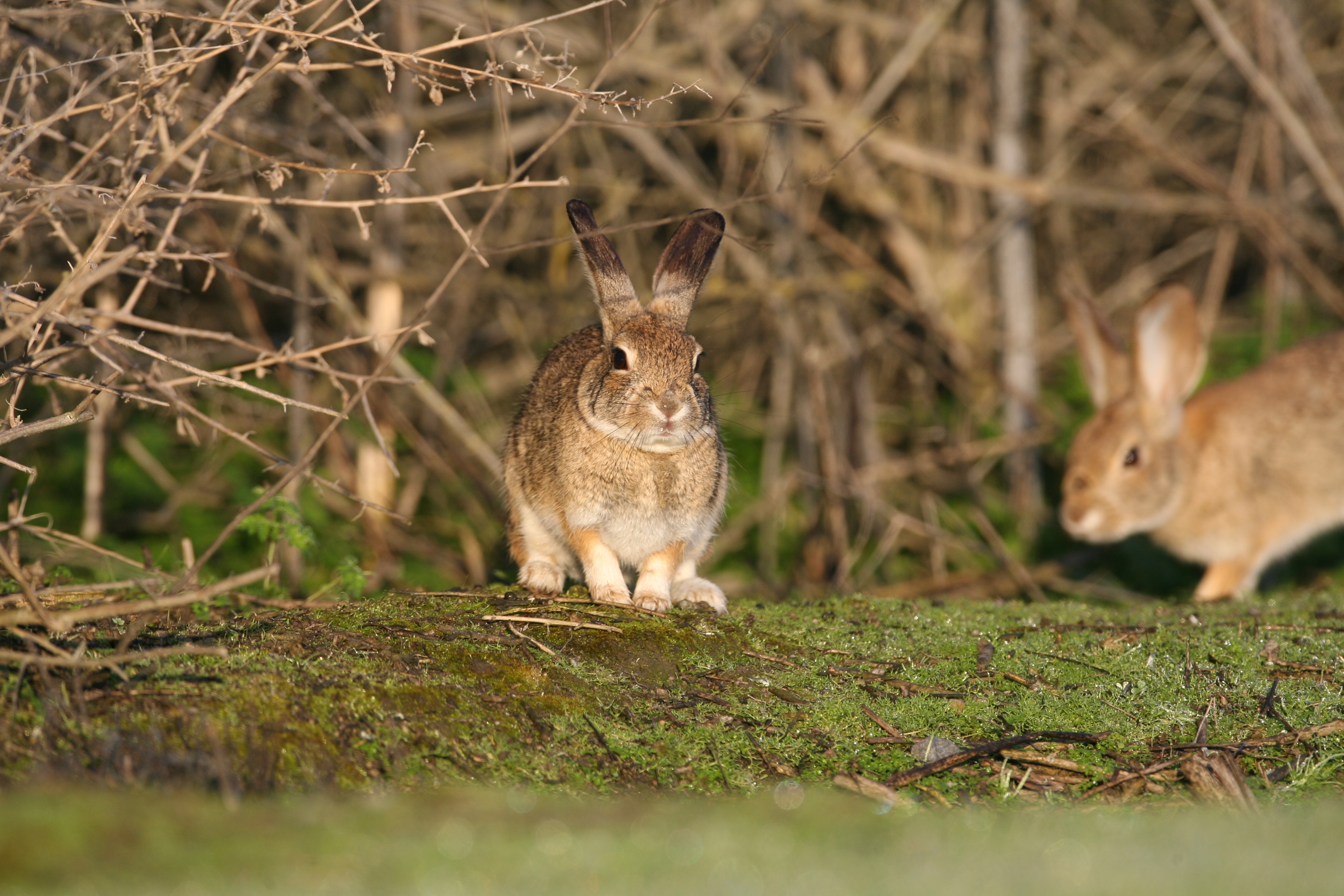
Brush rabbits are small to medium rabbits, usually compact and round-bodied, with brown to gray-brown fur, a pale belly, and a very short tail. The ears are shorter than many people expect, especially compared with the rangier look of more open-country rabbits. They often appear darker and more shadow-colored than a rabbit in a bright lawn setting.
Most good identifications come from behavior as much as looks. A brush rabbit feeds low, keeps close to shrubs, and bolts hard for the nearest tunnel through vegetation the moment it feels watched.
Feeding in the Edge Zone
Like other rabbits, brush rabbits eat grasses, clover, herbaceous growth, bark, buds, and tender shoots. In a garden setting that means lettuce if they can reach it, young beans, fresh perennial growth, and the lower new leaves on many ornamentals. They also make regular use of weedy margins and volunteer growth in neglected corners.
The old Fairview site gives them exactly the structure they like: open feeding lanes interrupted by brush, fence lines, tall grass, and shrub masses. The Fairview clay contributes by growing lush spring herbaceous cover after winter rain, then keeping some beds tender longer where irrigation continues through summer. Rabbits follow the greenest ground within sprint distance of shelter.
Around The Patient Garden
In The Patient Garden, brush rabbits are most visible early and late, especially in spring when everything is fresh and edible. A rabbit may sit under salal, nibble clover at the path edge, then disappear under a hydrangea or into a blackberry seam before you finish bending down to confirm it.
They also leave tidy evidence. Young shoots clipped at an angle, small round pellets in quiet corners, and narrow paths under dense shrubs all point to regular use. Unlike deer, which browse at height and on a larger scale, brush rabbits work the lower world.
That matters to the garden design conversation. Dense shrubs and layered wildlife cover are ecologically valuable, but they also create rabbit housing. If we plant for cover, we should expect rabbits to notice.
Predators and Seasonal Rhythm
Brush rabbits live under steady pressure from coyotes, hawks, owls, raccoons, and neighborhood cats. Their answer is speed, concealment, and reproduction. Breeding begins early, and multiple litters can be produced through the warmer months when food stays abundant.
Spring and early summer are the peak seasons for seeing them because growth is lush and young rabbits begin moving on their own. By late summer they grow quieter and more crepuscular, feeding quickly from cover to cover as the ground dries out and vegetation loses tenderness.
Conservation and Honest Coexistence
Brush rabbits are native and locally ordinary where cover remains. They do not need rescue around Salem so much as a certain kind of landscape continuity: shrubs, rough margins, brushy edges, and enough connected hiding places to move between feeding spots.
For gardeners, the honest relationship is mixed. They are charming and destructive in proportion to how much tender growth we provide. A rabbit under the lavender border is easy to love right up until the beans vanish.
Still, they are part of what makes the old Fairview site feel alive at ground level. Watch one pause under a shrub on a still evening, ears angled forward, body already half-committed to flight, and you see the whole logic of edge habitat condensed into a single animal.
The Rabbit That Becomes a Shadow
The rabbit most people call a cottontail around Shall and Audubon is often less a lawn rabbit than a shrub-edge rabbit. You glimpse it at the base of a rosemary hedge, under the low spread of a rhododendron, or slipping from one blackberry tangle to the next along the old Fairview site. Then it is gone. Brush rabbits specialize in that vanishing act. They feed in the open only as long as the nearest cover feels close enough to trust.
That habit makes them easy to overlook and perfectly suited to the mixed, patchy landscape around The Patient Garden. Where there is dense structure near tender growth, a brush rabbit can make a living.
Brush Rabbit or Cottontail
People use cottontail loosely for almost any backyard rabbit, and that is understandable. Brush rabbits do show the pale underside of the tail when they run, and the general silhouette is familiar. The useful distinction is habitat and attitude. Brush rabbits are smaller, more thicket-bound, and much less likely to sit exposed in broad open lawn for long. They belong to cover.
On the west side of Oregon, that makes them a strong fit for the shrub-heavy edges, bramble tangles, and low concealed runways that still exist around the old Fairview site. The rabbit hugging the cover line is the rabbit this landscape most naturally supports.
Identification
Brush rabbits are small to medium rabbits, usually compact and round-bodied, with brown to gray-brown fur, a pale belly, and a very short tail. The ears are shorter than many people expect, especially compared with the rangier look of more open-country rabbits. They often appear darker and more shadow-colored than a rabbit in a bright lawn setting.
Most good identifications come from behavior as much as looks. A brush rabbit feeds low, keeps close to shrubs, and bolts hard for the nearest tunnel through vegetation the moment it feels watched.
Feeding in the Edge Zone
Like other rabbits, brush rabbits eat grasses, clover, herbaceous growth, bark, buds, and tender shoots. In a garden setting that means lettuce if they can reach it, young beans, fresh perennial growth, and the lower new leaves on many ornamentals. They also make regular use of weedy margins and volunteer growth in neglected corners.
The old Fairview site gives them exactly the structure they like: open feeding lanes interrupted by brush, fence lines, tall grass, and shrub masses. The Fairview clay contributes by growing lush spring herbaceous cover after winter rain, then keeping some beds tender longer where irrigation continues through summer. Rabbits follow the greenest ground within sprint distance of shelter.
Around The Patient Garden
In The Patient Garden, brush rabbits are most visible early and late, especially in spring when everything is fresh and edible. A rabbit may sit under salal, nibble clover at the path edge, then disappear under a hydrangea or into a blackberry seam before you finish bending down to confirm it.
They also leave tidy evidence. Young shoots clipped at an angle, small round pellets in quiet corners, and narrow paths under dense shrubs all point to regular use. Unlike deer, which browse at height and on a larger scale, brush rabbits work the lower world.
That matters to the garden design conversation. Dense shrubs and layered wildlife cover are ecologically valuable, but they also create rabbit housing. If we plant for cover, we should expect rabbits to notice.
Predators and Seasonal Rhythm
Brush rabbits live under steady pressure from coyotes, hawks, owls, raccoons, and neighborhood cats. Their answer is speed, concealment, and reproduction. Breeding begins early, and multiple litters can be produced through the warmer months when food stays abundant.
Spring and early summer are the peak seasons for seeing them because growth is lush and young rabbits begin moving on their own. By late summer they grow quieter and more crepuscular, feeding quickly from cover to cover as the ground dries out and vegetation loses tenderness.
Conservation and Honest Coexistence
Brush rabbits are native and locally ordinary where cover remains. They do not need rescue around Salem so much as a certain kind of landscape continuity: shrubs, rough margins, brushy edges, and enough connected hiding places to move between feeding spots.
For gardeners, the honest relationship is mixed. They are charming and destructive in proportion to how much tender growth we provide. A rabbit under the lavender border is easy to love right up until the beans vanish.
Still, they are part of what makes the old Fairview site feel alive at ground level. Watch one pause under a shrub on a still evening, ears angled forward, body already half-committed to flight, and you see the whole logic of edge habitat condensed into a single animal.
Continue Continuar