Bumblebees Bumblebees
Bombus spp.
Bumblebees are the deep-voiced pollinators of the neighborhood, shaggy, steady, and active in weather that keeps smaller bees grounded. Around The Patient Garden, they are among the clearest signs that a planting is feeding more than the eye. Bumblebees are the deep-voiced pollinators of the neighborhood, shaggy, steady, and active in weather that keeps smaller bees grounded. Around The Patient Garden, they are among the clearest signs that a planting is feeding more than the eye.
The Bee You Can Hear Before You See
A bumblebee announces itself with sound as much as motion. The tone is lower, fuller, and somehow more substantial than the thin whine of many smaller bees. On a cool Salem spring morning, when the garden still feels half asleep, a queen bumblebee moving through rosemary or early currant bloom can sound like the first real engine of the season.
That reliability is part of why people love them. Bumblebees feel dependable. They show up in weather that sends many other pollinators home, and they work flowers with a seriousness that suits the whole patient-garden project.
Not One Bee, But a Group
A broad bumblebee page is the honest way to cover what we see around Shall and Audubon. Several species can occur in the Willamette Valley, and most people watching a bee on a salvia or bee balm are not going to sort them with confidence from a yard path. What matters first is learning the body plan and the role.
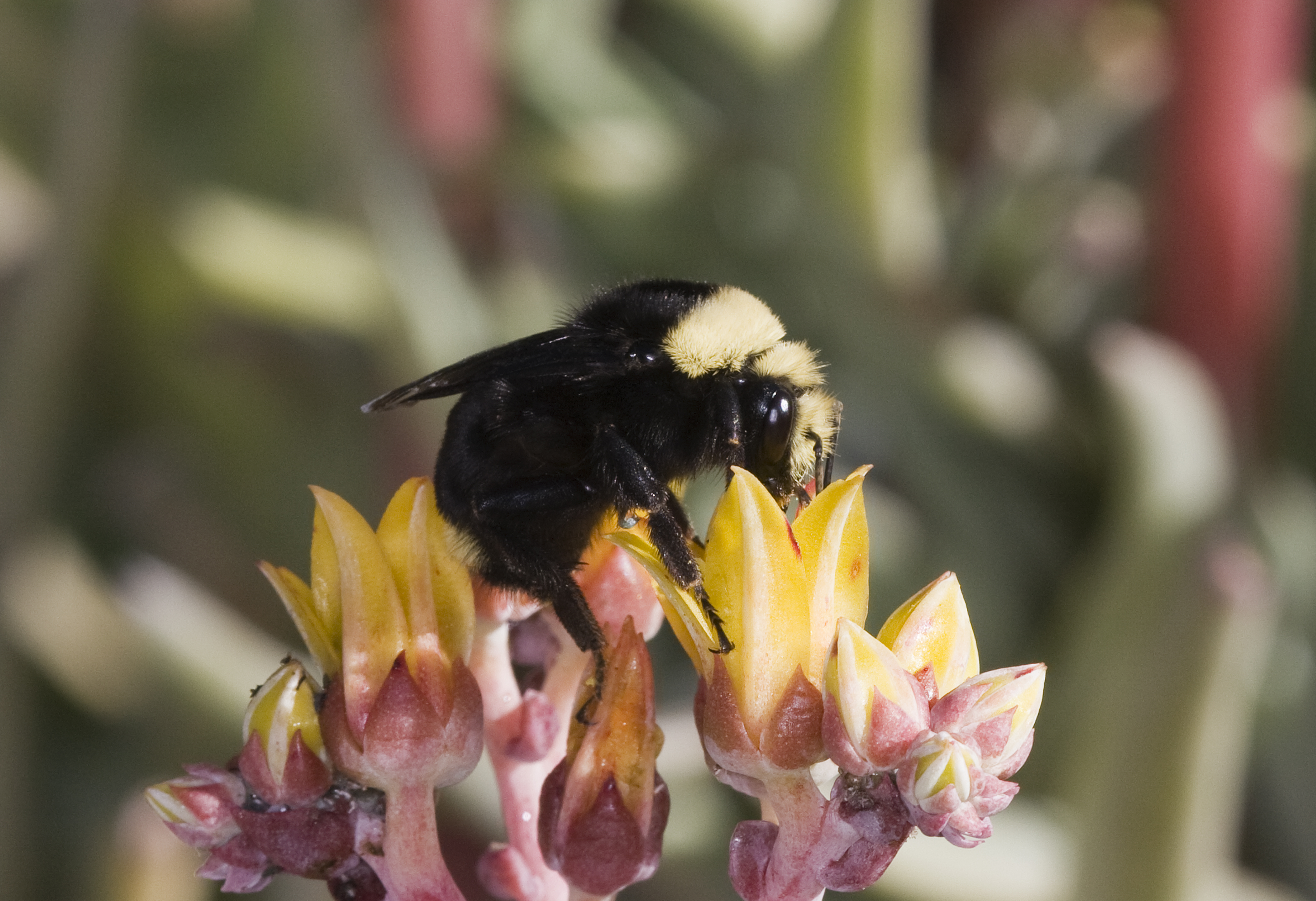
Bumblebees are large, fuzzy bees with robust bodies, obvious pollen baskets on the hind legs of females, and a less shiny, less wasp-like look than many other flower visitors. The color pattern varies by species and caste, but the impression is consistent: thick fur, strong flight, and real weight on the bloom.
Why They Work So Well Here
Bumblebees are built for the shoulder seasons. Queens emerge early, often when weather is still cool and the first bloom is just beginning. Workers keep going through spring and summer, and late-season queens and males appear once the colony turns toward reproduction.
That calendar overlaps beautifully with The Patient Garden's mix of shrubs, perennials, herbs, and later summer flowers. Early rosemary, red-flowering currant, fruit tree bloom, salvia, thyme, bee balm, and late asters all matter. A garden that offers something from late winter through fall can keep bumblebees working through most of the year they are active.
The old Fairview site's openness also helps. Bumblebees like flower-rich patches, but they also need nesting and overwintering texture nearby. Ungroomed grass margins, old rodent burrows, rough thatch, composty corners, and undisturbed ground all contribute. The tidier we make everything, the less bumblebee country we leave.
The Queen Changes the Whole Season
The first bumblebees you notice in late winter or very early spring are usually queens. They are larger than the later workers and often fly low and deliberately as they feed and search for nest sites. A queen has one job at first: survive the lean season, find a cavity or sheltered ground space, and start the colony.
That makes early flowers disproportionately important. A rosemary shrub humming in March is not just nice to look at. It is infrastructure.
Once workers appear, the whole rhythm changes. Then the garden hears the species properly, with multiple bees moving among blossoms through the warm months. Bumblebees are also among the best buzz-pollinators in a garden, vibrating certain flowers to shake pollen loose. Tomatoes, blueberries, and some native and ornamental blooms all benefit from that technique.
Around The Patient Garden
Bumblebees are constant summer companions here. They move through lavender with a heavy, contented focus. They disappear into penstemon, work salvias, shoulder into catmint, and circle back to any patch with sustained nectar or pollen. Because they are large and relatively tolerant of weather, they are often the pollinators visitors notice first.
Their calm demeanor is part of that visibility. A foraging bumblebee is not looking for trouble. It wants the flower, not the person standing nearby. Nests are a different matter and deserve respectful space, but flowers themselves are shared ground.
Conservation and Garden Practice
Bumblebee conservation is a real concern in North America, though the level of trouble varies by species. The useful local response is practical and direct: plant long bloom sequences, leave some rough nesting texture, avoid pesticides, and accept that a living garden includes a few untidy edges.
That is one reason bumblebees feel so emblematic of The Patient Garden. They reward patience in a very literal way. Plant for the long season, leave some structure in place, and they come. Once they are there, the whole garden sounds more alive.
The Bee You Can Hear Before You See
A bumblebee announces itself with sound as much as motion. The tone is lower, fuller, and somehow more substantial than the thin whine of many smaller bees. On a cool Salem spring morning, when the garden still feels half asleep, a queen bumblebee moving through rosemary or early currant bloom can sound like the first real engine of the season.
That reliability is part of why people love them. Bumblebees feel dependable. They show up in weather that sends many other pollinators home, and they work flowers with a seriousness that suits the whole patient-garden project.
Not One Bee, But a Group
A broad bumblebee page is the honest way to cover what we see around Shall and Audubon. Several species can occur in the Willamette Valley, and most people watching a bee on a salvia or bee balm are not going to sort them with confidence from a yard path. What matters first is learning the body plan and the role.
Bumblebees are large, fuzzy bees with robust bodies, obvious pollen baskets on the hind legs of females, and a less shiny, less wasp-like look than many other flower visitors. The color pattern varies by species and caste, but the impression is consistent: thick fur, strong flight, and real weight on the bloom.
Why They Work So Well Here
Bumblebees are built for the shoulder seasons. Queens emerge early, often when weather is still cool and the first bloom is just beginning. Workers keep going through spring and summer, and late-season queens and males appear once the colony turns toward reproduction.
That calendar overlaps beautifully with The Patient Garden's mix of shrubs, perennials, herbs, and later summer flowers. Early rosemary, red-flowering currant, fruit tree bloom, salvia, thyme, bee balm, and late asters all matter. A garden that offers something from late winter through fall can keep bumblebees working through most of the year they are active.
The old Fairview site's openness also helps. Bumblebees like flower-rich patches, but they also need nesting and overwintering texture nearby. Ungroomed grass margins, old rodent burrows, rough thatch, composty corners, and undisturbed ground all contribute. The tidier we make everything, the less bumblebee country we leave.
The Queen Changes the Whole Season
The first bumblebees you notice in late winter or very early spring are usually queens. They are larger than the later workers and often fly low and deliberately as they feed and search for nest sites. A queen has one job at first: survive the lean season, find a cavity or sheltered ground space, and start the colony.
That makes early flowers disproportionately important. A rosemary shrub humming in March is not just nice to look at. It is infrastructure.
Once workers appear, the whole rhythm changes. Then the garden hears the species properly, with multiple bees moving among blossoms through the warm months. Bumblebees are also among the best buzz-pollinators in a garden, vibrating certain flowers to shake pollen loose. Tomatoes, blueberries, and some native and ornamental blooms all benefit from that technique.
Around The Patient Garden
Bumblebees are constant summer companions here. They move through lavender with a heavy, contented focus. They disappear into penstemon, work salvias, shoulder into catmint, and circle back to any patch with sustained nectar or pollen. Because they are large and relatively tolerant of weather, they are often the pollinators visitors notice first.
Their calm demeanor is part of that visibility. A foraging bumblebee is not looking for trouble. It wants the flower, not the person standing nearby. Nests are a different matter and deserve respectful space, but flowers themselves are shared ground.
Conservation and Garden Practice
Bumblebee conservation is a real concern in North America, though the level of trouble varies by species. The useful local response is practical and direct: plant long bloom sequences, leave some rough nesting texture, avoid pesticides, and accept that a living garden includes a few untidy edges.
That is one reason bumblebees feel so emblematic of The Patient Garden. They reward patience in a very literal way. Plant for the long season, leave some structure in place, and they come. Once they are there, the whole garden sounds more alive.
Continue Continuar