Cabbage white Cabbage white
Pieris rapae
Cabbage white is the plain little white butterfly that every vegetable gardener eventually learns by consequence as much as by beauty. Around The Patient Garden, it is both a cheerful flower visitor and the parent of the green caterpillars that appear on brassicas with suspicious speed. Cabbage white is the plain little white butterfly that every vegetable gardener eventually learns by consequence as much as by beauty. Around The Patient Garden, it is both a cheerful flower visitor and the parent of the green caterpillars that appear on brassicas with suspicious speed.
The Butterfly You Notice More Once You Grow Kale
At first, cabbage whites seem harmlessly pleasant. A small pale butterfly bobs through the garden in loose daylight flight, pauses at a flower, and drifts on. Then you grow kale, cabbage, broccoli, mustard greens, or arugula, and suddenly the species becomes very easy to identify. The adult is charming. The larvae are the reason people go outside muttering over chewed leaves.
That combination makes cabbage white one of the most honest neighborhood wildlife entries we can have. It is common, pretty enough, non-dramatic, and directly relevant to what happens in a working garden on Shall and Audubon.
Identification
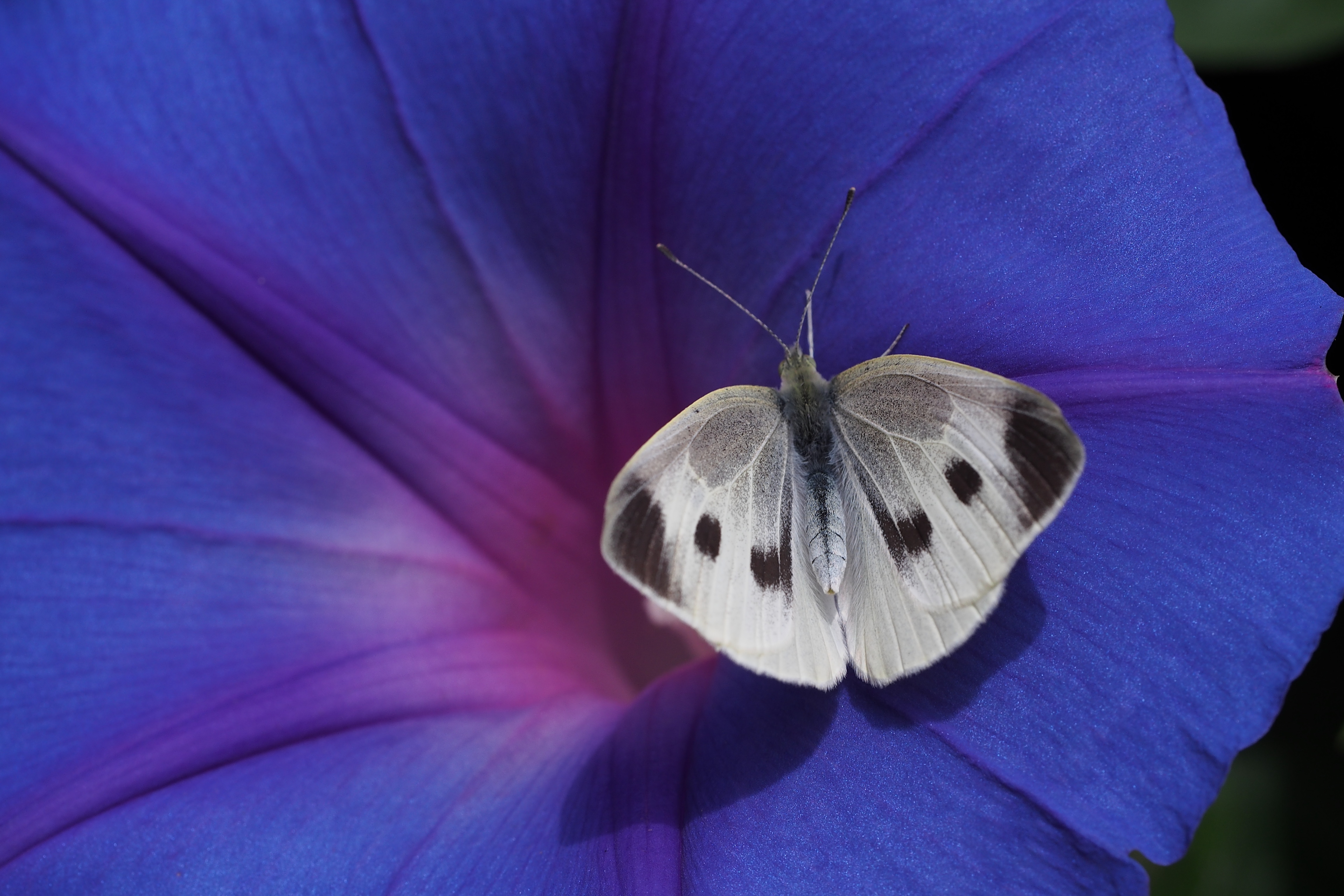
The adult butterfly is small to medium, mostly white to pale cream with dark gray to black tips on the forewings. Females usually show two dark spots on the forewing, males one, though distance and wear complicate this. In flight they read as simple, light, and restless rather than flamboyant.
They are not one of the big show butterflies. They are one of the constant ones. Once spring is underway, a garden with brassicas nearby can seem to host them almost continuously.
Not Native, Very Successful
Cabbage white is an introduced species from Eurasia that has spread across much of North America. It took to human-shaped landscapes beautifully, especially the vegetable gardens and disturbed open habitats where brassicas grow. Salem is ideal country for it. Mild winters, long growing seasons, and endless opportunities in vegetable patches, weed growth, and ornamental mustard relatives all help.
That success comes with a cost for gardeners. The green caterpillars, often called imported cabbageworms, feed on cabbage-family plants and can reduce leaves to ragged lace surprisingly fast if left unchecked.
Around The Patient Garden
At The Patient Garden, cabbage whites are most likely around any patch where the mustard family is represented. Kale, cabbage, broccoli, Brussels sprouts, radish, nasturtium relatives, volunteer mustards, and wild hedge mustard in rough edges all matter. The adults nectar broadly, but the real map is made by egg-laying opportunity.
The old Fairview site's open sunny character helps them. They like warm exposed growing space. Wind can slow them, but bright low vegetation and edible host plants keep them moving through the site. Because they are so comfortable in human-managed ground, they are one of the insects that most clearly blur the line between garden resident and agricultural pest.
Life Cycle in Plain Sight
Females lay eggs singly on host plant leaves. Tiny green caterpillars hatch, feed, and blend in so well that people often notice the feeding holes before they notice the insect. After several molts they pupate, and the cycle begins again. Multiple generations can occur through the growing season, which is why pressure seems to rebuild every time a gardener thinks the issue has passed.
This is also why hand inspection matters. Cabbage whites are manageable at garden scale precisely because the signs are readable: eggs on the underside of leaves, small holes, frass pellets, and a green caterpillar resting against the midrib.
The Ecological Reading
It would be easy to write this species as a villain and stop there, but that would flatten the story. Adult cabbage whites do visit flowers and move pollen. The caterpillars feed birds, paper wasps, and other predators when a garden is alive enough to support them. Even a pest species is still part of a food web.
The trick is deciding where tolerance ends and crop protection begins. In ornamental ground or on a patch of volunteer mustard, a cabbage white caterpillar may not matter much. On the best kale in the garden, it matters immediately.
Conservation and Practical Wisdom
Cabbage whites do not need conservation help. Gardeners, on the other hand, do need clear strategy. Row cover, regular inspection, hand removal, and healthy predator populations all work better than waiting for damage and feeling betrayed by a butterfly.
In The Patient Garden, cabbage white is worth knowing because it teaches a very local lesson: not every beautiful fluttering thing is neutral, and not every problem species is ecologically irrelevant. If we want a real field guide instead of a sentimental one, this butterfly belongs in it. It is part of the neighborhood, part of the garden, and part of the argument between what we grow and what comes to eat it.
The Butterfly You Notice More Once You Grow Kale
At first, cabbage whites seem harmlessly pleasant. A small pale butterfly bobs through the garden in loose daylight flight, pauses at a flower, and drifts on. Then you grow kale, cabbage, broccoli, mustard greens, or arugula, and suddenly the species becomes very easy to identify. The adult is charming. The larvae are the reason people go outside muttering over chewed leaves.
That combination makes cabbage white one of the most honest neighborhood wildlife entries we can have. It is common, pretty enough, non-dramatic, and directly relevant to what happens in a working garden on Shall and Audubon.
Identification
The adult butterfly is small to medium, mostly white to pale cream with dark gray to black tips on the forewings. Females usually show two dark spots on the forewing, males one, though distance and wear complicate this. In flight they read as simple, light, and restless rather than flamboyant.
They are not one of the big show butterflies. They are one of the constant ones. Once spring is underway, a garden with brassicas nearby can seem to host them almost continuously.
Not Native, Very Successful
Cabbage white is an introduced species from Eurasia that has spread across much of North America. It took to human-shaped landscapes beautifully, especially the vegetable gardens and disturbed open habitats where brassicas grow. Salem is ideal country for it. Mild winters, long growing seasons, and endless opportunities in vegetable patches, weed growth, and ornamental mustard relatives all help.
That success comes with a cost for gardeners. The green caterpillars, often called imported cabbageworms, feed on cabbage-family plants and can reduce leaves to ragged lace surprisingly fast if left unchecked.
Around The Patient Garden
At The Patient Garden, cabbage whites are most likely around any patch where the mustard family is represented. Kale, cabbage, broccoli, Brussels sprouts, radish, nasturtium relatives, volunteer mustards, and wild hedge mustard in rough edges all matter. The adults nectar broadly, but the real map is made by egg-laying opportunity.
The old Fairview site's open sunny character helps them. They like warm exposed growing space. Wind can slow them, but bright low vegetation and edible host plants keep them moving through the site. Because they are so comfortable in human-managed ground, they are one of the insects that most clearly blur the line between garden resident and agricultural pest.
Life Cycle in Plain Sight
Females lay eggs singly on host plant leaves. Tiny green caterpillars hatch, feed, and blend in so well that people often notice the feeding holes before they notice the insect. After several molts they pupate, and the cycle begins again. Multiple generations can occur through the growing season, which is why pressure seems to rebuild every time a gardener thinks the issue has passed.
This is also why hand inspection matters. Cabbage whites are manageable at garden scale precisely because the signs are readable: eggs on the underside of leaves, small holes, frass pellets, and a green caterpillar resting against the midrib.
The Ecological Reading
It would be easy to write this species as a villain and stop there, but that would flatten the story. Adult cabbage whites do visit flowers and move pollen. The caterpillars feed birds, paper wasps, and other predators when a garden is alive enough to support them. Even a pest species is still part of a food web.
The trick is deciding where tolerance ends and crop protection begins. In ornamental ground or on a patch of volunteer mustard, a cabbage white caterpillar may not matter much. On the best kale in the garden, it matters immediately.
Conservation and Practical Wisdom
Cabbage whites do not need conservation help. Gardeners, on the other hand, do need clear strategy. Row cover, regular inspection, hand removal, and healthy predator populations all work better than waiting for damage and feeling betrayed by a butterfly.
In The Patient Garden, cabbage white is worth knowing because it teaches a very local lesson: not every beautiful fluttering thing is neutral, and not every problem species is ecologically irrelevant. If we want a real field guide instead of a sentimental one, this butterfly belongs in it. It is part of the neighborhood, part of the garden, and part of the argument between what we grow and what comes to eat it.
Continue Continuar