Coyote Coyote
Canis latrans
Coyotes are the after-hours canids of Salem's edges, heard more often than seen and perfectly capable of making use of open ground, thickets, rodents, fruit, and human carelessness. Around the old Fairview site, they read the whole landscape as a travel corridor. Coyotes are the after-hours canids of Salem's edges, heard more often than seen and perfectly capable of making use of open ground, thickets, rodents, fruit, and human carelessness. Around the old Fairview site, they read the whole landscape as a travel corridor.
The Voice From the Open Ground
A coyote does not need to show itself to change the feel of a neighborhood. One round of yips and rising howls from the dark edge of the old Fairview site is enough. Suddenly the place feels bigger than the streetlights suggest. Coyotes do that. They restore scale. The open fields, the brushy margins, the drainage lines, the yards with rabbits and fallen fruit all connect into one moving nighttime map, and the coyote is one of the animals reading it at the top of the local food chain.
Around Shall and Audubon, coyotes are neither wilderness curiosities nor rare accidents. They are regular edge animals, most visible only when something in their route overlaps with ours.
Identification
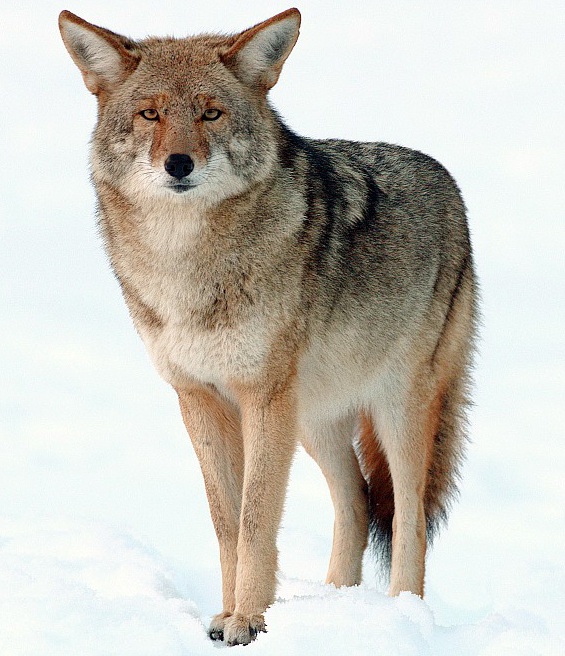
A neighborhood coyote is usually leaner and lighter on its feet than people expect. Adults in the Willamette Valley are medium-sized canids with a narrow chest, long legs, pointed muzzle, upright ears, and a low-carried tail that usually hangs straight rather than curling over the back the way many dogs do. The coat is a mix of gray, tan, buff, black, and rusty tones that changes with season and light.
Seen at a distance, they often move with a steady, efficient trot that covers ground quietly. The shape gives them away. Long nose, long legs, direct purpose.
What Fairview Offers a Coyote
The old Fairview site gives coyotes what they want most in developed country: movement room. Open ground makes travel easy. Brushy margins offer cover. Nearby residential blocks produce rabbits, rodents, fruit, compost, and the occasional unsecured pet food. Drainage corridors and undeveloped edges tie those pieces together.
The Fairview clay matters here too. It holds winter moisture, which grows rank grass and supports vole populations in open areas. Voles are coyote food. Clay also shapes where shrub cover thickens and where puddled ground slows human use. Coyotes use those quieter strips and low-disturbance routes with impressive consistency.
Food and Hunting
The coyote diet is broader than its reputation. Rodents are the foundation in many seasons, especially voles and mice. Rabbits matter. So do insects, carrion, fallen fruit, and the occasional bird or reptile. In suburban landscapes, coyotes are best understood as flexible hunters and scavengers rather than specialists.
That flexibility is why they persist. One night they may be mousing through open grass. Another they may be checking plum windfalls, rabbit runs under blackberry, or the edge of a compost area that smells suspiciously active. They are not above easy calories, which is why human food habits matter so much to local coyote behavior.
Around The Patient Garden
Coyotes are usually visitors rather than residents in the tight core of The Patient Garden, but the garden sits inside the kind of broader matrix they use. Brush rabbit paths, ground squirrel colonies, vole-rich grass, fruiting shrubs, and quieter after-dark movement corridors all make the larger site and surrounding blocks worth checking.
You are most likely to notice them at dawn, dusk, or by sound after dark. A single animal may cross a road quickly and vanish into cover before your brain finishes sorting dog from coyote. During late winter and spring, vocal activity tends to rise as pairs hold territory and raise young.
Living With a Clever Generalist
Most coexistence advice comes down to one principle: keep coyotes wild. Do not feed them, directly or indirectly. Bring pet food in. Pick fruit up. Protect small pets, especially at dawn and dusk. Trim the places where a feeding routine could form around human subsidy.
Coyotes that rely mostly on wild food keep behaving like wary neighborhood predators. Coyotes that learn easy human-associated food become a different problem.
Conservation and Perspective
Coyotes are secure, adaptable, and famously resilient. The local story is not one of scarcity. It is one of adjustment. As wolves and larger predators disappeared from the valley floor, coyotes expanded and settled into a bigger role. They now help regulate rodents and rabbits in the same landscapes where we garden.
There is something clarifying about that. A coyote moving across the old Fairview site at first light tells us the place is still ecologically porous. The neighborhood is not sealed. It still leaks scent, prey, and passage into the wider system. Coyotes know that every day. We are the ones who need reminding.
The Voice From the Open Ground
A coyote does not need to show itself to change the feel of a neighborhood. One round of yips and rising howls from the dark edge of the old Fairview site is enough. Suddenly the place feels bigger than the streetlights suggest. Coyotes do that. They restore scale. The open fields, the brushy margins, the drainage lines, the yards with rabbits and fallen fruit all connect into one moving nighttime map, and the coyote is one of the animals reading it at the top of the local food chain.
Around Shall and Audubon, coyotes are neither wilderness curiosities nor rare accidents. They are regular edge animals, most visible only when something in their route overlaps with ours.
Identification
A neighborhood coyote is usually leaner and lighter on its feet than people expect. Adults in the Willamette Valley are medium-sized canids with a narrow chest, long legs, pointed muzzle, upright ears, and a low-carried tail that usually hangs straight rather than curling over the back the way many dogs do. The coat is a mix of gray, tan, buff, black, and rusty tones that changes with season and light.
Seen at a distance, they often move with a steady, efficient trot that covers ground quietly. The shape gives them away. Long nose, long legs, direct purpose.
What Fairview Offers a Coyote
The old Fairview site gives coyotes what they want most in developed country: movement room. Open ground makes travel easy. Brushy margins offer cover. Nearby residential blocks produce rabbits, rodents, fruit, compost, and the occasional unsecured pet food. Drainage corridors and undeveloped edges tie those pieces together.
The Fairview clay matters here too. It holds winter moisture, which grows rank grass and supports vole populations in open areas. Voles are coyote food. Clay also shapes where shrub cover thickens and where puddled ground slows human use. Coyotes use those quieter strips and low-disturbance routes with impressive consistency.
Food and Hunting
The coyote diet is broader than its reputation. Rodents are the foundation in many seasons, especially voles and mice. Rabbits matter. So do insects, carrion, fallen fruit, and the occasional bird or reptile. In suburban landscapes, coyotes are best understood as flexible hunters and scavengers rather than specialists.
That flexibility is why they persist. One night they may be mousing through open grass. Another they may be checking plum windfalls, rabbit runs under blackberry, or the edge of a compost area that smells suspiciously active. They are not above easy calories, which is why human food habits matter so much to local coyote behavior.
Around The Patient Garden
Coyotes are usually visitors rather than residents in the tight core of The Patient Garden, but the garden sits inside the kind of broader matrix they use. Brush rabbit paths, ground squirrel colonies, vole-rich grass, fruiting shrubs, and quieter after-dark movement corridors all make the larger site and surrounding blocks worth checking.
You are most likely to notice them at dawn, dusk, or by sound after dark. A single animal may cross a road quickly and vanish into cover before your brain finishes sorting dog from coyote. During late winter and spring, vocal activity tends to rise as pairs hold territory and raise young.
Living With a Clever Generalist
Most coexistence advice comes down to one principle: keep coyotes wild. Do not feed them, directly or indirectly. Bring pet food in. Pick fruit up. Protect small pets, especially at dawn and dusk. Trim the places where a feeding routine could form around human subsidy.
Coyotes that rely mostly on wild food keep behaving like wary neighborhood predators. Coyotes that learn easy human-associated food become a different problem.
Conservation and Perspective
Coyotes are secure, adaptable, and famously resilient. The local story is not one of scarcity. It is one of adjustment. As wolves and larger predators disappeared from the valley floor, coyotes expanded and settled into a bigger role. They now help regulate rodents and rabbits in the same landscapes where we garden.
There is something clarifying about that. A coyote moving across the old Fairview site at first light tells us the place is still ecologically porous. The neighborhood is not sealed. It still leaks scent, prey, and passage into the wider system. Coyotes know that every day. We are the ones who need reminding.
Continue Continuar