Douglas squirrel Douglas squirrel
Tamiasciurus douglasii
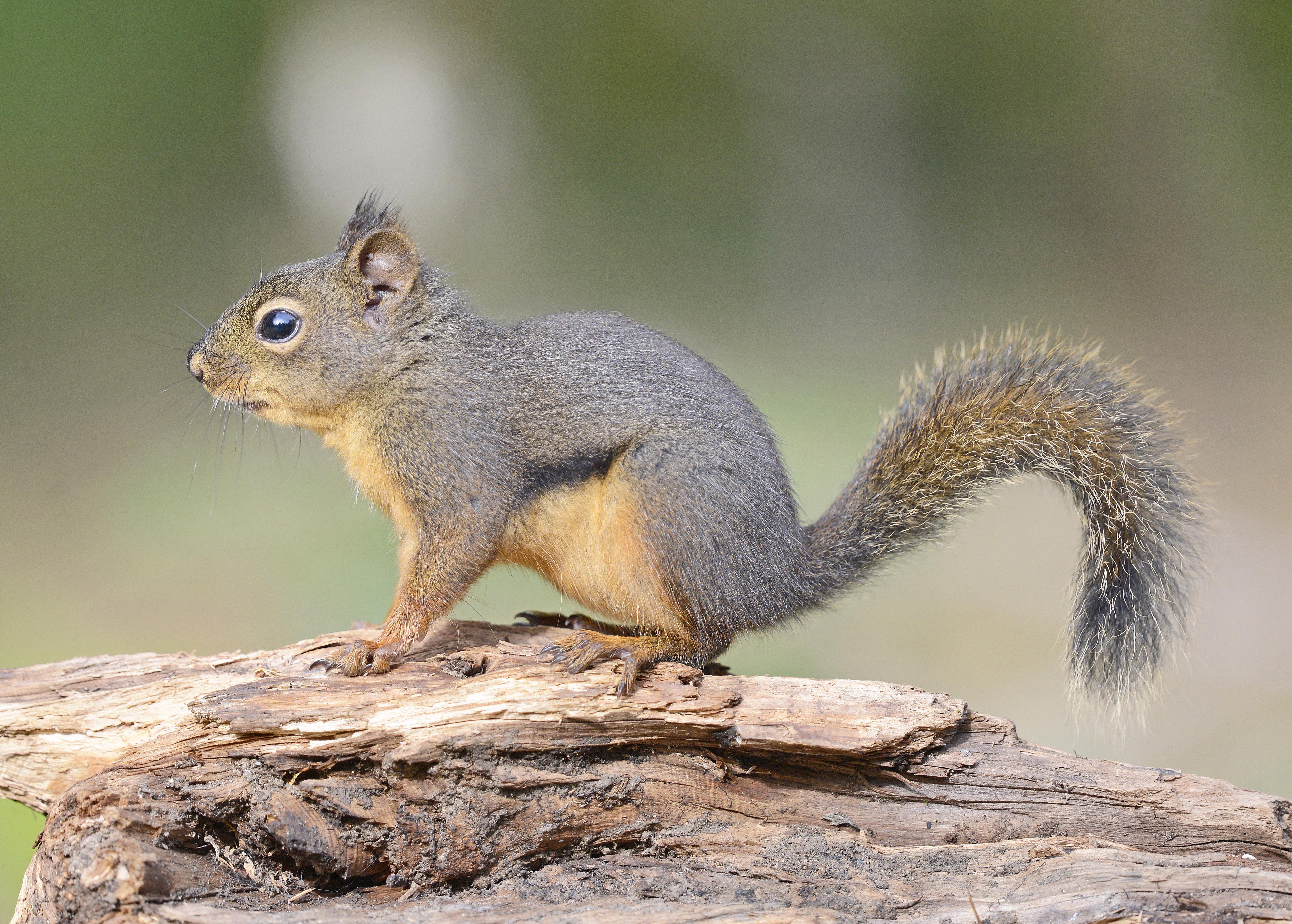
Douglas squirrels are the small, fiery conifer squirrels of the Pacific Northwest, all chatter and motion and cone obsession. Around the old Fairview site, they show up where mature firs and other evergreens still hold a real forest feel. Douglas squirrels are the small, fiery conifer squirrels of the Pacific Northwest, all chatter and motion and cone obsession. Around the old Fairview site, they show up where mature firs and other evergreens still hold a real forest feel.
The Squirrel That Sounds Off First
Before you see a Douglas squirrel, you usually hear it. A rapid, scolding rattle comes from high in a fir, sharp enough to stop you in the middle of weeding. Then a small squirrel runs headfirst down the trunk, pauses with its tail flicking, and delivers another burst of outrage for the crime of existing near its tree. Douglas squirrels are tiny alarms wired into the conifer canopy. They make the whole neighborhood feel more western, more forest-edged, more connected to the larger Pacific Northwest than the street grid would suggest.
They are native here, unlike the more familiar eastern gray squirrel, and they belong to conifers in a deep way. If gray squirrels are neighborhood opportunists, Douglas squirrels are specialists with attitude.
Identification
Douglas squirrels are smaller than eastern gray squirrels, usually about ten to thirteen inches long including the tail. The body is compact and quick, the tail narrower and less plush, and the back often reads as rusty brown or olive-brown with a warm orange wash on the belly. In winter the coat can look grayer and the ear tufts can become more noticeable. The face looks sharper, the posture more wound tight.
The voice is often the best clue. They produce a dry, buzzy chatter and repeated scolding notes from exposed perches in firs and spruces. If a squirrel seems personally offended by your presence in a conifer, Douglas squirrel is the likely answer.
Cone Country
This animal is built around seed crops from conifers. Douglas fir cones are the classic food, but hemlock, spruce, pine, and cedar all matter where available. A productive squirrel territory usually includes what biologists call a midden, a cone-scaling station where the squirrel strips cones and leaves a growing pile of chewed cone cores beneath a favored perch.
That is one of the pleasures of learning them. Once you know to look for a midden under a fir, the whole hidden economy becomes obvious. A Douglas squirrel is not just passing through. It is running inventory.
Around The Patient Garden, mature Douglas firs and other large evergreens along the margins of the old Fairview site are what make this species possible. Without that older conifer structure, they disappear quickly. They can use adjacent ornamental landscapes for travel and the occasional snack, but the core of life is still the cone crop.
Around the Old Fairview Site
The old Fairview site is open in many places, and much of it reads more as field edge and neighborhood planting than forest interior. Douglas squirrels do best in the portions that still hold tall conifers, especially where the canopy meets a quieter edge and the understory gives some cover from hawks. They use trunks, upper limbs, and den cavities, and they cross open ground reluctantly compared with gray squirrels.
The Fairview clay matters here in an indirect way. It favors some tree plantings over others and creates a patchy landscape of wetter ground, drier berms, and established canopy islands. Douglas squirrels choose the islands. Where fir roots and shade create a cooler, duff-rich pocket, you get the closest thing to true squirrel territory.
Seasonal Rhythm
Douglas squirrels stay active year-round, but their year rises and falls with the cone crop. In late summer and fall they cut and cache heavily, often working with frantic intensity when the seeds are ripe. Winter is quieter but never fully quiet. They continue feeding from stores and using sheltered nests and cavities during storms.
Breeding begins early. By late winter or early spring they are already chasing, calling, and repairing nests. Young appear in late spring and early summer, often looking like miniature adults with the same oversized sense of grievance.
Native Value and Watchability
Douglas squirrels are not a conservation problem in Salem. The practical concern is habitat continuity. Remove large conifers from a block and you remove the squirrel that depends on them. Leave the firs standing, and this species stays as a reminder that the neighborhood still touches the broader forest ecology of the valley and foothills.
They feed hawks and owls, move fungal spores, prune cone-bearing branches, and help define the soundscape of evergreen habitat. They are also just fun to watch. The speed, the scolding, the way they stop with all four feet on a trunk and glare back at you make them feel like concentrated woodland energy.
In The Patient Garden, a Douglas squirrel is proof that not all wildlife value comes from flowers and feeders. Sometimes it comes from leaving the big old fir in place and accepting that one very small mammal now considers itself in charge of the whole tree.
The Squirrel That Sounds Off First
Before you see a Douglas squirrel, you usually hear it. A rapid, scolding rattle comes from high in a fir, sharp enough to stop you in the middle of weeding. Then a small squirrel runs headfirst down the trunk, pauses with its tail flicking, and delivers another burst of outrage for the crime of existing near its tree. Douglas squirrels are tiny alarms wired into the conifer canopy. They make the whole neighborhood feel more western, more forest-edged, more connected to the larger Pacific Northwest than the street grid would suggest.
They are native here, unlike the more familiar eastern gray squirrel, and they belong to conifers in a deep way. If gray squirrels are neighborhood opportunists, Douglas squirrels are specialists with attitude.
Identification
Douglas squirrels are smaller than eastern gray squirrels, usually about ten to thirteen inches long including the tail. The body is compact and quick, the tail narrower and less plush, and the back often reads as rusty brown or olive-brown with a warm orange wash on the belly. In winter the coat can look grayer and the ear tufts can become more noticeable. The face looks sharper, the posture more wound tight.
The voice is often the best clue. They produce a dry, buzzy chatter and repeated scolding notes from exposed perches in firs and spruces. If a squirrel seems personally offended by your presence in a conifer, Douglas squirrel is the likely answer.
Cone Country
This animal is built around seed crops from conifers. Douglas fir cones are the classic food, but hemlock, spruce, pine, and cedar all matter where available. A productive squirrel territory usually includes what biologists call a midden, a cone-scaling station where the squirrel strips cones and leaves a growing pile of chewed cone cores beneath a favored perch.
That is one of the pleasures of learning them. Once you know to look for a midden under a fir, the whole hidden economy becomes obvious. A Douglas squirrel is not just passing through. It is running inventory.
Around The Patient Garden, mature Douglas firs and other large evergreens along the margins of the old Fairview site are what make this species possible. Without that older conifer structure, they disappear quickly. They can use adjacent ornamental landscapes for travel and the occasional snack, but the core of life is still the cone crop.
Around the Old Fairview Site
The old Fairview site is open in many places, and much of it reads more as field edge and neighborhood planting than forest interior. Douglas squirrels do best in the portions that still hold tall conifers, especially where the canopy meets a quieter edge and the understory gives some cover from hawks. They use trunks, upper limbs, and den cavities, and they cross open ground reluctantly compared with gray squirrels.
The Fairview clay matters here in an indirect way. It favors some tree plantings over others and creates a patchy landscape of wetter ground, drier berms, and established canopy islands. Douglas squirrels choose the islands. Where fir roots and shade create a cooler, duff-rich pocket, you get the closest thing to true squirrel territory.
Seasonal Rhythm
Douglas squirrels stay active year-round, but their year rises and falls with the cone crop. In late summer and fall they cut and cache heavily, often working with frantic intensity when the seeds are ripe. Winter is quieter but never fully quiet. They continue feeding from stores and using sheltered nests and cavities during storms.
Breeding begins early. By late winter or early spring they are already chasing, calling, and repairing nests. Young appear in late spring and early summer, often looking like miniature adults with the same oversized sense of grievance.
Native Value and Watchability
Douglas squirrels are not a conservation problem in Salem. The practical concern is habitat continuity. Remove large conifers from a block and you remove the squirrel that depends on them. Leave the firs standing, and this species stays as a reminder that the neighborhood still touches the broader forest ecology of the valley and foothills.
They feed hawks and owls, move fungal spores, prune cone-bearing branches, and help define the soundscape of evergreen habitat. They are also just fun to watch. The speed, the scolding, the way they stop with all four feet on a trunk and glare back at you make them feel like concentrated woodland energy.
In The Patient Garden, a Douglas squirrel is proof that not all wildlife value comes from flowers and feeders. Sometimes it comes from leaving the big old fir in place and accepting that one very small mammal now considers itself in charge of the whole tree.
Continue Continuar