Hoverflies Hoverflies
Syrphidae
Hoverflies are the understated stars of a working garden, part pollinator and part aphid control, with adults that can hang in the air like tiny helicopters. Around The Patient Garden, they are proof that useful insects do not always look dramatic. Hoverflies are the understated stars of a working garden, part pollinator and part aphid control, with adults that can hang in the air like tiny helicopters. Around The Patient Garden, they are proof that useful insects do not always look dramatic.
The Insect That Hangs in Place
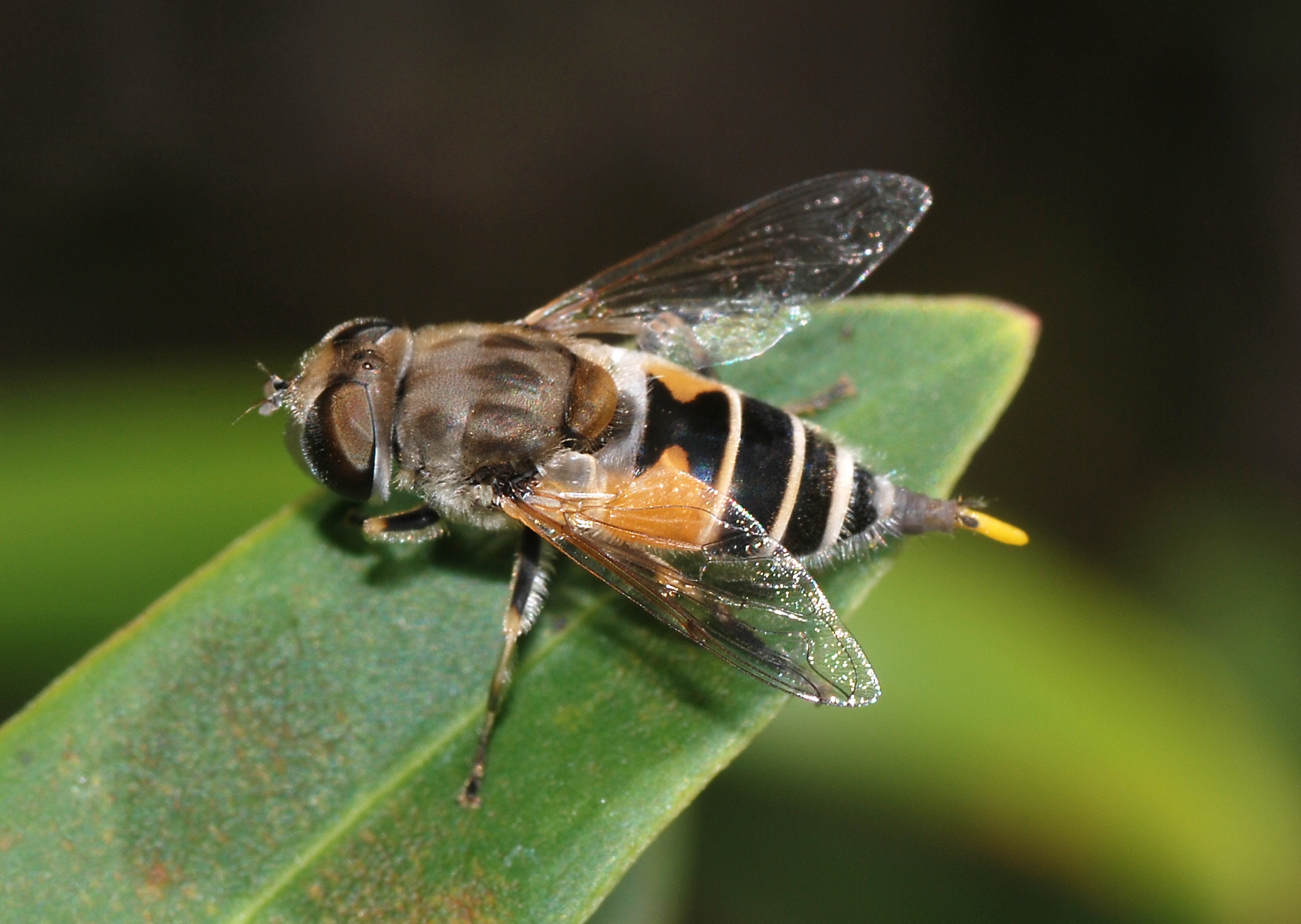
Every good garden has moments when an insect seems to suspend itself in the air long enough to think. That is often a hoverfly. It holds steady in front of a flower or leaf, shifts a few inches sideways, then darts off with startling precision. Many people register the yellow and black pattern first and assume wasp. The second look changes everything. The body is softer, the movement more delicate, and the whole creature feels interested in flowers rather than confrontation.
Hoverflies deserve much more attention than they get around Shall and Audubon, because they do two excellent things at once. The adults pollinate. The larvae of many species eat aphids. That is a very good résumé for a neighborhood garden insect.
Identification
Hoverflies are true flies, not bees and not wasps. That means they have a single pair of wings rather than two pairs, though nobody counts wings in the garden at first glance. What most people notice is the mimicry. Many species wear yellow-and-black bands, orange patches, or other warning-like markings that discourage predators without requiring an actual sting.
The field clue that matters most is behavior. Hoverflies can remain almost stationary in the air, then zip off in a clean straight burst. Bees and wasps fly differently. Once you see the hover, the name makes immediate sense.
Adults on Flowers, Larvae in the Aphids
Adult hoverflies feed on nectar and pollen, especially from open, accessible flowers. Umbels, daisies, herbs in bloom, alyssum, yarrow, and many small composite flowers are excellent hoverfly plants. They work the kind of flowers that let a short mouthpart feed easily.
The real garden magic happens one life stage earlier. Many hoverfly larvae are soft-bodied predators in aphid colonies. They look a little like small tapering slugs, not at all like the neat striped adults they become. A plant with aphids often draws lady beetles, lacewings, and hoverflies together, and the hoverfly larvae are often the least noticed of the useful hunters.
Why They Thrive in a Thoughtful Garden
Hoverflies do well where a garden includes both bloom and tolerance. Bloom feeds the adults. Tolerance allows aphids and other small prey to exist at the low to moderate levels predators need. A garden that is sprayed at the first sign of insect life removes the very food web that hoverflies depend on.
The Patient Garden's mixed planting style suits them. Herbs, meadow-like flowers, composite blooms, and a general reluctance to sterilize the insect world all help. The old Fairview site's openness also gives adults room to move between patches quickly. A hoverfly can feed in one sunny border, inspect another for egg-laying, and be back at a flowering herb bed in a very short loop.
Around The Patient Garden
You are most likely to notice hoverflies from spring into early fall on flowers that look almost too simple to matter. Alyssum, yarrow, dill, fennel, coriander in bloom, asters, chamomile-like composites, and open umbel flowers are especially good. They also show up on aphid-heavy growth in spring when roses, lupines, or soft new stems begin hosting sap-feeders.
Because they do not dominate a bed visually, hoverflies are a nice test of whether we are actually paying attention. Once you start looking, they turn out to be everywhere.
Conservation and Usefulness
Hoverflies are generally common, but like many beneficial insects they disappear from overly tidy, chemically managed landscapes. The easiest conservation action is also the easiest gardening advice: grow a range of small open flowers, let some herbs bolt, tolerate manageable aphid populations, and do not spray the whole system flat.
They are also excellent ambassadors for a broader truth. Not every helpful insect is charismatic at first glance. Some of the best ones look like minor supporting characters until you understand the role they are playing.
In The Patient Garden, hoverflies are part of the deep infrastructure of summer. They pollinate quietly, patrol aphid outbreaks by proxy through their larvae, and keep proving that ecological value often arrives in a much smaller package than we expect.
The Insect That Hangs in Place
Every good garden has moments when an insect seems to suspend itself in the air long enough to think. That is often a hoverfly. It holds steady in front of a flower or leaf, shifts a few inches sideways, then darts off with startling precision. Many people register the yellow and black pattern first and assume wasp. The second look changes everything. The body is softer, the movement more delicate, and the whole creature feels interested in flowers rather than confrontation.
Hoverflies deserve much more attention than they get around Shall and Audubon, because they do two excellent things at once. The adults pollinate. The larvae of many species eat aphids. That is a very good résumé for a neighborhood garden insect.
Identification
Hoverflies are true flies, not bees and not wasps. That means they have a single pair of wings rather than two pairs, though nobody counts wings in the garden at first glance. What most people notice is the mimicry. Many species wear yellow-and-black bands, orange patches, or other warning-like markings that discourage predators without requiring an actual sting.
The field clue that matters most is behavior. Hoverflies can remain almost stationary in the air, then zip off in a clean straight burst. Bees and wasps fly differently. Once you see the hover, the name makes immediate sense.
Adults on Flowers, Larvae in the Aphids
Adult hoverflies feed on nectar and pollen, especially from open, accessible flowers. Umbels, daisies, herbs in bloom, alyssum, yarrow, and many small composite flowers are excellent hoverfly plants. They work the kind of flowers that let a short mouthpart feed easily.
The real garden magic happens one life stage earlier. Many hoverfly larvae are soft-bodied predators in aphid colonies. They look a little like small tapering slugs, not at all like the neat striped adults they become. A plant with aphids often draws lady beetles, lacewings, and hoverflies together, and the hoverfly larvae are often the least noticed of the useful hunters.
Why They Thrive in a Thoughtful Garden
Hoverflies do well where a garden includes both bloom and tolerance. Bloom feeds the adults. Tolerance allows aphids and other small prey to exist at the low to moderate levels predators need. A garden that is sprayed at the first sign of insect life removes the very food web that hoverflies depend on.
The Patient Garden's mixed planting style suits them. Herbs, meadow-like flowers, composite blooms, and a general reluctance to sterilize the insect world all help. The old Fairview site's openness also gives adults room to move between patches quickly. A hoverfly can feed in one sunny border, inspect another for egg-laying, and be back at a flowering herb bed in a very short loop.
Around The Patient Garden
You are most likely to notice hoverflies from spring into early fall on flowers that look almost too simple to matter. Alyssum, yarrow, dill, fennel, coriander in bloom, asters, chamomile-like composites, and open umbel flowers are especially good. They also show up on aphid-heavy growth in spring when roses, lupines, or soft new stems begin hosting sap-feeders.
Because they do not dominate a bed visually, hoverflies are a nice test of whether we are actually paying attention. Once you start looking, they turn out to be everywhere.
Conservation and Usefulness
Hoverflies are generally common, but like many beneficial insects they disappear from overly tidy, chemically managed landscapes. The easiest conservation action is also the easiest gardening advice: grow a range of small open flowers, let some herbs bolt, tolerate manageable aphid populations, and do not spray the whole system flat.
They are also excellent ambassadors for a broader truth. Not every helpful insect is charismatic at first glance. Some of the best ones look like minor supporting characters until you understand the role they are playing.
In The Patient Garden, hoverflies are part of the deep infrastructure of summer. They pollinate quietly, patrol aphid outbreaks by proxy through their larvae, and keep proving that ecological value often arrives in a much smaller package than we expect.
Continue Continuar