Pacific tree frog Pacific tree frog
Pseudacris regilla
Pacific tree frogs are the tiny voices of wet weather in western Oregon, calling from puddles, swales, and hidden stems with a sound far larger than their bodies suggest. Around the old Fairview site, they turn winter and spring standing water into breeding habitat almost overnight. Pacific tree frogs are the tiny voices of wet weather in western Oregon, calling from puddles, swales, and hidden stems with a sound far larger than their bodies suggest. Around the old Fairview site, they turn winter and spring standing water into breeding habitat almost overnight.
The Voice in the Rainwater
The first Pacific tree frog of the year is often heard before it is seen, and usually before the weather feels settled enough to deserve frogs at all. A sharp, repeating creek or ribbit comes from a rain-filled low spot, a roadside ditch, or a shallow basin on the old Fairview site, and suddenly winter does not feel dormant anymore. It feels occupied.
That is one of the quiet pleasures of this landscape. The same heavy clay that frustrates gardeners by holding water also creates temporary amphibian habitat. Pacific tree frogs know how to use it fast.
Identification
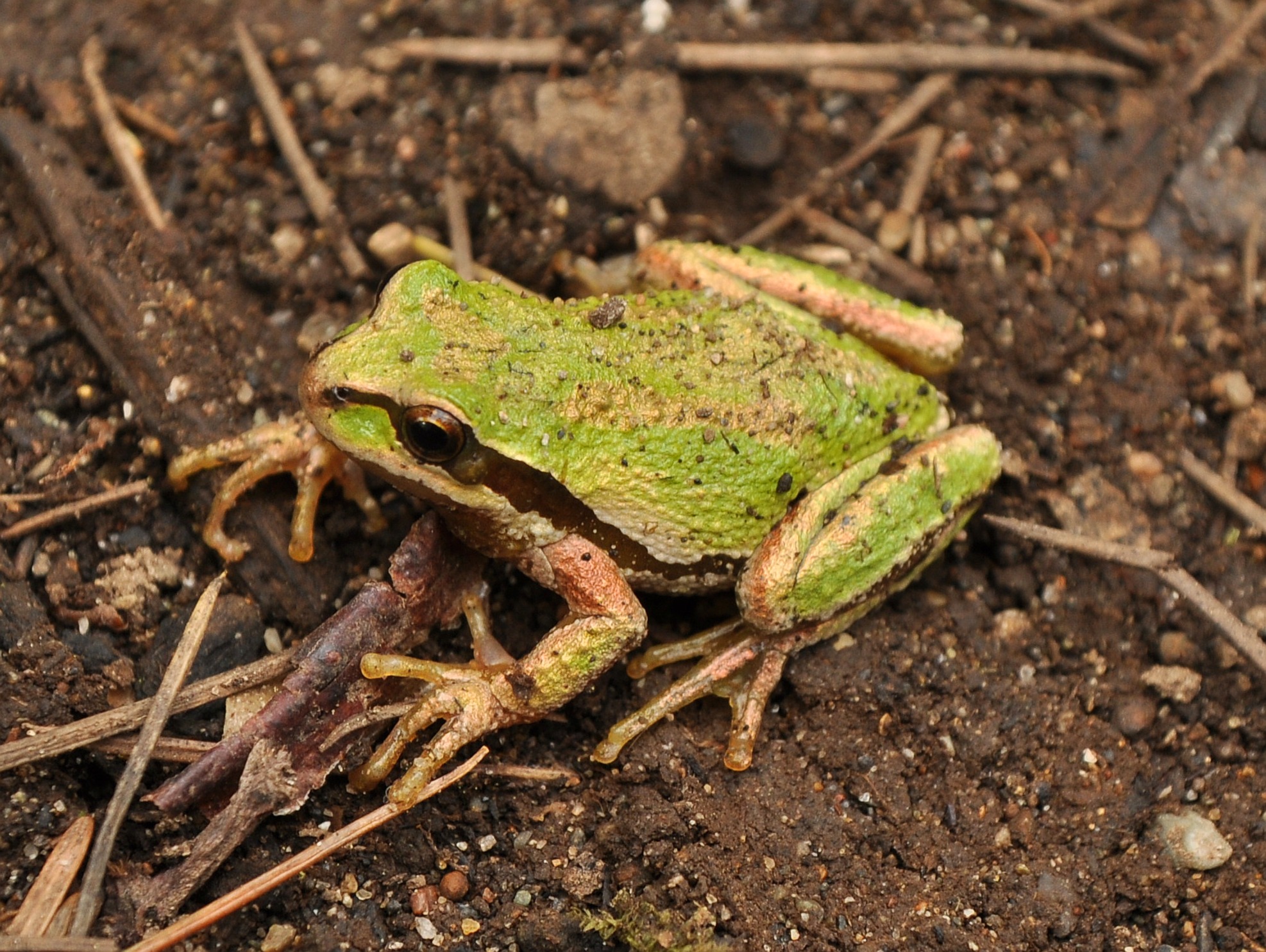
Pacific tree frogs are small, usually about one to two inches long, with smooth skin, a dark mask through the eye, and adhesive toe pads that let them climb stems, leaves, fences, and windows. The color is famously variable. One frog may be bright leaf green. Another may be brown, bronze, or mottled in a way that matches bark or mud. The dark eye stripe is the most dependable field mark.
Their size surprises people. The call carries like a much larger animal. A whole breeding chorus in a wet spring ditch can sound as if the water is full of substantial frogs, when in reality most of the singers would fit easily in the palm of your hand.
Clay, Puddles, and Breeding Season
The Fairview clay makes this entry local in a very literal way. Pacific tree frogs do not require a grand permanent pond to breed. They can use seasonal pools, shallow flooded depressions, and low spots that stay wet long enough for eggs and tadpoles to develop. The old Fairview site offers exactly that kind of temporary water in wet months.
This matters because temporary water can be safer than permanent water. It is less likely to hold fish, and fish eat amphibian eggs and tadpoles readily. A muddy, rain-filled basin that seems inconvenient to us may be excellent frog nursery habitat for a few critical weeks.
Breeding usually ramps up in late winter and spring. Males call from shallow water or wet vegetation, females lay gelatinous egg masses, and tadpoles begin working the algae-rich edges as the days lengthen. Timing depends on rain and temperature, which means every year feels a little different.
Around The Patient Garden
At The Patient Garden itself, Pacific tree frogs are more often nearby neighbors than permanent residents of the central beds, unless there is a pond or seasonally reliable water feature close at hand. But the surrounding Fairview ground, drainage edges, and wet winter depressions make the broader site useful.
Outside breeding season they spread into terrestrial habitat and become much harder to notice. A tree frog may spend summer tucked in dense foliage, low shrubs, garden vegetation, or damp crevices, emerging by night to hunt small insects. That is why a place can seem frog-free in August and still erupt with calling in February.
Plants matter here because cover matters. Sword fern, sedges, iris clumps, low shrubs, and any layered moist edge around water help tree frogs move between breeding and resting habitat. A tidy scraped bank is much less interesting to them than a messy planted margin.
What They Eat and Who Eats Them
Pacific tree frogs feed on small insects and other invertebrates. Mosquitoes, gnats, beetles, flies, spiders, and tiny moths all fall within range. In turn, frogs feed garter snakes, birds, raccoons, and larger invertebrate hunters. A calling pond edge is never just a frog event. It is a small food-web event unfolding out in the open.
Tadpoles mostly graze algae and organic film, which means water quality matters. Polluted or repeatedly disturbed shallow water can fail even when the basin itself still fills.
Conservation and Why They Matter
Pacific tree frogs remain common in much of western Oregon, but local breeding habitat is easy to lose. Fill the puddles, pipe the ditches, scrape the vegetation, or introduce fish, and the frogs fade quickly. The neighborhood-scale conservation lesson is simple: seasonal water counts.
That is worth remembering on the old Fairview site. Not every wet low spot needs to be corrected into neat drainage. Some of them are doing ecological work. When Pacific tree frogs call from them in late winter, they make that case better than any signboard could.
In The Patient Garden, their presence is one of the clearest reminders that a place shaped by clay and rain can support more life than our tidy instincts would predict. Sometimes habitat sounds like a small frog calling from a puddle we were planning to complain about.
The Voice in the Rainwater
The first Pacific tree frog of the year is often heard before it is seen, and usually before the weather feels settled enough to deserve frogs at all. A sharp, repeating creek or ribbit comes from a rain-filled low spot, a roadside ditch, or a shallow basin on the old Fairview site, and suddenly winter does not feel dormant anymore. It feels occupied.
That is one of the quiet pleasures of this landscape. The same heavy clay that frustrates gardeners by holding water also creates temporary amphibian habitat. Pacific tree frogs know how to use it fast.
Identification
Pacific tree frogs are small, usually about one to two inches long, with smooth skin, a dark mask through the eye, and adhesive toe pads that let them climb stems, leaves, fences, and windows. The color is famously variable. One frog may be bright leaf green. Another may be brown, bronze, or mottled in a way that matches bark or mud. The dark eye stripe is the most dependable field mark.
Their size surprises people. The call carries like a much larger animal. A whole breeding chorus in a wet spring ditch can sound as if the water is full of substantial frogs, when in reality most of the singers would fit easily in the palm of your hand.
Clay, Puddles, and Breeding Season
The Fairview clay makes this entry local in a very literal way. Pacific tree frogs do not require a grand permanent pond to breed. They can use seasonal pools, shallow flooded depressions, and low spots that stay wet long enough for eggs and tadpoles to develop. The old Fairview site offers exactly that kind of temporary water in wet months.
This matters because temporary water can be safer than permanent water. It is less likely to hold fish, and fish eat amphibian eggs and tadpoles readily. A muddy, rain-filled basin that seems inconvenient to us may be excellent frog nursery habitat for a few critical weeks.
Breeding usually ramps up in late winter and spring. Males call from shallow water or wet vegetation, females lay gelatinous egg masses, and tadpoles begin working the algae-rich edges as the days lengthen. Timing depends on rain and temperature, which means every year feels a little different.
Around The Patient Garden
At The Patient Garden itself, Pacific tree frogs are more often nearby neighbors than permanent residents of the central beds, unless there is a pond or seasonally reliable water feature close at hand. But the surrounding Fairview ground, drainage edges, and wet winter depressions make the broader site useful.
Outside breeding season they spread into terrestrial habitat and become much harder to notice. A tree frog may spend summer tucked in dense foliage, low shrubs, garden vegetation, or damp crevices, emerging by night to hunt small insects. That is why a place can seem frog-free in August and still erupt with calling in February.
Plants matter here because cover matters. Sword fern, sedges, iris clumps, low shrubs, and any layered moist edge around water help tree frogs move between breeding and resting habitat. A tidy scraped bank is much less interesting to them than a messy planted margin.
What They Eat and Who Eats Them
Pacific tree frogs feed on small insects and other invertebrates. Mosquitoes, gnats, beetles, flies, spiders, and tiny moths all fall within range. In turn, frogs feed garter snakes, birds, raccoons, and larger invertebrate hunters. A calling pond edge is never just a frog event. It is a small food-web event unfolding out in the open.
Tadpoles mostly graze algae and organic film, which means water quality matters. Polluted or repeatedly disturbed shallow water can fail even when the basin itself still fills.
Conservation and Why They Matter
Pacific tree frogs remain common in much of western Oregon, but local breeding habitat is easy to lose. Fill the puddles, pipe the ditches, scrape the vegetation, or introduce fish, and the frogs fade quickly. The neighborhood-scale conservation lesson is simple: seasonal water counts.
That is worth remembering on the old Fairview site. Not every wet low spot needs to be corrected into neat drainage. Some of them are doing ecological work. When Pacific tree frogs call from them in late winter, they make that case better than any signboard could.
In The Patient Garden, their presence is one of the clearest reminders that a place shaped by clay and rain can support more life than our tidy instincts would predict. Sometimes habitat sounds like a small frog calling from a puddle we were planning to complain about.
Continue Continuar