Paper wasps Paper wasps
Polistes spp.
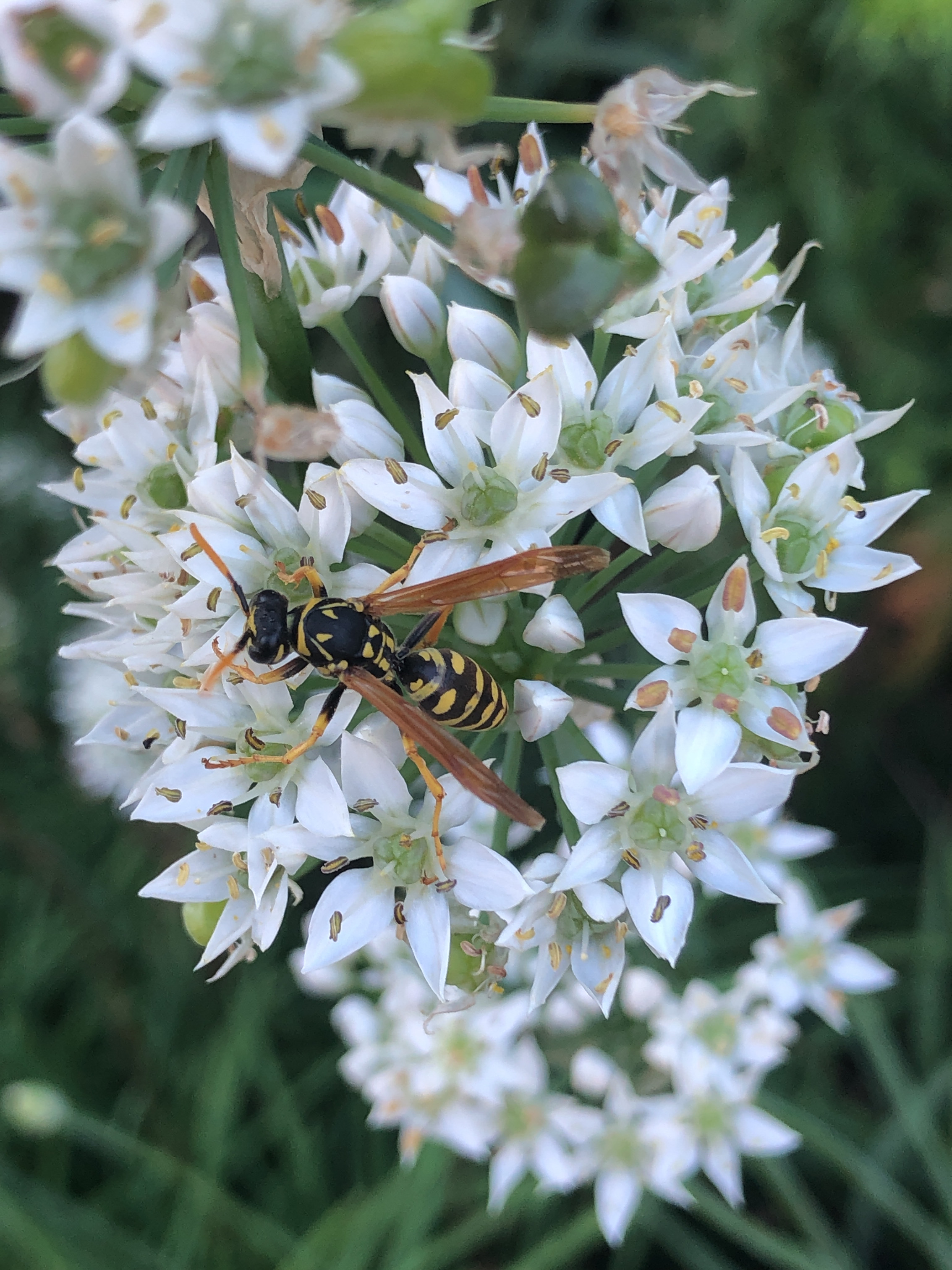
Paper wasps are the long-legged wasps of eaves, stems, and summer flowers, more useful and less aggressive than their reputation suggests. Around The Patient Garden, they are both pollinator-adjacent flower visitors and efficient caterpillar hunters. Paper wasps are the long-legged wasps of eaves, stems, and summer flowers, more useful and less aggressive than their reputation suggests. Around The Patient Garden, they are both pollinator-adjacent flower visitors and efficient caterpillar hunters.
The Wasp People Notice Before They Understand
Paper wasps suffer from being recognizable at a distance and poorly known up close. Someone spots the slim waist, long legs, and dangling flight under an eave, and the word wasp does the rest. But watch a paper wasp in the garden instead of on the patio for a few minutes and the story changes. It lands on flowers. It patrols leaves. It investigates a caterpillar-rich patch with very clear purpose. This is not just a stinging insect. It is one of the garden's working predators.
That does not mean paper wasps are harmless decorations. A nest deserves space. But it does mean they belong in the honest field guide, not just the list of things people complain about in August.
Identification
Paper wasps are slimmer and leggier than yellowjackets. In flight, the hind legs often trail noticeably behind the body, which is one of the easiest field marks once you know to look for it. The nest is another clue: an open umbrella of exposed hexagonal cells, often suspended by a narrow stalk under eaves, beams, rails, or protected stems.
Species vary, but the overall look is consistent. Narrow waist, long legs, paper nest, more graceful movement than the chunkier social wasps people usually fear most.
What They Actually Do in the Garden
Adult paper wasps feed on nectar, plant juices, and prey-derived fluids, but the colony's real value to a garden comes from what they collect for larvae. Caterpillars, sawfly larvae, and other soft-bodied insects are chewed and carried back to the nest as food. A paper wasp hunting through foliage is often doing pest control.
That makes them especially interesting around The Patient Garden, where flowering borders and edible plantings overlap. A garden that supports leaf-feeding insects will attract predators, and paper wasps are among the more effective aerial hunters in that category.
They also visit flowers. Allium, mint flowers, umbels, euphorbia, yarrow, and many late summer blooms draw adults looking for nectar. So while they are not top-tier pollinators in the way bees are, they are still part of the flower-visiting community.
Around The Old Fairview Site
The old Fairview site and its surrounding houses give paper wasps exactly the mix they prefer: sheltered overhangs and structures for nesting, open sunny garden for foraging, and plenty of caterpillars on ornamentals and nearby vegetation through the warm months. Nests often begin small in late spring, founded by a single queen or a small cluster of females, then grow through summer as workers take over the foraging.
The Fairview clay matters only indirectly here. It supports lush spring growth and a long season of leaf production where water is available, which in turn supports the herbivores paper wasps hunt. More leaf, more caterpillar, more wasp work.
Coexistence Without Drama
Paper wasps are usually less aggressive away from the nest than yellowjackets. A foraging wasp on a flower generally wants the flower, not the person standing nearby. Conflict happens when nests are built in high-traffic places and repeatedly disturbed.
The best response is situational. A nest over a back door may need management. A nest on a quiet shed corner may be worth leaving alone. Blanket fear is not helpful, but neither is pretending all nests are equally easy to live with.
Conservation and Perspective
Paper wasps do not need special protection in Salem, but they do benefit from the same general garden conditions that support a functioning insect web: bloom, prey, and reduced chemical use. The more interesting conservation point is cultural. If we want gardens that support predators and not just pollinators, then paper wasps are part of that commitment.
They ask us to think a little better about what usefulness looks like. A paper wasp carrying off a caterpillar from the beans is not a nuisance. It is a predator doing exactly what a living garden makes possible.
Around The Patient Garden, that is their place in the story. They are not cuddly. They are not everyone’s favorite. But they are real participants in the ecology of summer, and the garden is better understood once you learn to read them that way.
The Wasp People Notice Before They Understand
Paper wasps suffer from being recognizable at a distance and poorly known up close. Someone spots the slim waist, long legs, and dangling flight under an eave, and the word wasp does the rest. But watch a paper wasp in the garden instead of on the patio for a few minutes and the story changes. It lands on flowers. It patrols leaves. It investigates a caterpillar-rich patch with very clear purpose. This is not just a stinging insect. It is one of the garden's working predators.
That does not mean paper wasps are harmless decorations. A nest deserves space. But it does mean they belong in the honest field guide, not just the list of things people complain about in August.
Identification
Paper wasps are slimmer and leggier than yellowjackets. In flight, the hind legs often trail noticeably behind the body, which is one of the easiest field marks once you know to look for it. The nest is another clue: an open umbrella of exposed hexagonal cells, often suspended by a narrow stalk under eaves, beams, rails, or protected stems.
Species vary, but the overall look is consistent. Narrow waist, long legs, paper nest, more graceful movement than the chunkier social wasps people usually fear most.
What They Actually Do in the Garden
Adult paper wasps feed on nectar, plant juices, and prey-derived fluids, but the colony's real value to a garden comes from what they collect for larvae. Caterpillars, sawfly larvae, and other soft-bodied insects are chewed and carried back to the nest as food. A paper wasp hunting through foliage is often doing pest control.
That makes them especially interesting around The Patient Garden, where flowering borders and edible plantings overlap. A garden that supports leaf-feeding insects will attract predators, and paper wasps are among the more effective aerial hunters in that category.
They also visit flowers. Allium, mint flowers, umbels, euphorbia, yarrow, and many late summer blooms draw adults looking for nectar. So while they are not top-tier pollinators in the way bees are, they are still part of the flower-visiting community.
Around The Old Fairview Site
The old Fairview site and its surrounding houses give paper wasps exactly the mix they prefer: sheltered overhangs and structures for nesting, open sunny garden for foraging, and plenty of caterpillars on ornamentals and nearby vegetation through the warm months. Nests often begin small in late spring, founded by a single queen or a small cluster of females, then grow through summer as workers take over the foraging.
The Fairview clay matters only indirectly here. It supports lush spring growth and a long season of leaf production where water is available, which in turn supports the herbivores paper wasps hunt. More leaf, more caterpillar, more wasp work.
Coexistence Without Drama
Paper wasps are usually less aggressive away from the nest than yellowjackets. A foraging wasp on a flower generally wants the flower, not the person standing nearby. Conflict happens when nests are built in high-traffic places and repeatedly disturbed.
The best response is situational. A nest over a back door may need management. A nest on a quiet shed corner may be worth leaving alone. Blanket fear is not helpful, but neither is pretending all nests are equally easy to live with.
Conservation and Perspective
Paper wasps do not need special protection in Salem, but they do benefit from the same general garden conditions that support a functioning insect web: bloom, prey, and reduced chemical use. The more interesting conservation point is cultural. If we want gardens that support predators and not just pollinators, then paper wasps are part of that commitment.
They ask us to think a little better about what usefulness looks like. A paper wasp carrying off a caterpillar from the beans is not a nuisance. It is a predator doing exactly what a living garden makes possible.
Around The Patient Garden, that is their place in the story. They are not cuddly. They are not everyone’s favorite. But they are real participants in the ecology of summer, and the garden is better understood once you learn to read them that way.
Continue Continuar