Raccoon Raccoon
Procyon lotor
Raccoons are the masked night shift of the neighborhood, clever enough to open lids and patient enough to work every edge of the garden after dark. Around Shall and Audubon, they live comfortably between creek corridor habits and suburban trash-can logic. Raccoons are the masked night shift of the neighborhood, clever enough to open lids and patient enough to work every edge of the garden after dark. Around Shall and Audubon, they live comfortably between creek corridor habits and suburban trash-can logic.
The Night Shift Arrives After We Go In
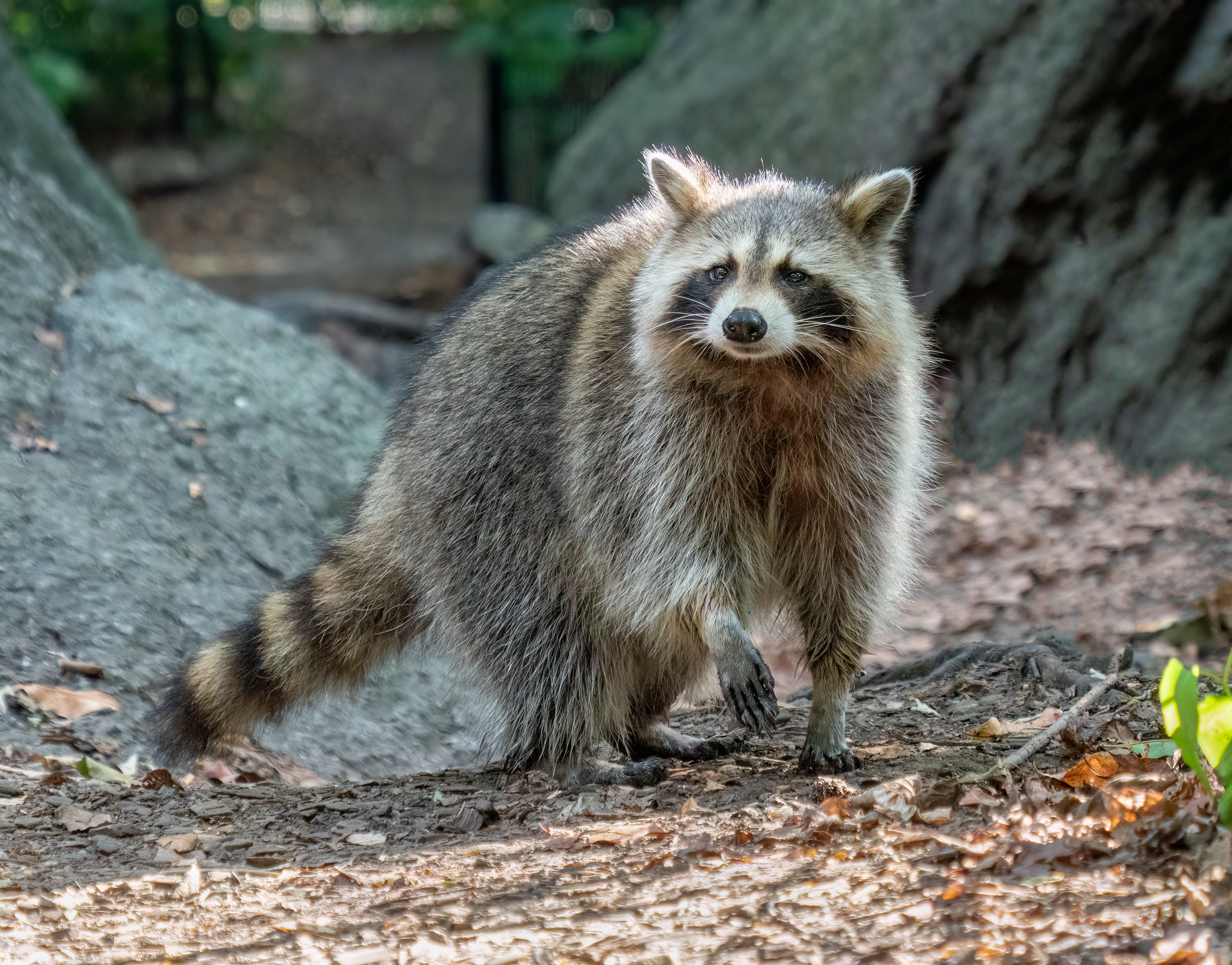
A raccoon rarely announces itself the way a crow or squirrel does. You discover it indirectly. The suet feeder is on the ground. The compost lid is crooked. A muddy handprint appears on the rim of a water basin. Then one evening, if you happen to be outside late enough, the owner of all that evidence steps into view under the porch light: gray coat, black mask, ringed tail, moving with the slow, deliberate confidence of an animal that has learned our schedules and does not find them impressive.
Raccoons fit the old Fairview site and the surrounding neighborhood almost perfectly. They like edges, den sites, scattered trees, wet places, and human leftovers. Salem gives them all of that.
Identification
There is not much else here to confuse with a raccoon. Adults are medium-sized mammals, often ten to twenty pounds in urban neighborhoods, though well-fed individuals can run heavier. The mask across the face is obvious. The tail is thick and ringed. The gait has a rolling, plantigrade feel, almost bear-like at a small scale.
The detail people remember once they see one up close is the hands. Raccoons use their front paws with startling precision, feeling, turning, prying, and testing. In wet weather you can sometimes follow a raccoon's route by hand-shaped prints in mud along the edge of a bed or drainage swale.
What They Eat Here
Raccoons are omnivores in the broadest possible sense. On the Fairview grounds and nearby streets, that means fallen fruit, nuts, beetles, worms, slugs, bird seed, pet food, crayfish where available, eggs if they find them, and any unsecured garbage that smells promising. They also work shallow water and muddy edges for invertebrates, using those sensitive hands to feel through leaf litter and soft muck.
This is one place where the heavy Fairview clay changes the story. Clay holds puddles and seasonal wet spots longer than better-drained soil would, and those wet edges become feeding lanes. After a stretch of rain, raccoons can work the margins of standing water, the damp base of shrubbery, and the soft edges of drainage features with excellent results.
Around The Patient Garden
In The Patient Garden, raccoons are mostly a twilight and night presence. They move the fence lines, skirt the denser shrubs, and investigate any place where humans have concentrated food or water. Fruit trees are invitations. Compost is an invitation. Uncovered feed is an invitation written in large letters.
They also need den sites, and suburban raccoons are flexible about them. Large tree cavities are classic, but so are outbuildings, crawl spaces, brush piles, and sheltered corners of old structures. The older trees and layered edges around the old Fairview site give them enough cover to spend the day close by and emerge only when the light drops.
In spring, females with kits begin showing up on the margins of the neighborhood. Young raccoons climb poorly at first, then suddenly become agile and reckless. A family moving along a fence at dusk is one of the better summer wildlife sightings around Shall and Audubon.
Behavior and Neighborhood Friction
Raccoons are smart, adaptable, and sometimes impossible. They remember food sources, return to successful routes, and learn which lids open, which gates swing, and which yards are worth checking. That intelligence is part of their charm and most of the trouble.
The practical rule is simple: if you do not want to feed raccoons, remove the opportunity. Secure compost, bring pet food in, use wildlife-resistant bins, and harvest fruit before it rots under the tree. Once a raccoon has mapped a reliable food stop, it will keep that stop on the route.
Conservation and Perspective
Raccoons are common and need no special conservation help in Salem. The local concerns are conflict and disease, not scarcity. They can carry parasites and should never be encouraged into close dependence on human food. Respectful distance is the right relationship.
Still, they earn a certain admiration. They read the neighborhood with great precision. They know where the sheltered routes are, where the puddles persist after rain, and where the apples start dropping first. Watching one pause on the edge of the garden, hands resting on the fence top, you see an animal fully adapted to the border between wild habit and human habit. That border is where much of the Fairview story lives now, and raccoons understand it better than we do.
The Night Shift Arrives After We Go In
A raccoon rarely announces itself the way a crow or squirrel does. You discover it indirectly. The suet feeder is on the ground. The compost lid is crooked. A muddy handprint appears on the rim of a water basin. Then one evening, if you happen to be outside late enough, the owner of all that evidence steps into view under the porch light: gray coat, black mask, ringed tail, moving with the slow, deliberate confidence of an animal that has learned our schedules and does not find them impressive.
Raccoons fit the old Fairview site and the surrounding neighborhood almost perfectly. They like edges, den sites, scattered trees, wet places, and human leftovers. Salem gives them all of that.
Identification
There is not much else here to confuse with a raccoon. Adults are medium-sized mammals, often ten to twenty pounds in urban neighborhoods, though well-fed individuals can run heavier. The mask across the face is obvious. The tail is thick and ringed. The gait has a rolling, plantigrade feel, almost bear-like at a small scale.
The detail people remember once they see one up close is the hands. Raccoons use their front paws with startling precision, feeling, turning, prying, and testing. In wet weather you can sometimes follow a raccoon's route by hand-shaped prints in mud along the edge of a bed or drainage swale.
What They Eat Here
Raccoons are omnivores in the broadest possible sense. On the Fairview grounds and nearby streets, that means fallen fruit, nuts, beetles, worms, slugs, bird seed, pet food, crayfish where available, eggs if they find them, and any unsecured garbage that smells promising. They also work shallow water and muddy edges for invertebrates, using those sensitive hands to feel through leaf litter and soft muck.
This is one place where the heavy Fairview clay changes the story. Clay holds puddles and seasonal wet spots longer than better-drained soil would, and those wet edges become feeding lanes. After a stretch of rain, raccoons can work the margins of standing water, the damp base of shrubbery, and the soft edges of drainage features with excellent results.
Around The Patient Garden
In The Patient Garden, raccoons are mostly a twilight and night presence. They move the fence lines, skirt the denser shrubs, and investigate any place where humans have concentrated food or water. Fruit trees are invitations. Compost is an invitation. Uncovered feed is an invitation written in large letters.
They also need den sites, and suburban raccoons are flexible about them. Large tree cavities are classic, but so are outbuildings, crawl spaces, brush piles, and sheltered corners of old structures. The older trees and layered edges around the old Fairview site give them enough cover to spend the day close by and emerge only when the light drops.
In spring, females with kits begin showing up on the margins of the neighborhood. Young raccoons climb poorly at first, then suddenly become agile and reckless. A family moving along a fence at dusk is one of the better summer wildlife sightings around Shall and Audubon.
Behavior and Neighborhood Friction
Raccoons are smart, adaptable, and sometimes impossible. They remember food sources, return to successful routes, and learn which lids open, which gates swing, and which yards are worth checking. That intelligence is part of their charm and most of the trouble.
The practical rule is simple: if you do not want to feed raccoons, remove the opportunity. Secure compost, bring pet food in, use wildlife-resistant bins, and harvest fruit before it rots under the tree. Once a raccoon has mapped a reliable food stop, it will keep that stop on the route.
Conservation and Perspective
Raccoons are common and need no special conservation help in Salem. The local concerns are conflict and disease, not scarcity. They can carry parasites and should never be encouraged into close dependence on human food. Respectful distance is the right relationship.
Still, they earn a certain admiration. They read the neighborhood with great precision. They know where the sheltered routes are, where the puddles persist after rain, and where the apples start dropping first. Watching one pause on the edge of the garden, hands resting on the fence top, you see an animal fully adapted to the border between wild habit and human habit. That border is where much of the Fairview story lives now, and raccoons understand it better than we do.
Continue Continuar