Slugs and snails Slugs and snails
Gastropoda
Slugs and snails are the least romantic but most practically important wildlife in a Salem garden, shaping what survives spring planting and what gets skeletonized overnight. Around Fairview, the heavy clay and long wet season make them impossible to ignore and worth understanding clearly. Slugs and snails are the least romantic but most practically important wildlife in a Salem garden, shaping what survives spring planting and what gets skeletonized overnight. Around Fairview, the heavy clay and long wet season make them impossible to ignore and worth understanding clearly.
The Honest Garden Problem
A neighborhood field guide that includes hummingbirds and swallowtails but skips slugs would be avoiding the truth. Around Shall and Audubon, slugs and snails are part of the real ecology of gardening, not an unfortunate side note. They are recyclers, prey, moisture-loving grazers, and, when conditions suit them, genuine plant-mangling professionals.
The old Fairview site gives them a lot to work with. Heavy clay holds moisture. Winter and spring stay wet for a long time. Mulch, boards, stone edges, and dense groundcover create daytime shelter. Tender seedlings appear every year as if in tribute. Of course slugs and snails are here.
Not One Thing
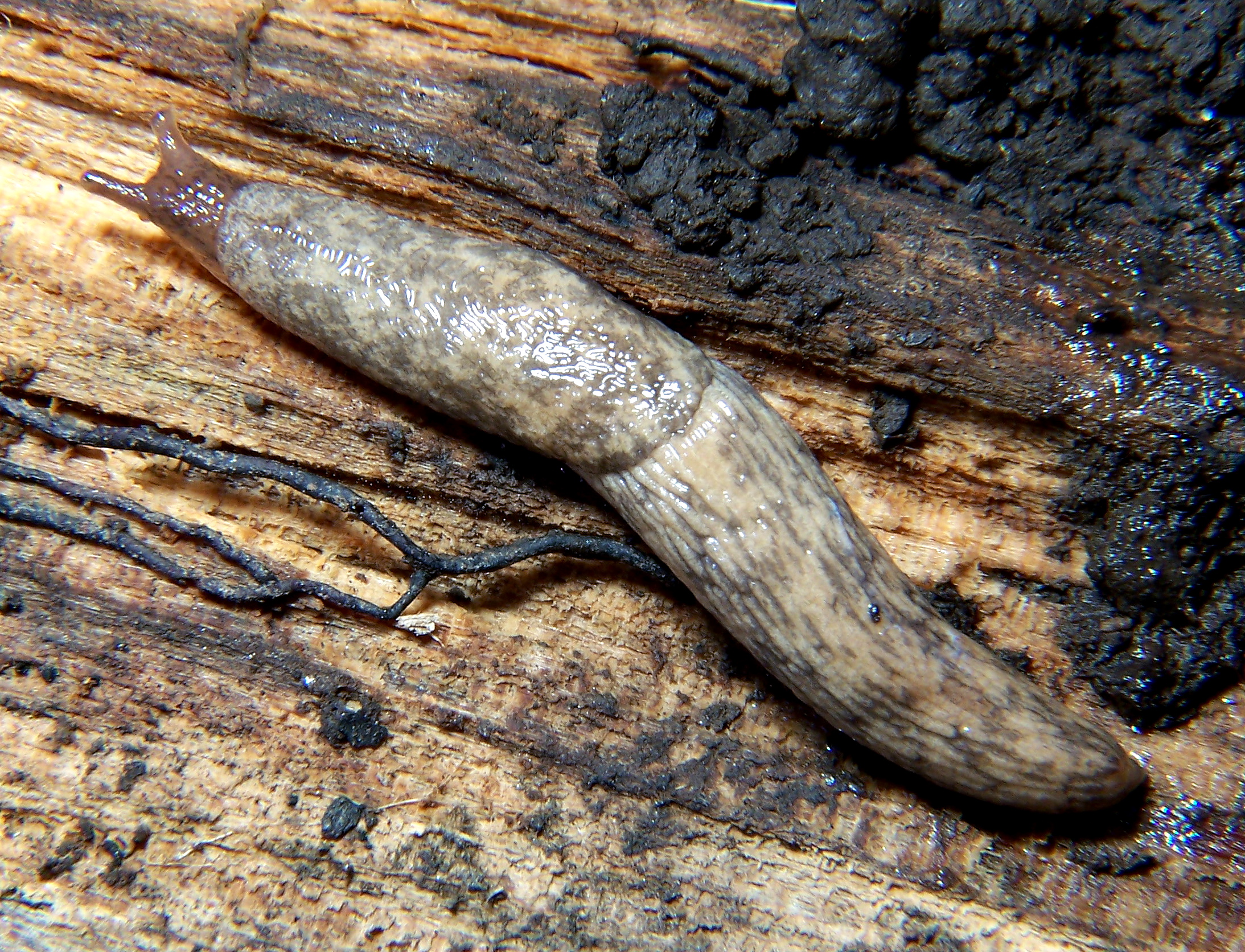
This page groups several kinds of garden gastropods because that is how most gardeners experience them. Gray field slugs, brown garden snails, small dark slugs under pots, and other soft-bodied leaf grazers all enter the conversation under one emotional category: who did this to my seedlings.
That broad grouping is useful, but the main pattern is even more useful. Slugs dominate the damage conversation in wetter Pacific Northwest gardens because they move easily through low damp cover and feed hard at night. Snails matter too, but often a little less intensely in the kinds of cool wet spring conditions Salem does so well.
Why Fairview Is Good Slug Country
This may be the most locally grounded wildlife page in the whole batch. The Fairview clay is slug infrastructure. It retains water, slows drying, and supports lush low growth through the wet half of the year. Add mulch and irrigation, and the surface layer of the garden stays comfortable for gastropods long after a sandier site would have become hostile.
That is why spring planting can feel so uneven here. A bed may look ready, but every board edge, stone, and clump of old leaves can hide a nighttime grazing crew. Seedlings with soft leaves are especially vulnerable. Lettuce, basil, dahlia shoots, marigolds, beans, hostas, and tender annual starts often read to slugs as invitations.
What They Actually Do
Slugs and snails eat living plant tissue, algae, fungi, and decaying matter. That means they are not only pests. They are also decomposers and part of the nutrient-cycling story in damp gardens. The problem is one of balance and appetite. A few slugs in the compost zone are one thing. A wet April with high numbers in the lettuce bed is another.
They are also prey. Garter snakes, ground beetles, some birds, ducks, and even opossums can take slugs and snails. If those predators are absent or the shelter conditions are too perfect, slug numbers rise fast.
Around The Patient Garden
In The Patient Garden, slug pressure is highest in the cool wet months and in irrigated pockets that stay soft through summer. Dense low plantings, thick mulch, board borders, overturned pots, and shaded bed edges are classic hiding places. Damage appears overnight as ragged holes, shaved stems, or seedlings cut down before breakfast.
The most productive response is not outrage. It is timing and habitat reading. Water in the morning rather than late evening. Reduce the coolest hidden shelter right next to the most vulnerable starts. Protect seedlings during the weeks they are most tender. Hand-pick on wet evenings if numbers are high. Use traps or barriers where they actually help, not as ritual.
The Field-Guide Way to Think About Them
Slugs and snails are useful because they force honesty. A Pacific Northwest garden is not a Mediterranean garden. Our long wet season supports lush growth and mollusk pressure together. You do not get one without negotiating the other.
That is why this page belongs next to the birds and bees. If we are paying attention to how a place really works, then the animals eating the young dahlia leaves matter just as much as the birds on the fence. They tell us what kind of climate we garden in.
Conservation, If That Is the Right Word
No one needs encouragement to conserve the gray field slug. The more useful ecological point is to avoid flattening every species into a moral category. Some gastropods are major garden pests. Some are mostly decomposers. All are moisture-bound creatures telling the truth about the site.
Around the old Fairview site, that truth is simple. Wet ground stays alive in ways we do not fully control. Understanding slugs and snails does not make them less frustrating, but it does make the garden more legible. Sometimes that is the first real step toward managing anything well.
The Honest Garden Problem
A neighborhood field guide that includes hummingbirds and swallowtails but skips slugs would be avoiding the truth. Around Shall and Audubon, slugs and snails are part of the real ecology of gardening, not an unfortunate side note. They are recyclers, prey, moisture-loving grazers, and, when conditions suit them, genuine plant-mangling professionals.
The old Fairview site gives them a lot to work with. Heavy clay holds moisture. Winter and spring stay wet for a long time. Mulch, boards, stone edges, and dense groundcover create daytime shelter. Tender seedlings appear every year as if in tribute. Of course slugs and snails are here.
Not One Thing
This page groups several kinds of garden gastropods because that is how most gardeners experience them. Gray field slugs, brown garden snails, small dark slugs under pots, and other soft-bodied leaf grazers all enter the conversation under one emotional category: who did this to my seedlings.
That broad grouping is useful, but the main pattern is even more useful. Slugs dominate the damage conversation in wetter Pacific Northwest gardens because they move easily through low damp cover and feed hard at night. Snails matter too, but often a little less intensely in the kinds of cool wet spring conditions Salem does so well.
Why Fairview Is Good Slug Country
This may be the most locally grounded wildlife page in the whole batch. The Fairview clay is slug infrastructure. It retains water, slows drying, and supports lush low growth through the wet half of the year. Add mulch and irrigation, and the surface layer of the garden stays comfortable for gastropods long after a sandier site would have become hostile.
That is why spring planting can feel so uneven here. A bed may look ready, but every board edge, stone, and clump of old leaves can hide a nighttime grazing crew. Seedlings with soft leaves are especially vulnerable. Lettuce, basil, dahlia shoots, marigolds, beans, hostas, and tender annual starts often read to slugs as invitations.
What They Actually Do
Slugs and snails eat living plant tissue, algae, fungi, and decaying matter. That means they are not only pests. They are also decomposers and part of the nutrient-cycling story in damp gardens. The problem is one of balance and appetite. A few slugs in the compost zone are one thing. A wet April with high numbers in the lettuce bed is another.
They are also prey. Garter snakes, ground beetles, some birds, ducks, and even opossums can take slugs and snails. If those predators are absent or the shelter conditions are too perfect, slug numbers rise fast.
Around The Patient Garden
In The Patient Garden, slug pressure is highest in the cool wet months and in irrigated pockets that stay soft through summer. Dense low plantings, thick mulch, board borders, overturned pots, and shaded bed edges are classic hiding places. Damage appears overnight as ragged holes, shaved stems, or seedlings cut down before breakfast.
The most productive response is not outrage. It is timing and habitat reading. Water in the morning rather than late evening. Reduce the coolest hidden shelter right next to the most vulnerable starts. Protect seedlings during the weeks they are most tender. Hand-pick on wet evenings if numbers are high. Use traps or barriers where they actually help, not as ritual.
The Field-Guide Way to Think About Them
Slugs and snails are useful because they force honesty. A Pacific Northwest garden is not a Mediterranean garden. Our long wet season supports lush growth and mollusk pressure together. You do not get one without negotiating the other.
That is why this page belongs next to the birds and bees. If we are paying attention to how a place really works, then the animals eating the young dahlia leaves matter just as much as the birds on the fence. They tell us what kind of climate we garden in.
Conservation, If That Is the Right Word
No one needs encouragement to conserve the gray field slug. The more useful ecological point is to avoid flattening every species into a moral category. Some gastropods are major garden pests. Some are mostly decomposers. All are moisture-bound creatures telling the truth about the site.
Around the old Fairview site, that truth is simple. Wet ground stays alive in ways we do not fully control. Understanding slugs and snails does not make them less frustrating, but it does make the garden more legible. Sometimes that is the first real step toward managing anything well.
Continue Continuar