Striped skunk Striped skunk
Mephitis mephitis
Striped skunks are the neighborhood's slow, black-and-white warning signs, calm until pushed and surprisingly useful where lawns and beds hide beetles and grubs. Around Fairview, they belong to the twilight hours when the garden starts smelling like damp soil and cut grass. Striped skunks are the neighborhood's slow, black-and-white warning signs, calm until pushed and surprisingly useful where lawns and beds hide beetles and grubs. Around Fairview, they belong to the twilight hours when the garden starts smelling like damp soil and cut grass.
The Animal That Asks for Space Clearly
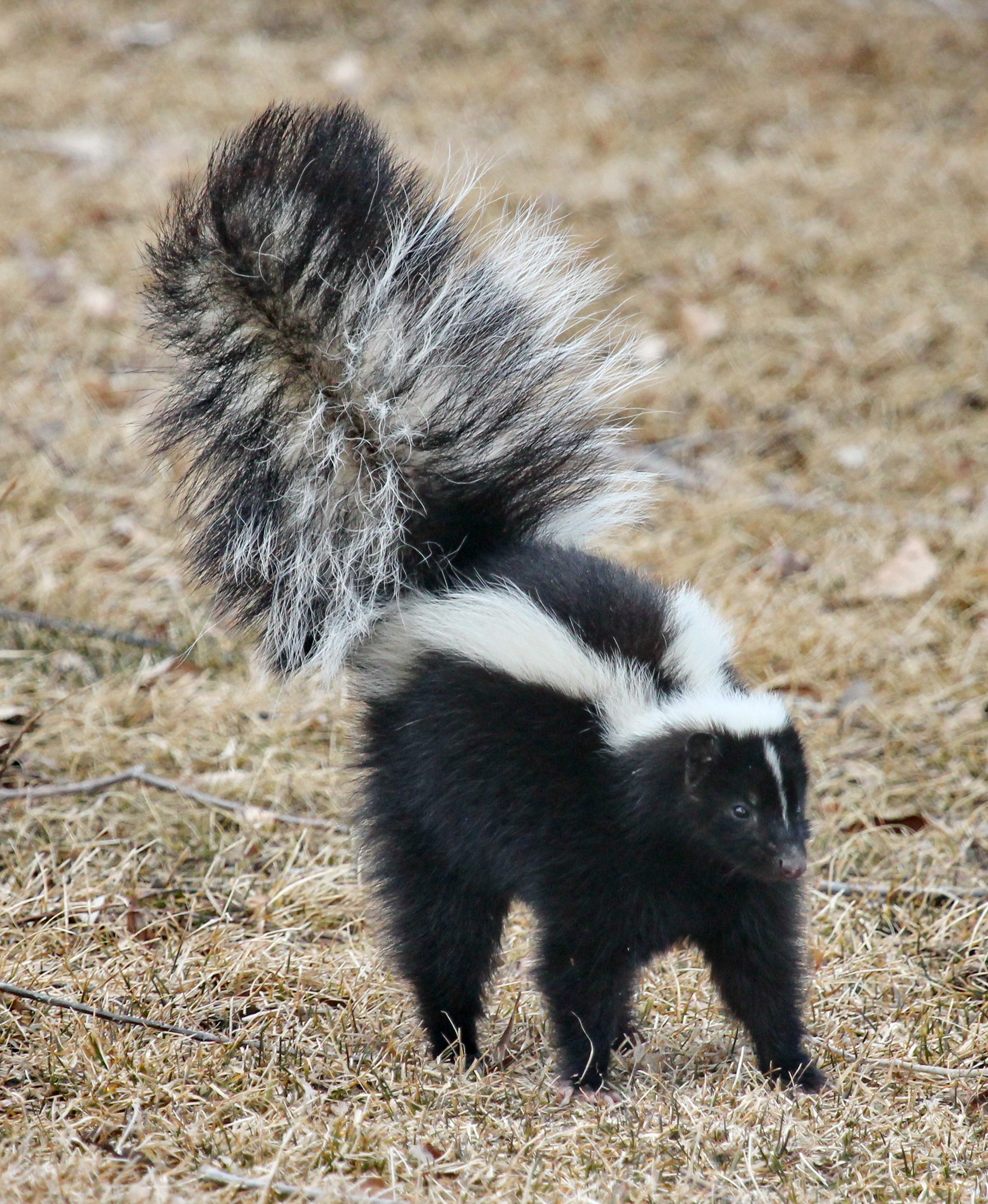
A striped skunk does not rely on camouflage the way many mammals do. It walks around in one of the bluntest patterns in North American wildlife, black fur split by bright white stripes, as if to say that subtlety has failed and clarity will have to do. It is one of the more honest neighborhood animals. Leave me room and there will be no problem. Corner me and we will both regret it.
That warning tends to overshadow the more interesting reality. Skunks are steady, useful omnivores that spend their evenings turning over the same ground we do, looking for beetles, grubs, worms, fallen fruit, and other small rewards. In a place like the old Fairview site, with open turf, garden edges, and dense margins close together, they fit naturally.
Identification
The basic look is unmistakable. Adults are small to medium mammals with a stocky body, short legs, and a full tail carried low or slightly arched. The white pattern varies. Some animals have two clean stripes from head to tail. Others have a broader white mantle or broken streaking. The face is pointed and the gait is deliberate, almost waddling.
Because they move so calmly, people often notice the pattern before they notice the animal's size. A skunk is usually smaller than it first appears. Much of the impression comes from fur and confidence.
What They Are Actually Doing in the Garden
Most of the time, skunks are feeding. They nose through grass for beetles, dig shallow holes for grubs, patrol bed edges for worms and snails, and clean up fallen fruit under trees. That shallow digging can annoy gardeners who wake up to little conical holes in a lawn or mulch ring, but it also means the skunk spent the night eating insects we would not especially want concentrated there.
The Fairview clay makes that foraging pattern visible. When wet winter and spring soils soften the surface, skunks can probe and scratch much more easily for grubs and worms. During drier summer stretches, they shift toward irrigated beds, fruit drops, and any place that still holds moisture. In other words, they follow the edible softness.
Around The Patient Garden
At The Patient Garden, striped skunks are edge animals. They prefer the less exposed routes: fence lines, the shadowed side of shrubs, the base of taller plantings, and the transition between lawn and denser cover. They are most active at dusk and into the first part of the night, when the site still holds warmth but human movement has dropped off.
Dens may be under sheds, brush piles, wood stacks, crawl spaces, or other sheltered cavities. Females raise kits in spring, and that is when skunk traffic becomes easier to notice. A mother with several small kits moving single file through an edge planting is a remarkably neat piece of neighborhood wildlife, though it is also a reminder to keep dogs leashed and curious people back.
The Spray, Properly Understood
The spray is real, effective, and best avoided, but it is not a first move. Skunks warn before they use it. They turn, stamp, arch the tail, and hold a tense posture that is very easy to read if nobody is rushing the situation. Most bad outcomes come from dogs closing distance too fast, people surprising a skunk at close range, or someone blocking the animal's retreat.
That makes coexistence simpler than its reputation suggests. Give a skunk an exit and it will almost always take it.
Conservation and Value
Striped skunks are common and do not need special conservation intervention in Salem. They do, however, benefit from the same thing many neighborhood animals benefit from: some tolerance for edges that are not overmanaged. Dense plantings, old logs, brushy margins, and insect-rich soils all help.
They also remind us that a healthy garden is not a sealed system. It leaks scent, fruit, grubs, and opportunity into the night. A skunk walking the edge of the old Fairview site is reading those signals perfectly. If we can get past the fear of the one defensive talent everyone remembers, what is left is a useful, steady mammal doing honest evening work in the dark.
The Animal That Asks for Space Clearly
A striped skunk does not rely on camouflage the way many mammals do. It walks around in one of the bluntest patterns in North American wildlife, black fur split by bright white stripes, as if to say that subtlety has failed and clarity will have to do. It is one of the more honest neighborhood animals. Leave me room and there will be no problem. Corner me and we will both regret it.
That warning tends to overshadow the more interesting reality. Skunks are steady, useful omnivores that spend their evenings turning over the same ground we do, looking for beetles, grubs, worms, fallen fruit, and other small rewards. In a place like the old Fairview site, with open turf, garden edges, and dense margins close together, they fit naturally.
Identification
The basic look is unmistakable. Adults are small to medium mammals with a stocky body, short legs, and a full tail carried low or slightly arched. The white pattern varies. Some animals have two clean stripes from head to tail. Others have a broader white mantle or broken streaking. The face is pointed and the gait is deliberate, almost waddling.
Because they move so calmly, people often notice the pattern before they notice the animal's size. A skunk is usually smaller than it first appears. Much of the impression comes from fur and confidence.
What They Are Actually Doing in the Garden
Most of the time, skunks are feeding. They nose through grass for beetles, dig shallow holes for grubs, patrol bed edges for worms and snails, and clean up fallen fruit under trees. That shallow digging can annoy gardeners who wake up to little conical holes in a lawn or mulch ring, but it also means the skunk spent the night eating insects we would not especially want concentrated there.
The Fairview clay makes that foraging pattern visible. When wet winter and spring soils soften the surface, skunks can probe and scratch much more easily for grubs and worms. During drier summer stretches, they shift toward irrigated beds, fruit drops, and any place that still holds moisture. In other words, they follow the edible softness.
Around The Patient Garden
At The Patient Garden, striped skunks are edge animals. They prefer the less exposed routes: fence lines, the shadowed side of shrubs, the base of taller plantings, and the transition between lawn and denser cover. They are most active at dusk and into the first part of the night, when the site still holds warmth but human movement has dropped off.
Dens may be under sheds, brush piles, wood stacks, crawl spaces, or other sheltered cavities. Females raise kits in spring, and that is when skunk traffic becomes easier to notice. A mother with several small kits moving single file through an edge planting is a remarkably neat piece of neighborhood wildlife, though it is also a reminder to keep dogs leashed and curious people back.
The Spray, Properly Understood
The spray is real, effective, and best avoided, but it is not a first move. Skunks warn before they use it. They turn, stamp, arch the tail, and hold a tense posture that is very easy to read if nobody is rushing the situation. Most bad outcomes come from dogs closing distance too fast, people surprising a skunk at close range, or someone blocking the animal's retreat.
That makes coexistence simpler than its reputation suggests. Give a skunk an exit and it will almost always take it.
Conservation and Value
Striped skunks are common and do not need special conservation intervention in Salem. They do, however, benefit from the same thing many neighborhood animals benefit from: some tolerance for edges that are not overmanaged. Dense plantings, old logs, brushy margins, and insect-rich soils all help.
They also remind us that a healthy garden is not a sealed system. It leaks scent, fruit, grubs, and opportunity into the night. A skunk walking the edge of the old Fairview site is reading those signals perfectly. If we can get past the fear of the one defensive talent everyone remembers, what is left is a useful, steady mammal doing honest evening work in the dark.
Continue Continuar