Swallowtail butterflies Swallowtail butterflies
Papilio spp.
Swallowtail butterflies are the big statement butterflies of Salem gardens, all glide and flash and confidence once the warm months settle in. Around Fairview, they connect ornamental flower borders to host plants that most people only notice when the caterpillars start eating them. Swallowtail butterflies are the big statement butterflies of Salem gardens, all glide and flash and confidence once the warm months settle in. Around Fairview, they connect ornamental flower borders to host plants that most people only notice when the caterpillars start eating them.
The Butterfly That Makes People Stop Walking
A swallowtail crossing the garden changes the scale of the afternoon. Smaller butterflies flicker. Swallowtails arrive. They move with a glide-and-flap rhythm that reads from across the whole site, and even people who do not know a butterfly from a moth usually stop and look up when one passes.
That reaction makes sense. These are among the largest and most theatrical butterflies we get around Salem. They also tell a fuller garden story than the adult beauty alone would suggest, because swallowtails tie nectar flowers, larval host plants, and warm open movement space together in one life cycle.
A Group Page Makes Sense Here
Around Shall and Audubon, the swallowtails most likely to matter are the western tiger swallowtail and the anise swallowtail, with occasional other possibilities depending on habitat and movement. For a neighborhood field guide, the useful first step is not pretending every sighting can be pinned down instantly. It is learning the group: large butterflies with tailed hindwings, strong gliding flight, and a habit of making flower borders look better just by crossing them.
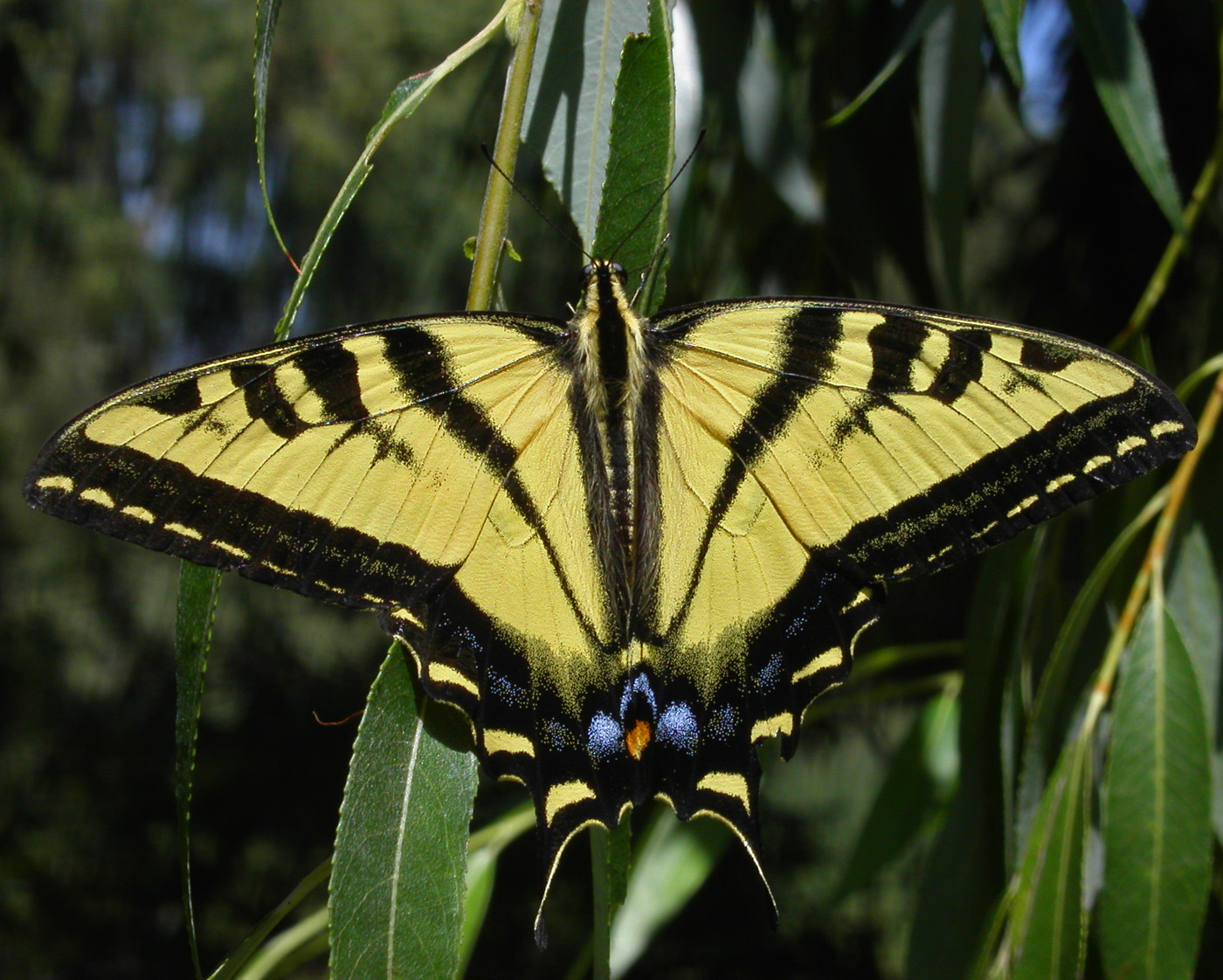
Western tiger swallowtails often read yellow with black striping and a tree-and-creek-edge affinity. Anise swallowtails overlap more with fennel, parsley-family host plants, and drier open garden settings. In practice, both can fold into the broader swallowtail story around the old Fairview site.
Adults on Flowers, Caterpillars on Specific Plants
Adult swallowtails visit nectar sources across the garden. Lilac, buddleia, milkweed, bee balm, zinnias, phlox, verbena, and many other summer flowers can draw them in. They want broad landing opportunities and reliable nectar in warm weather.
Caterpillars are less flexible. They need particular host plants. Anise swallowtail larvae famously use fennel, parsley, dill, rue, and native or wild members of the carrot family. Western tiger swallowtail larvae rely more on trees such as willow, cottonwood, cherry, ash, and other woody hosts depending on species and local availability.
That split between adult and larval needs is the key to understanding swallowtails in a garden. A butterfly border without host plants makes for visitors. A garden with both nectar and larval food makes for life cycle.
Around The Patient Garden
At The Patient Garden, swallowtails are most likely from late spring through summer, when the air is warm enough for strong flight and the flower beds are finally carrying enough color to act as beacons. The old Fairview site's openness helps. Big butterflies need room to move, circle, and drift from one planting to the next without immediately running into dense shade or tight urban canyons.
Host plants matter just as much. If fennel is allowed to exist, swallowtail caterpillars usually notice. If willows, cherries, or other host trees are nearby in the broader neighborhood matrix, the garden may receive adults even when the larval stage is happening elsewhere.
One of the nicer lessons swallowtails teach is tolerance. Their caterpillars can be startlingly conspicuous on fennel or parsley, but eating the host is the point. A garden cannot seriously claim to support butterflies while treating every chewed leaf as a failure.
Seasonal Rhythm and Behavior
Adults are sun-loving and most active in warm bright weather. Males may patrol routes or puddle on damp soil for minerals. Females spend more time inspecting host plants with intent. Once you learn that behavior, the difference between a butterfly merely nectaring and a butterfly evaluating a plant becomes easier to read.
The Fairview clay can help here in a small but useful way. Damp exposed soil after irrigation or rain can create mineral-rich puddling spots, especially on path edges and low places.
Conservation and Garden Practice
Swallowtails are not the most imperiled insects in Salem, but they do depend on a garden culture willing to think beyond bloom alone. That means planting host species, allowing some chew, avoiding pesticides, and keeping warm flower-rich space available through the summer flight season.
In The Patient Garden, swallowtails represent the generous version of gardening. We plant for the flower, yes, but also for the caterpillar we know will take some of it. When one large yellow-and-black butterfly drifts over the beds on a hot July afternoon, the whole compromise suddenly looks very good.
The Butterfly That Makes People Stop Walking
A swallowtail crossing the garden changes the scale of the afternoon. Smaller butterflies flicker. Swallowtails arrive. They move with a glide-and-flap rhythm that reads from across the whole site, and even people who do not know a butterfly from a moth usually stop and look up when one passes.
That reaction makes sense. These are among the largest and most theatrical butterflies we get around Salem. They also tell a fuller garden story than the adult beauty alone would suggest, because swallowtails tie nectar flowers, larval host plants, and warm open movement space together in one life cycle.
A Group Page Makes Sense Here
Around Shall and Audubon, the swallowtails most likely to matter are the western tiger swallowtail and the anise swallowtail, with occasional other possibilities depending on habitat and movement. For a neighborhood field guide, the useful first step is not pretending every sighting can be pinned down instantly. It is learning the group: large butterflies with tailed hindwings, strong gliding flight, and a habit of making flower borders look better just by crossing them.
Western tiger swallowtails often read yellow with black striping and a tree-and-creek-edge affinity. Anise swallowtails overlap more with fennel, parsley-family host plants, and drier open garden settings. In practice, both can fold into the broader swallowtail story around the old Fairview site.
Adults on Flowers, Caterpillars on Specific Plants
Adult swallowtails visit nectar sources across the garden. Lilac, buddleia, milkweed, bee balm, zinnias, phlox, verbena, and many other summer flowers can draw them in. They want broad landing opportunities and reliable nectar in warm weather.
Caterpillars are less flexible. They need particular host plants. Anise swallowtail larvae famously use fennel, parsley, dill, rue, and native or wild members of the carrot family. Western tiger swallowtail larvae rely more on trees such as willow, cottonwood, cherry, ash, and other woody hosts depending on species and local availability.
That split between adult and larval needs is the key to understanding swallowtails in a garden. A butterfly border without host plants makes for visitors. A garden with both nectar and larval food makes for life cycle.
Around The Patient Garden
At The Patient Garden, swallowtails are most likely from late spring through summer, when the air is warm enough for strong flight and the flower beds are finally carrying enough color to act as beacons. The old Fairview site's openness helps. Big butterflies need room to move, circle, and drift from one planting to the next without immediately running into dense shade or tight urban canyons.
Host plants matter just as much. If fennel is allowed to exist, swallowtail caterpillars usually notice. If willows, cherries, or other host trees are nearby in the broader neighborhood matrix, the garden may receive adults even when the larval stage is happening elsewhere.
One of the nicer lessons swallowtails teach is tolerance. Their caterpillars can be startlingly conspicuous on fennel or parsley, but eating the host is the point. A garden cannot seriously claim to support butterflies while treating every chewed leaf as a failure.
Seasonal Rhythm and Behavior
Adults are sun-loving and most active in warm bright weather. Males may patrol routes or puddle on damp soil for minerals. Females spend more time inspecting host plants with intent. Once you learn that behavior, the difference between a butterfly merely nectaring and a butterfly evaluating a plant becomes easier to read.
The Fairview clay can help here in a small but useful way. Damp exposed soil after irrigation or rain can create mineral-rich puddling spots, especially on path edges and low places.
Conservation and Garden Practice
Swallowtails are not the most imperiled insects in Salem, but they do depend on a garden culture willing to think beyond bloom alone. That means planting host species, allowing some chew, avoiding pesticides, and keeping warm flower-rich space available through the summer flight season.
In The Patient Garden, swallowtails represent the generous version of gardening. We plant for the flower, yes, but also for the caterpillar we know will take some of it. When one large yellow-and-black butterfly drifts over the beds on a hot July afternoon, the whole compromise suddenly looks very good.
Continue Continuar