Virginia opossum Virginia opossum
Didelphis virginiana
Virginia opossums are the quiet scavengers of the neighborhood, pale-faced, slow-footed, and much less alarming than their grin suggests. Around the old Fairview site, they work the damp edges, fruit drops, and mulch-rich corners that stay busy after dark. Virginia opossums are the quiet scavengers of the neighborhood, pale-faced, slow-footed, and much less alarming than their grin suggests. Around the old Fairview site, they work the damp edges, fruit drops, and mulch-rich corners that stay busy after dark.
The Animal Everyone Misreads First
The first good look at a Virginia opossum usually startles people. The face is pale and pointed, the tail looks almost unfinished, and the mouth seems to contain more teeth than any reasonable neighborhood mammal should need. Then the animal keeps walking with a slow, practical little shuffle, nose down, minding its own business, and the whole impression changes. Opossums are not dramatic hunters or swaggering raiders. They are patient cleanup crews with excellent timing.
They are also North America's only marsupial, which already makes them worth paying attention to. Around Salem, they are now a regular part of the nighttime mammal list, especially where gardens, fruit, brush cover, and a little moisture overlap.
Identification
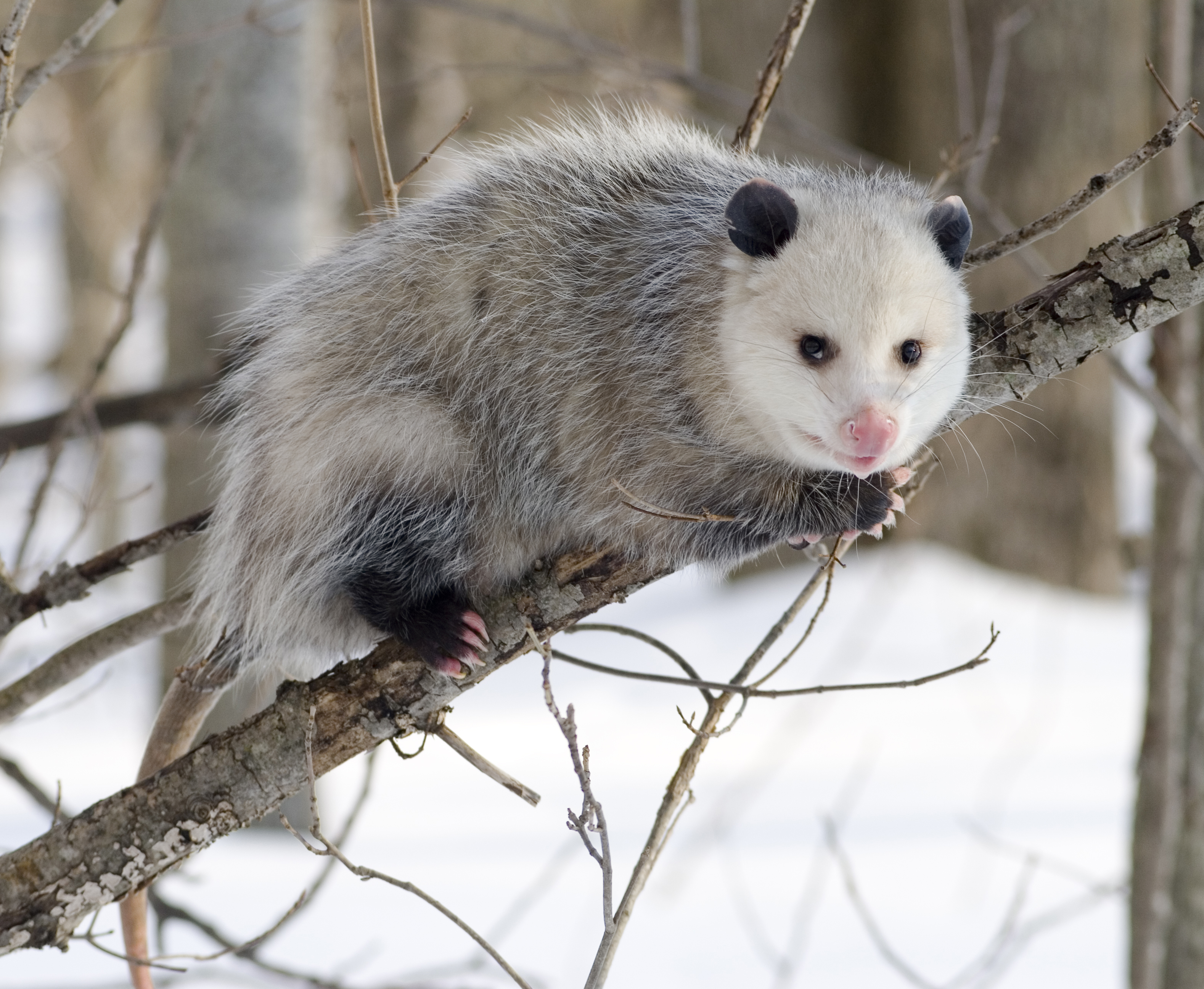
An adult opossum is about cat-sized, sometimes larger, with grizzled gray fur, a white face, dark round ears, and a long hairless tail. The tail is prehensile to a degree, useful for balance and grip, but adults do not spend time hanging from it the way cartoons insist. The feet are strange and memorable, especially the hind foot with its thumb-like toe for climbing.
Their gait is slow and steady rather than sleek. If you catch one in the beam of a flashlight, the body often looks low and slightly hunched, with the nose constantly testing the air and ground.
Not Dead, Just Defeated Looking
Opossums are famous for playing dead, but that is not a performance they choose casually. It is a last-ditch stress response. Most of the time, an opossum's real strategy is simpler: avoid attention, feed quietly, and keep moving. They do not want trouble. They want the dropped apple, the overturned slug, the beetle under the board, and the quiet route back to cover.
That makes them a good fit for The Patient Garden and the surrounding edges of the old Fairview site. They use dense shrubs, fence lines, wood piles, and the darker parts of the garden as travel cover. They are especially at home where the Fairview clay holds moisture long enough to keep worms, slugs, and other small prey active near the surface.
Useful in a Garden, Within Reason
Opossums are opportunistic omnivores. In Salem yards they eat fallen fruit, insects, worms, snails, slugs, carrion, pet food left out overnight, and whatever else the season puts in reach. Gardeners often appreciate them most for the less glamorous jobs. They work the damp places that produce slugs. They clear soft windfall fruit before it turns into a wasp convention. They are not tidy, but they are helpful in their own loose way.
They will also sample eggs if they find them and can make a mess of accessible feed. Like raccoons, they should not be encouraged into dependence on human food. The right relationship is tolerance, not hospitality.
Around Shall and Audubon
The old Fairview site creates a mosaic that suits opossums well: open ground for crossing, dense edges for concealment, ornamental plantings with fruit and insects, and plenty of little nighttime food sources concentrated by gardening. Opossums do not need pristine habitat. They need connected cover and edible margins.
Spring is the season when their life history becomes visible. Tiny young ride in the mother's pouch first, then later cling to her back in one of the oddest and best wildlife sights a neighborhood can offer. By summer, juveniles begin appearing on their own and looking improbably small for how ancient-faced they seem.
In cold wet weather they are a little slower and more vulnerable than many mammals. Their bare ears, feet, and tail do not handle hard cold especially well, which is one reason Salem's mild winter climate suits them. They can stay active here in a way they could not farther north or east under harsher conditions.
Conservation and Plain Respect
Opossums are common in western Oregon now and need no urgent conservation help in Salem. The bigger issue is misunderstanding. People assume aggression where there is mostly bluff. They assume disease where there is often just an animal moving through. They see the teeth and miss the temperament.
It is worth learning them more accurately. An opossum on the edge of The Patient Garden is one of the neighborhood's least glamorous mammals, but also one of the most revealing. It tells you that the site still has dark routes, damp feeding patches, and enough messy abundance to support a scavenger. That is real habitat. Not polished habitat, maybe, but honest habitat all the same.
The Animal Everyone Misreads First
The first good look at a Virginia opossum usually startles people. The face is pale and pointed, the tail looks almost unfinished, and the mouth seems to contain more teeth than any reasonable neighborhood mammal should need. Then the animal keeps walking with a slow, practical little shuffle, nose down, minding its own business, and the whole impression changes. Opossums are not dramatic hunters or swaggering raiders. They are patient cleanup crews with excellent timing.
They are also North America's only marsupial, which already makes them worth paying attention to. Around Salem, they are now a regular part of the nighttime mammal list, especially where gardens, fruit, brush cover, and a little moisture overlap.
Identification
An adult opossum is about cat-sized, sometimes larger, with grizzled gray fur, a white face, dark round ears, and a long hairless tail. The tail is prehensile to a degree, useful for balance and grip, but adults do not spend time hanging from it the way cartoons insist. The feet are strange and memorable, especially the hind foot with its thumb-like toe for climbing.
Their gait is slow and steady rather than sleek. If you catch one in the beam of a flashlight, the body often looks low and slightly hunched, with the nose constantly testing the air and ground.
Not Dead, Just Defeated Looking
Opossums are famous for playing dead, but that is not a performance they choose casually. It is a last-ditch stress response. Most of the time, an opossum's real strategy is simpler: avoid attention, feed quietly, and keep moving. They do not want trouble. They want the dropped apple, the overturned slug, the beetle under the board, and the quiet route back to cover.
That makes them a good fit for The Patient Garden and the surrounding edges of the old Fairview site. They use dense shrubs, fence lines, wood piles, and the darker parts of the garden as travel cover. They are especially at home where the Fairview clay holds moisture long enough to keep worms, slugs, and other small prey active near the surface.
Useful in a Garden, Within Reason
Opossums are opportunistic omnivores. In Salem yards they eat fallen fruit, insects, worms, snails, slugs, carrion, pet food left out overnight, and whatever else the season puts in reach. Gardeners often appreciate them most for the less glamorous jobs. They work the damp places that produce slugs. They clear soft windfall fruit before it turns into a wasp convention. They are not tidy, but they are helpful in their own loose way.
They will also sample eggs if they find them and can make a mess of accessible feed. Like raccoons, they should not be encouraged into dependence on human food. The right relationship is tolerance, not hospitality.
Around Shall and Audubon
The old Fairview site creates a mosaic that suits opossums well: open ground for crossing, dense edges for concealment, ornamental plantings with fruit and insects, and plenty of little nighttime food sources concentrated by gardening. Opossums do not need pristine habitat. They need connected cover and edible margins.
Spring is the season when their life history becomes visible. Tiny young ride in the mother's pouch first, then later cling to her back in one of the oddest and best wildlife sights a neighborhood can offer. By summer, juveniles begin appearing on their own and looking improbably small for how ancient-faced they seem.
In cold wet weather they are a little slower and more vulnerable than many mammals. Their bare ears, feet, and tail do not handle hard cold especially well, which is one reason Salem's mild winter climate suits them. They can stay active here in a way they could not farther north or east under harsher conditions.
Conservation and Plain Respect
Opossums are common in western Oregon now and need no urgent conservation help in Salem. The bigger issue is misunderstanding. People assume aggression where there is mostly bluff. They assume disease where there is often just an animal moving through. They see the teeth and miss the temperament.
It is worth learning them more accurately. An opossum on the edge of The Patient Garden is one of the neighborhood's least glamorous mammals, but also one of the most revealing. It tells you that the site still has dark routes, damp feeding patches, and enough messy abundance to support a scavenger. That is real habitat. Not polished habitat, maybe, but honest habitat all the same.
Continue Continuar